
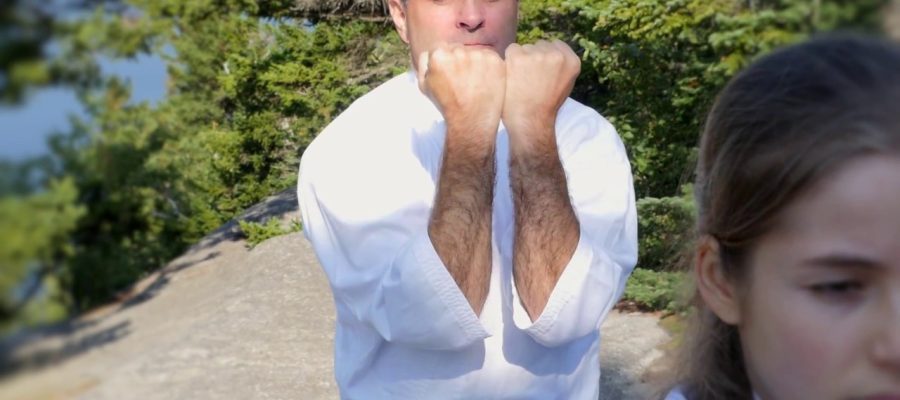
Learning the movement should take into account the various stages of the child’s physical and emotional growth. Each detailed physical skill and adaptation should be learned only after the easier initial steps have been properly understood.
Between 2 and 5 years
We will talk about a physical and artistic education addressed through pleasure and play, oriented towards psychomotor support allowing the expression of the child’s basic psychomotor activity through movement and psychomotor stimulation which allows the acquisition of motor skills: locomotion, climbing, jumping, throwing, carrying, fine, imitative and expressive gestures. These skills will be available later, when faced with complex situations, memorizing numerous action programs, respecting the different phases of psychomotor and psychoaffective development. The child can join a Baby-Gym, Baby-judo or Baby-Karate club of the interested sports federations.
At 6-7 years old
The child enters the age of learning to write and read which will be facilitated by the acquisition of a good body image, thanks in particular to mini-sport, establishing the basis of physical condition: postural control, coordination, balance, laterality, orientation in space and time, trajectory, anticipation, positioning, etc. Experiment with gestures through games with rules; he puts himself in a competitive situation but does not like failures, which lead to discouragement and disinterest.
Between 8 and 12 years
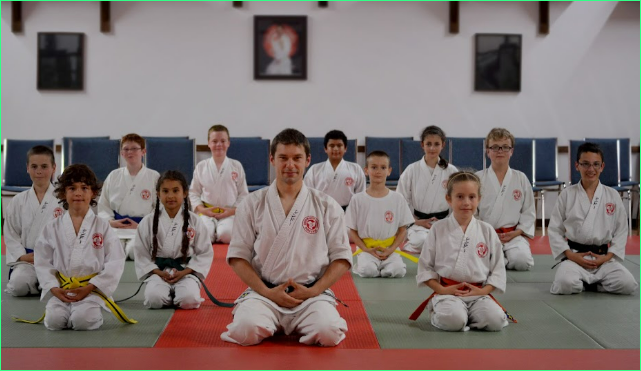
Controls and disciplines his actions with the ability to maintain effort to achieve a goal. We move from sports initiation to improvement and competition which are an integral part of sports practice, which retains all its educational value if freely consented to and if it does not become coercion or even torture. It enhances the child, awakens in him the cult of effort and perseverance, the desire to succeed with willpower. It accelerates the decision-making process, allows you to assert yourself, externalize and channel reactions of aggression, dominance and opposition but with violence controlled by rigid rules, using «fair play». Learn to control the effects of stress. It contributes, through the interest it generates, to reducing idleness. It can, among students in academic difficulty, create an original center of interest that thus operates within the class, through a different hierarchy, thus facilitating socialization and reducing discouragement.
At 13-14 years old
This is the era of contradictions: improvement and questioning in a period of intensive training. But with the global reorganization of adolescence (morphological evolution, psychological instability, appearance of sexuality), the gesture becomes upset, less precise and less coordinated. Teenagers increasingly accept the authority of parents or even coaches. Competition declines in the scale of values, as does the need for competition, while he maintains a keen interest in non-competitive sport: the activity is therefore based on contact with the partner and on the development of team spirit.
Between 15 and 17 years old
During the second phase of puberty, physical proportions become more harmonious and psychological balance is restored. The adolescent regains a taste for training and performance, both collective and individual, when before he was definitely not disgusted by it.
Conclusion
Teaching movement to children requires much more than demonstrating techniques and expecting immediate results. Every child develops at a unique pace, and successful instruction must respect the natural stages of psychomotor and psychoaffective growth. By building skills progressively, instructors create an environment where children can develop confidence, coordination, and a genuine enjoyment of learning, rather than feeling overwhelmed by tasks that exceed their current abilities.
Psychomotor development forms the foundation of all physical skills. Before a child can perform complex techniques with precision, they must first master fundamental abilities such as balance, coordination, posture, spatial awareness, and body control. These basic movements provide the framework upon which more advanced karate techniques can be built. Attempting to teach sophisticated combinations too early may lead to frustration, poor habits, or even an increased risk of injury.
Equally important is psychoaffective development, which involves a child’s emotional, social, and psychological maturity. Young students need encouragement, positive reinforcement, and a supportive learning environment where mistakes are viewed as opportunities to improve rather than failures. As children gain confidence in their abilities, they become more willing to face challenges, cooperate with others, and develop the perseverance necessary for long-term progress.
A progressive teaching approach benefits both students and instructors. By introducing new skills only after earlier stages have been successfully learned, children experience consistent achievement and remain motivated throughout their training. Each small success strengthens their self-esteem while reinforcing the importance of patience, discipline, and regular practice. Over time, these gradual improvements accumulate into significant technical and personal development.
Karate instructors also play a vital role in adapting lessons to the age and developmental level of each child. Activities should be engaging, age-appropriate, and designed to stimulate both physical and cognitive growth. Games, coordination exercises, and simple technical drills can make learning enjoyable while helping children build the essential skills needed for more advanced training in the future.
latest posts published

What does the name of our dojo “ishin denshin” mean?

Water: the elixir of life and the secret to optimal hydration
Sempai, Kohai and Dohai: respect for the hierarchical system
What is a dojo (道場)? | At the origins of the word
Mitsu no sen (three points) les trois principals initiatives

Karate Belts: Understanding the Order of Ranks
The concept of “Giri”, a profound moral commitment
Kyokun Martial – In karate there is no first attack.
The social economy at the heart of our martial arts center
