
The first thought that pops into my head when I read Gichin Funakoshi’s second martial principle is that karate should not be used to pick a fight or promote violence, but is that it? I believe Funakoshi could have been clearer by saying, «Karate is only for self-defense,» which makes me feel there’s more to this idea.
Before I move on, I want to take a moment to acknowledge that these principles can mean totally different things to each person based on their age and whether they are a beginner, intermediate, advanced karate practitioner, or someone who has been training for many years.
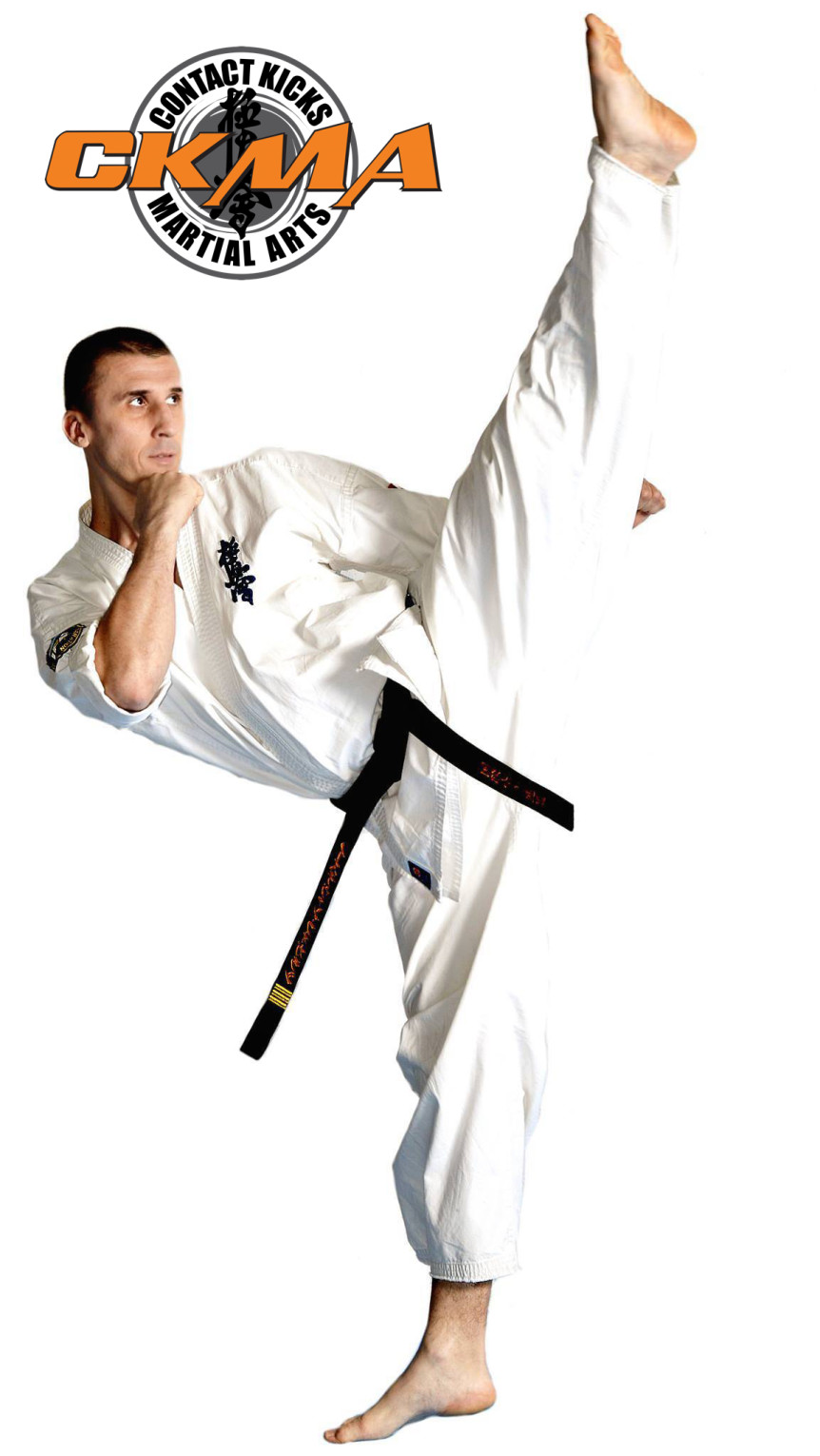
Kyokun Martial – In karate there is no first attack.
In my view, this martial lesson speaks to us in two parts. The first part is «the before» and I connect it to a quote from Sensei Hironi Otsuka, the founder of the Wado Ryu style «There is nothing more uncomfortable than finding yourself in a situation where you need to use martial arts for protection. The goal of training is to prepare intensely for its use and at the same time aim for a state where martial arts should not be necessary. Therefore, we must always seek the way to peace». In short, we must be prepared and train not necessarily to avoid fights, but to pursue peace.
However, I also think that Funakoshi talks to us about a «pendant».
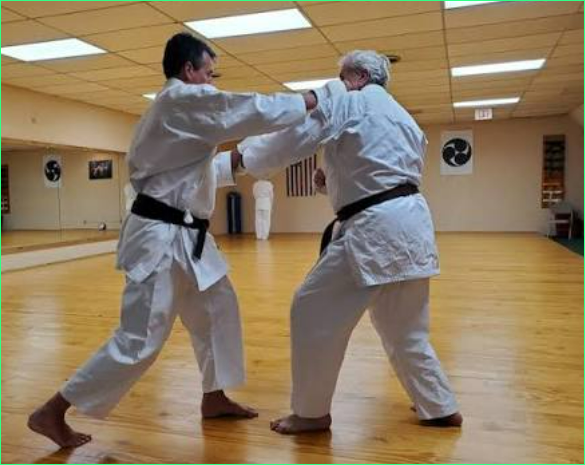
For me in karate, observing and managing feelings is a vital part of my growth as a fighter. Funakoshi himself mentions in his book Kyohan Karate-do that only when you have no way to escape should you think about self-defense moves as an option. Even at these times, Funakoshi adds, one must not show any wish to attack, instead, one should let the attacker relax their guard. Only then is it time to strike, focusing all your strength in one hit on a key point and using the surprise to flee and seek safety and help. From this, I conclude that what the lesson also tells me is that a karate practitioner who watches and waits calmly for the chance their opponent offers before striking will be closer to winning.
Lastly, I want to tell you an ancient story about two Okinawan karate masters that I believe illustrates how I understand this principle.
«In the early years of karate in Okinawa, there were two karate masters in two neighboring towns. Each town was very proud of its Sensei and soon a debate started about which of the two was superior. As time passed, this debate grew so intense that a confrontation between the two became unavoidable.
Eventually, the two masters met on neutral ground and faced off.
The villagers eagerly awaited the fight to start. The two masters faced each other calmly, each waiting for a chance, but it never happened. After what felt like forever, the battle was declared a draw and the disappointed villagers returned home feeling frustrated.
A village student, after visiting his teacher’s home, finally got the bravery to ask: «Teacher, why didn’t you engage? What can we learn from this scenario? ʺ
The teacher grins: ʺ We recognized that we are both skilled martial artists. We both knew that the one who strikes first would definitely lose. So neither of us wanted to strike first. ʺ
Conclusion
The second idea of Gichin Funakoshi encourages students to think beyond the clear message that karate should never be used to start a fight. While this saying is certainly correct, its meaning goes much deeper than just steering clear of physical battles. It urges every karateka to grow the insight to see that true power is not shown by the ability to harm others but by the ability to manage oneself, think wisely, and avoid unnecessary clashes whenever possible.
Karate was never meant to be a means for violence or fear. Rather, it is a practice that teaches awareness, accountability, and respect for human life. A student who grasps this idea learns that the highest form of success is often reached without throwing a single punch. By being confident, calm, and making wise choices, many disputes can be sidestepped before they even become physical. In this way, self-defense starts long before any moves are made.
As with all of Funakoshi’s lessons, the understanding of this principle grows with experience. A newcomer may see it simply as a rule against fighting. A mid-level learner may appreciate the value of self-control and discipline, while a seasoned practitioner starts to value the mental and philosophical aspects beneath the words. Someone who has trained over many years often finds that the principle relates not only to physical encounters but also to daily interactions, where patience, modesty, and emotional steadiness can stop many conflicts.
This growing understanding is one of karate’s greatest advantages. The same principle keeps revealing new insights throughout a lifetime of practice because the practitioner is always evolving. As skills get better and life lessons pile up, the teachings gain deeper meaning and become more applicable. What used to seem like a straightforward instruction gradually becomes a guide for living with honesty and harmony.
In the end, Funakoshi’s second principle reminds us that karate is not defined by the techniques we practice but by the choices we make. Every punch, block, and kick should be backed by strong character, kindness, and accountability. The aim of training is not to make someone eager to fight but to prepare them to defend themselves and others while avoiding violence whenever possible. This way, karate shifts from being just a way to protect oneself—it transforms into a lifelong philosophy that encourages peace, self-control, and respect.
latest posts published
What does the name of our dojo “ishin denshin” mean?

Water: the elixir of life and the secret to optimal hydration
Sempai, Kohai and Dohai: respect for the hierarchical system
What is a dojo (道場)? | At the origins of the word
Mitsu no sen (three points) les trois principals initiatives
Karate Belts: Understanding the Order of Ranks
The concept of “Giri”, a profound moral commitment
Kyokun Martial – In karate there is no first attack.
The social economy at the heart of our martial arts center
