
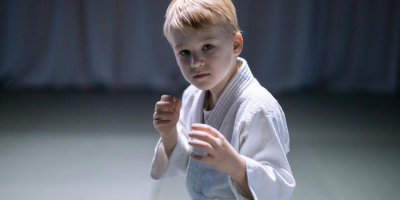
Discover how children’s Aikido develops discipline, concentration and self-confidence. Schedule a trial lesson for your child at the dojo!
Why is Aikido a great choice for children?
In an increasingly frenetic world full of digital distractions, offer children an activity that develops self-control, concentration and respect it is fundamental. Aikido, a Japanese martial art based on the principles of harmony and non-violence, offers an ideal environment in which little ones can grow solid values, emotional balance and personal security.

Unlike sports that encourage direct competition, Aikido cultivates the spirit of cooperation, self-awareness and personal mastery, making it a perfect practice for the healthy development of children.
Discipline and respect: the basis of every practice
Aikido values discipline, punctuality, respect for colleagues and teachersin addition to the traditional Japanese etiquette present in the dojo. From their first lessons, children learn the importance of simple rituals, such as bowing when entering the carpet or caring for and cleaning their uniform. These gestures cultivate responsibility and sense of belongingreflecting directly on behavior outside the dojo, such as at home and at school.
Develop attention and concentration
Through movements, postures and repetitions, Aikido stimulates awareness. Each technique requires the child to be present, observe the partner and respond accurately. Over time, this constant practice helps improve academic performance, as the child begins to stay focused on their tasks for longer, reducing anxiety and distraction.
Strengthening self-confidence and self-esteem
Aikido is not about beating others, but about overcome yourself. This creates an encouraging environment, where each achievement, such as learning a new technique or advancing in the belt, strengthens the child’s self-esteem. By understanding that progress comes with patience and dedication, the child develops resilience, courage and emotional security.
Social skills and cooperation
In Aikido lessons, children train with different colleagues in pairs, learning how to do it communicate, cooperate and respect boundaries. This constant interaction promotes fundamental social skillsespecially for shy children or those with socialization difficulties. The non-competitive environment also fosters positive bonds and lasting friendships.
Physical benefits in complete safety
Aikido is a complete physical activity that works motor coordination, balance, posture and flexibilitywithout the risk of injuries common in contact sports. The techniques are suitable for children, focusing on natural body movement and accident prevention. This makes Aikido a safe, educational and fun activity.
Book your trial lesson without obligation
Do you want to experience all this in practice and understand why Aikido transforms lives?
Book your trial lesson now!
Come feel the energy of the dojo, learn from qualified instructors and take the first step on a journey of self-knowledge, discipline and harmony.
Click here to make an appointment
Keywords: aikido for kids, martial arts for kids, benefits of aikido for kids, aikido for kids, aikido trial lesson for kids
Conclusion
In today’s fast-paced, digitally saturated world, providing children with activities that foster self-control, focus, and respect is more important than ever. Aikido, as a Japanese martial art rooted in harmony and non-violence, offers an ideal environment for nurturing these qualities. Unlike competitive sports, which often emphasize winning over personal growth, Aikido teaches children to cooperate, remain mindful, and develop inner strength while moving in harmony with others.
Through regular practice, young students cultivate concentration, emotional balance, and a sense of personal security. The deliberate movements, paired with conscious breathing and awareness exercises, help children manage impulses and channel energy constructively. They learn the value of discipline without fear, understanding that progress comes through patience, consistent effort, and respect for themselves and others.
Aikido also encourages empathy and collaboration. By practicing techniques with partners, children develop sensitivity to others’ movements and intentions, reinforcing lessons in cooperation and mutual respect. This approach fosters social skills alongside physical development, giving children tools to navigate relationships and challenges in a thoughtful, balanced manner.
Ultimately, Aikido provides more than a physical activity—it offers a framework for personal growth that strengthens both body and mind. Children who practice Aikido develop resilience, confidence, and self-awareness, building a foundation of values that will guide them throughout life. By integrating discipline, mindfulness, and harmony, Aikido empowers young practitioners to grow into balanced, compassionate, and confident individuals, fully equipped to face the complexities of a modern world.
latest posts published

What does the name of our dojo “ishin denshin” mean?

Water: the elixir of life and the secret to optimal hydration
Sempai, Kohai and Dohai: respect for the hierarchical system

What is a dojo (道場)? | At the origins of the word
Mitsu no sen (three points) les trois principals initiatives

Karate Belts: Understanding the Order of Ranks
The concept of “Giri”, a profound moral commitment

Kyokun Martial – In karate there is no first attack.
The social economy at the heart of our martial arts center
