
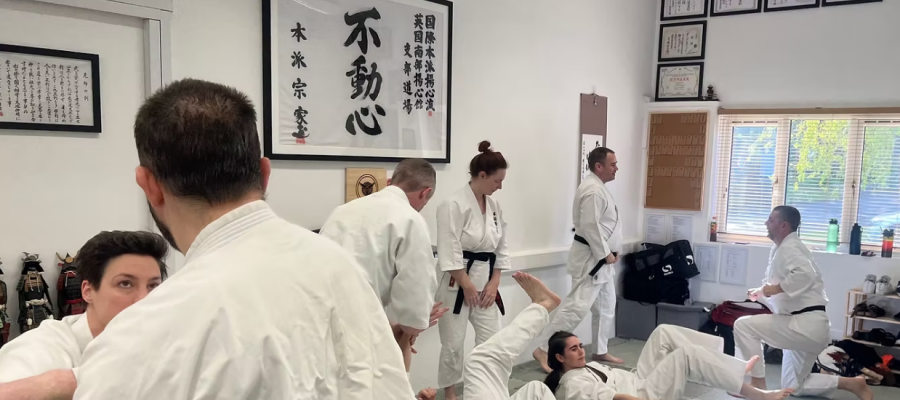
In the realm of martial arts, especially in karate, a ranking system is very important for sharing values like respect, humility and helping each other. While the ideas of senpai and kohai are well known and commonly used, the concept of free is not familiar. In fact, it raises some questions and shows up in situations where the ranking system is not clearly defined.
Senpai and Kohai: a key idea
The senpai-kohai system is built on a hierarchical relationship where the older student (senpai) guides and assists the younger or less experienced student (kohai). This relationship relies not just on rank, but also on how long someone has been in the dojo. Thus, a person who joined earlier will be seen as another’s senpai, even if their belt levels are similar.
The senpai’s job is to help the sensei and enable him to share his wisdom by assisting the kohai in their growth. In return, the kohai shows respect to their senpai who acts as their role model. This setup encourages a natural sharing of knowledge and boosts unity within the dojo.
Dohai: equality in practice
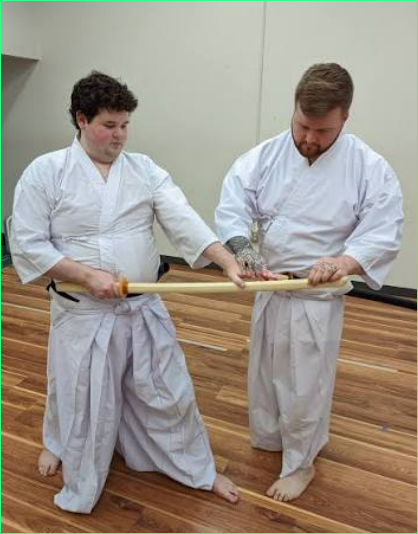
Less mentioned, the term free designates a professional who is at the same level as another, without a relationship of immediate hierarchical superiority. Unlike the senpai-kohai relationship, where there is a clear hierarchy, the dohai are equals who evolve together, often in a dynamic of healthy emulation.
The idea of free rank—or unranked training—in karate shows the distinction between a strict system and a personal path of self-betterment. It appears in casual guidance, cross-style practices, or cases where practitioners appreciate real skill and knowledge more than an official colored belt. While senpai (senior) and kohai (junior) define Dojo organization, a «free» way to rank deals with particular, unclear situations in martial arts:
Peer Mentorship: At times, two students may be similar in rank or a junior is ranked higher than a senior but values their experience. A «free» or informal relationship lets them see one another as equals, depending on shared respect instead of a strict hierarchy.
In the dojo itself it is relatively easy to recognize one’s dohai, as each person’s seniority is clearly identified. However, in external events such as phases (gasshuku) OR competitionsit becomes more difficult to determine who is older or more experienced, especially when it comes to positioning seirutsu (hierarchical line).
The idea you are mentioning is probably the «Free Rank» or Mu-kyu status. It is an important area in karate where a person trains without an official or recognized belt. This allows a beginner to concentrate fully on grasping the basics, free from the stress of ego and ranking.
In a dojo, passing down values depends on clear roles, but the idea of a free rank helps newcomers before they are formally put into the structure.
Key Points of Dojo Structure
Sensei (先生): The main teacher, meaning «one who walks before,» who gives both technical and spiritual support.
Senpai (先輩): The older student who serves as a guide and sets a good example on the training floor.
Kohai (後輩): The younger student who learns by watching and following the lead of the seniors.
Handling Unclear Structures
When the order of hierarchy is not clearly set—as in mixed-level classes or during starting times (the Mu-kyu stage)—martial arts depend greatly on the Dojo Kun (training hall rules) and strict manners to keep things in line. In these cases, respect and humility are shown through teamwork instead of strict seniority.
Mutual Respect: Practitioners partner up based on safety and respect, making sure that training partners trust one another to stick to rules and manage techniques, no matter their rank.
Manage hierarchy in an external context
When you find yourself in front of a dohai during an external event, you must combine courtesy and lack of knowledge of your interlocutor. Here are some principles that can guide these situations:
- Show humility : If the order isn’t obvious, respectfully giving up your seat is often the best option.
- Observer and adapter : by observing how other practitioners position themselves, we are often able to understand the dynamics taking place.
- Use dialogue : when doubt remains, a simple respectful exchange with your dohai helps avoid any misunderstanding.
Conclusion
The hierarchical system in karate is based on the principles of respect and mutual help. If the senpai-kohai relationship is well rooted in tradition, the notion of dohai deserves to be better understood and applied, particularly in external contexts where hierarchy is less evident. By adopting a humble and respectful attitude, each practitioner contributes to strengthening the harmony and discipline that are the richness of martial arts
latest posts published
What does the name of our dojo “ishin denshin” mean?

Water: the elixir of life and the secret to optimal hydration
Sempai, Kohai and Dohai: respect for the hierarchical system
What is a dojo (道場)? | At the origins of the word
Mitsu no sen (three points) les trois principals initiatives

Karate Belts: Understanding the Order of Ranks
The concept of “Giri”, a profound moral commitment
Kyokun Martial – In karate there is no first attack.
The social economy at the heart of our martial arts center
