
It is customary for each traditional Japanese dojo to have a name that represents it. Not having an official name yet, I asked the karateka to describe our dojo in one or a few words. The response was almost unanimous, with the word “family”.
As I thought about what a family is, outside of genetic family, it occurred to me that one characteristic of family is unconditional love. Of a parent towards his children. generally it is a visceral bond, but a strong invisible bond is also created between the members of a family.
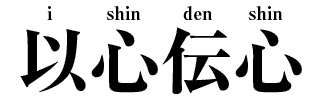
What does the name of our dojo “ishin denshin” mean?
It is by considering this aspect that a bond is created between the practitioners of a dojo. They share the tatami for several hours a week, investing body and soul in a common goal, namely physical, psychological and spiritual evolution. This allows you to create a bond that goes beyond friendship, accompanied by the sincere feeling that each member is part of a whole, just like a family traveling together.
It is from this premise that I understood that our family was born from an invisible bond that is woven from heart to heart. Hence the use of the word “ shin » which means heart and mind. “ I » instead represents the word “sincere”, as in the unconditional love of a family. Then the term » It » means a sincere and rigorous transmission between teacher and student, or between parent and child.
So, the “ isshin denshin » is seen by the Japanese as a sincere and tacit communication, which comes from one heart to another heart. It is also an expression that comes from Zen Buddhism. Registration as yojijukugo (grouping of kanji), which means that even without speaking or writing we can understand each other heart to heart.
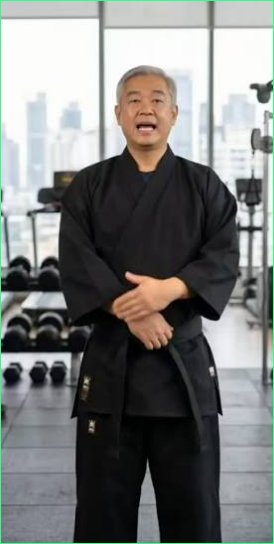
This principle implies that the master must purify his heart (Senshin) and make a lot of effort to develop an honest attitude. The disciple, in fact, will connect to him by observing and feeling, rather than just listening and vice versa.
Conclusion
The idea of a dojo as a family goes far beyond the simple fact that people train together. It reflects a deeper connection built through shared effort, mutual respect, and a genuine commitment to helping one another grow. When the members of a dojo almost unanimously describe their training hall with the word family, they reveal that the true value of the dojo lies not only in practicing techniques but also in the relationships that develop over time.
Unlike friendships that may come and go, the bond created within a dojo is strengthened through challenges, perseverance, and countless hours of learning together. Every student arrives with different strengths, weaknesses, goals, and experiences, yet they all contribute to an environment where everyone has the opportunity to improve. This collective journey creates trust, understanding, and a sense of belonging that cannot be forced or manufactured.
The comparison with a family is especially meaningful because it highlights the importance of unconditional support. In a healthy dojo, success is celebrated collectively, while mistakes become opportunities for learning rather than reasons for criticism. Senior students guide beginners with patience, instructors teach with dedication, and every member is encouraged to become a better martial artist and a better person. This atmosphere of encouragement allows individuals to develop confidence while remaining humble enough to continue learning.
A dojo family is not defined by blood relations but by shared values. Respect, discipline, honesty, perseverance, and compassion become the invisible threads that connect its members. These principles extend beyond the training floor, influencing how practitioners face difficulties, interact with others, and contribute to their communities. Over time, the lessons learned inside the dojo become lifelong habits that shape character just as much as physical ability.
Ultimately, giving a dojo a name that reflects the spirit of family recognizes the essence of what martial arts should represent. Techniques may evolve, students may come and go, and generations of practitioners may change, but the spirit of unity remains constant. The invisible bond formed through trust, respect, and unconditional support becomes the true foundation of the dojo. In this way, the dojo is transformed into more than a place to practice karate—it becomes a home where every member is valued, every challenge is faced together, and every individual is encouraged to grow, not only as a martial artist but also as a human being.
latest posts published
What does the name of our dojo “ishin denshin” mean?

Water: the elixir of life and the secret to optimal hydration
Sempai, Kohai and Dohai: respect for the hierarchical system
What is a dojo (道場)? | At the origins of the word
Mitsu no sen (three points) les trois principals initiatives

Karate Belts: Understanding the Order of Ranks
The concept of “Giri”, a profound moral commitment

Kyokun Martial – In karate there is no first attack.
The social economy at the heart of our martial arts center
