
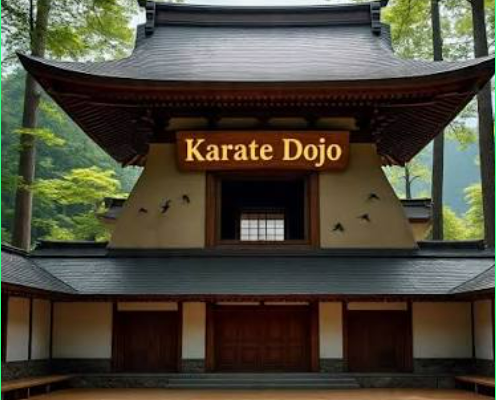
When we say the word dojo, the picture that quickly appears in our minds is that of a setting where martial arts are trained. Mats neatly placed, wooden weapons organized with care, bows at the start and finish of the class: the dojo appears to be mainly a site for training. Yet, calling the dojo just a simple gym would strip it of its deeper meaning. Because the dojo is far beyond a physical area: it is a spot for sharing knowledge, change, and personal exploration.
At the origins of the word
The Japanese term dojo (道場) is the heir to an older word: Chinese dao chang [1]. In ancient China this term designated a specific place where religious rites and divination ceremonies took place. Literally, dao chang means “the place of the way”. Even then it was not just a material space, but a consecrated place, an environment conducive to the encounter with something greater than oneself.
The word was introduced to Japan around the 18th century. He then first designated the temples, these sacred places where people tried to get closer to the essential through meditation, prayer or spiritual practice. Gradually the term was adopted in the context of martial arts, not by chance, but because the spirit of the dojo united with that of the temple: a place of discipline, research and inner transformation.
More than a training place
The dojo is obviously a technical learning space. Repeat movements, correct your posture, refine your reflexes. But as soon as you cross its threshold, something changes. We take off our shoes, say hello, lower our voices. All these gestures remind us that we are entering a particular place, almost out of time, where external worries vanish.
Through these rituals, the dojo ceases to be a banal room to become one symbolic place : a space where we learn to walk the path (dō), to improve as a human being. The rigor of the exercises, respect for the rules and patient repetition do not serve to limit the student’s freedom, but to help him build internal discipline.
The dojo as a mirror
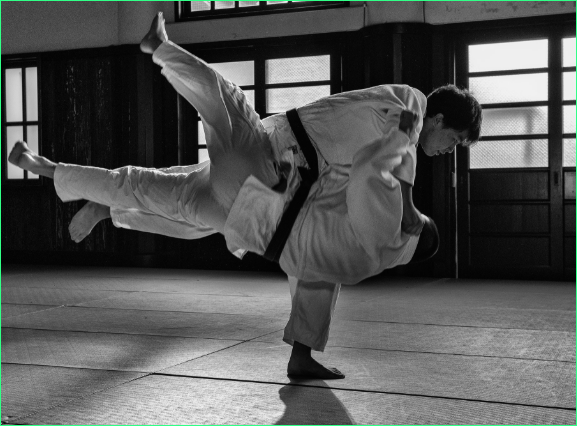
In martial arts it is often said that the dojo is a mirror. In fact, every practitioner is faced with their own limits: tiredness, impatience, fear of failure, ego. On the tatami it is impossible to cheat for long: sooner or later the body reveals our excesses and training exposes our true attitude.
In this sense the dojo becomes a space of introspection. By comparing ourselves with a partner, we not only meet the other, but also ourselves. Frustrations, small victories, defeats, the joy of progress – all this reflects our inner state. This is why the dojo is also a place of education of the mind.
A community space
The dojo does not exist without a community. It brings together students, teachers and different generations around the same practice. In this framework everyone finds their place: the beginner learns from the more advanced, the senior remembers his own beginnings and passes them on in turn.
This intergenerational bond is precious. It places each practitioner in a lineage that goes beyond their personal experience. We train not only for ourselves, but also to honor those who have walked the path before us and to offer something to those who come after.
Dojo and sacred
Although many dojos today are located in school gyms or community centers, the spirit of the dojo retains something sacred. This sacredness does not reside in religion, but in the quality of the presence that we cultivate there.
When you enter the dojo, you say hello to the shomen (the place of honor), we don’t just bow before a decorated wall and photos. We bow before the path itself, before tradition, before what goes beyond our individuality. This simple gesture reminds us that the dojo is not a space of consumption, but a place of transformation and is a gesture of gratitude.
The dojo in the modern world
In a world where everything accelerates, the dojo represents a refuge. We learn to slow down, to breathe, to focus on one thing at a time. Sitting time becomes quality time, which reconnects us to our body and mind.
Furthermore, the dojo is not just a place reserved for experts. Everyone can participate, regardless of age, physical condition or background. It is a space of inclusion where the important thing is not performance, but sincere commitment.
So, what is a dojo? It is both a place and a state of mind. A concrete place, with its walls, its tatamis, its rules. But also a symbolic place, where we walk on a journey, where we learn to know ourselves, where we build a community and where we touch, through practice, something bigger than ourselves.
In this sense the dojo is much more than a martial arts hall. It is a sacred space, a place of discipline and freedom, rigor and kindness, where everyone is invited to grow.
An old adage sums it up well: “The dojo is in our heart; where our heart is, our dojo resides.” This means that the spirit of the dojo does not stop at the walls of the training site. It accompanies us in daily life, in our actions, in our words and in our choices. By cultivating the dojo within us, every moment becomes an opportunity to walk the path.
latest posts published
What does the name of our dojo “ishin denshin” mean?

Water: the elixir of life and the secret to optimal hydration
Sempai, Kohai and Dohai: respect for the hierarchical system
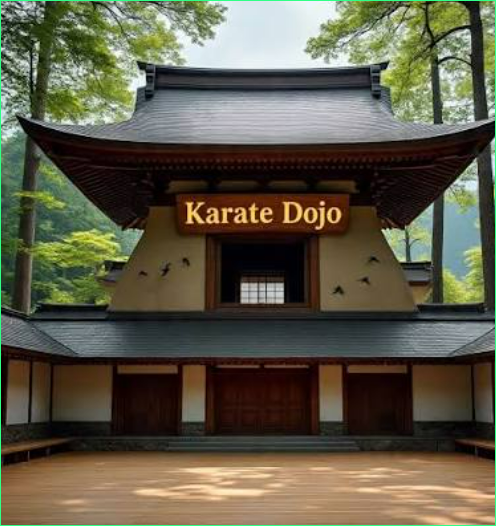
What is a dojo (道場)? | At the origins of the word
Mitsu no sen (three points) les trois principals initiatives

Karate Belts: Understanding the Order of Ranks
The concept of “Giri”, a profound moral commitment

Kyokun Martial – In karate there is no first attack.
The social economy at the heart of our martial arts center
