
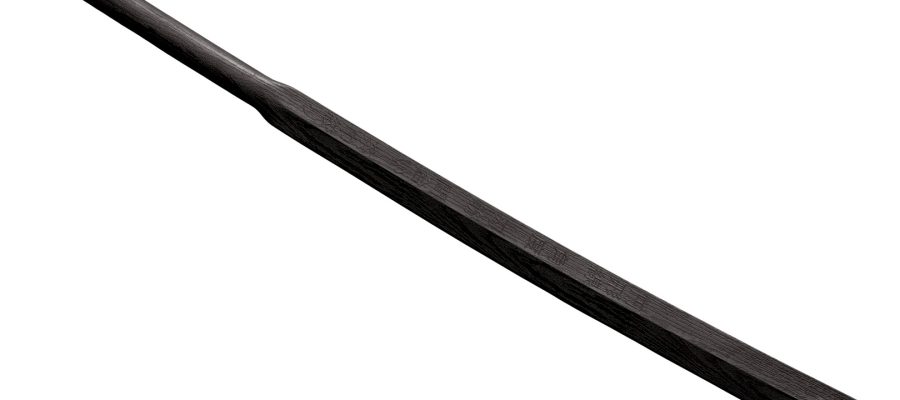
In the realm of Japanese fighting styles, every tool has a purpose and a teaching value that is much greater than its main use. Among these, the suburitothis large and awkward bokken holds a unique position. Too heavy to be used in fights or traditional forms, it is mainly meant for practicing strength, stamina, and accuracy. From iaido to aikido, including kendo and kenjutsu, the suburito is a quiet partner of the fighter aiming for excellence.
Origins and characteristics of suburito
The word “suburito” comes from suburi (repeated practice cuts) and TO (sword). We can interpret it as “sword for suburi.” Its design is based on the bokken (regular wooden sword), but its length and weight differ: some versions are longer than one meter and weigh more than 1.5 kg, occasionally reaching 3 kg for the heaviest ones. Unlike the bokken, it does not try to closely resemble the katana, but instead aims to increase the challenge of the movement.
The concept is straightforward: by adding weight and resistance, we prepare the body to handle more effort. When you switch back to the bokken or iaito, the motion feels smoother and lighter, promoting improved speed and better control.
I suburito en iaido et iaijutsu
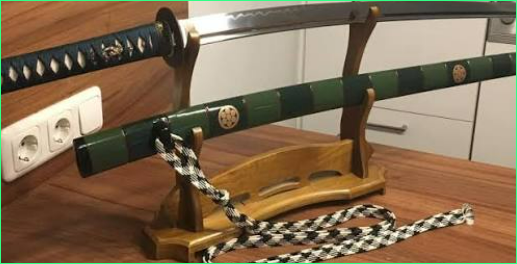
In iaido et iaijutsudisciplines focused on the art of drawing and cutting in a single gesture, the suburito is mainly used to strengthen muscles and improve the precision of cuts. Iaido requires extreme rigor in the cutting line (hasuji) and great body stability. The weight of the suburito forces the practitioner to use the whole body rather than just the arms.
By working on series of vertical, diagonal or lateral cuts, the practitioner develops greater awareness of his or her center of gravity. The slowness imposed by the tool also encourages greater attention to detail: alignment of the shoulders, fluidity of breathing, coordination between the left and right hands. Some masters recommend starting or ending each session with a few dozen cuts with the suburito, as a sort of active meditation.
The suburito animal is again
THE kendoa modern, sporting version of saber art, it emphasizes speed, rhythm and explosiveness. However, the suburito remains a privileged tool in the physical and technical preparation of the kendoka.
The most common exercise involves performing repetitive strikes (suburi menhead cuts) with the suburito. The additional load helps strengthen the forearm, wrist and shoulders, consolidating posture and stability. Furthermore, the training develops the notion of kiai (martial shout) and breathing, because the suburito requires deep and controlled breathing.
Some dojos even integrate entire sequences of suburi con suburito at the beginning of lessons, to warm up the body and anchor the gesture immediately before moving on to the shinai. The contrast between the heaviness of the suburito and the lightness of the shinai reminds the practitioner of the value of precision and speed.
The suburito in kenjutsu
In the kenjutsumore traditional discipline and often linked to the old schools (Koryu), the suburito is used as a resistance tool. Unlike kendo where speed is essential, koryu often favors depth of movement and anchoring.
Some ryu (schools) require thousands of suburito cuts as part of their fundamental training. This repetition, putting a strain on the body and mind, builds not only muscles but also determination. It’s part of a logic of Tanren (shaping the body and mind through effort).
The use of the suburito then becomes an initiatory rite: it is not just a matter of working on the technique, but of testing the practitioner’s perseverance, of strengthening his inner discipline and his patience.
The suburito in aikido
At first glance, the aikido it seems very far from the intensive practice of heavy swords. However, the size of the weapons occupies an important place, particularly in some lineages such as Iwama aikido. In this context, the suburito is used to develop the kokyu (power of breath) and the connection between the body and movement.
The suburi performed with the suburito serve to improve the fluidity of the gesture and the stability of the movement. As in iaido, the emphasis is placed on the body unity: the hips, the center (hara) and breathing become the real engines of the movement, and not the simple strength of the arms. This training allows the practitioner to then apply the principles acquired in the bare-hand techniques of aikido.
Transversal benefits
Whatever the martial art, the use of the suburito brings common benefits:
- General muscle strengthening : shoulders, arms, back, hips.
- Resistance and breathing : ability to maintain a sustained pace of exercise.
- Technical precision : the heaviness of the wood requires you to maintain a correct trajectory.
- Postural stability : The body learns to absorb weight and stay centered.
- Mental discipline : repeating the same gesture hundreds of times builds patience and concentration.
The suburito is therefore much more than a simple bodybuilding tool. It embodies the philosophy of budo: progress through difficulties, find lightness in heaviness, transform obstacles into means of growth.
Conclusion
At a time when many practitioners are looking for immediate effectiveness or sporting performance, suburito reminds us of the importance of basic work, invisible and thankless, but which brings lasting results. In the shadow of the dojos, this oversized wooden sword continues to forge strong bodies and resilient minds.
Whether it is wielded by an adept of iaido, kendo, kenjutsu or aikido, it conveys the same truth: mastery of the sword is not just a question of speed or technique, but also of patience, breath and perseverance.
latest posts published
What does the name of our dojo “ishin denshin” mean?

Water: the elixir of life and the secret to optimal hydration
Sempai, Kohai and Dohai: respect for the hierarchical system
What is a dojo (道場)? | At the origins of the word
Mitsu no sen (three points) les trois principals initiatives
Karate Belts: Understanding the Order of Ranks
The concept of “Giri”, a profound moral commitment
Kyokun Martial – In karate there is no first attack.
The social economy at the heart of our martial arts center
