

In karate, the colored belts mark the progression stages of the practitioner. They symbolize technical, physical and mental evolution, from beginner to advanced. In this article we present the order of the belts, their meaning and the progress of the club’s rank change.
Why so many colors?
Each color of the karate belt represents a symbolic level, a concrete way of measuring technical, physical and mental progress. This system was introduced in Japan in the 20th century, inspired by judo.
-
Kyū : colored belts, for beginners and intermediates
-
AND : black belts, for expert practitioners
The Order of Karate Belts (Kyū)
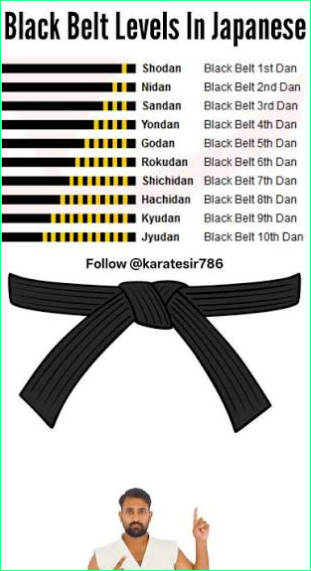
Here is the most common order in France, used in most clubs and styles (Shotokan, Wado-Ryu, etc.):
🔁 Some schools (like KCC) space out the belts two-tone (e.g. yellow-orange) to refine the evaluation between two grades and monitor the development of young karateka.
So what about the black belt? (Dan)
Obtaining a black belt is a significant event in a karateka’s career. Contrary to what you might think, this does not mark the end of learning. On the contrary, it is the beginning of a new sporting and spiritual journey in which we develop our personal and technical knowledge.
|
“Beginning of the journey”: solid foundations acquired |
||
|
In-depth mastery, spirit of research |
||
|
Leadership, teaching, sometimes honorary |
How does rank change work in karate?
Belt exams are generally organized at the end of the semester or year (depending on the club), under the supervision of senior professors.
Content varies by level, but generally includes:
-
Kihon (basic techniques): stances (dachi), punches (tsuki), kicks (geri) and blocks (uke).
-
Say (codified sequence of techniques): sequences of movements that simulate combat against imaginary opponents.
-
Kumite (fighting and application of techniques): conventional or free combat, which allows you to evaluate distance, reactivity, self-control, strategy and anticipation.
-
Theoretical questions : Japanese vocabulary, karate principles, martial values.
🥋The jury also evaluates the candidate’s attitude: respect, commitment, progression and martial spirit.
BONUS: 3 tips for choosing your karate belt
Choosing the right karate belt is important. Here are 3 useful tips for any karateka, beginner or expert:
Tip no. 1: the material
THE cotton belts they are the most common. Comfortable, resistant, they are suitable for all levels. They can also be embroidered with the practitioner’s name.
THE silk or satin belts they are rarer, often reserved for advanced degrees. They are more fragile and require special maintenance.
Tip no. 2: size
A karate belt generally measures 4cm wide. ON the length depends on the waist size of the practitioner. As a general rule, you should count:
2 waist sizes + approx. 100 cm
If in doubt, do not hesitate to go to a specialized shop.
Tip no. 3: use and quality
If you’re starting out, opt for a soft belteasier to tie. THE more rigid models it will be more suitable for advanced professionals.
Some belts are designed to trainingothers for the competition. We will return to this in a future article.
Finally, keep in mind that the belt represents an investment. Depending on the material, brand and level of customization, prices vary: there is something for every budget.
Conclusion
The belt system in karate represents far more than a sequence of colors or a measure of technical ability. Each belt symbolizes a stage in a practitioner’s personal journey, reflecting growth in skill, discipline, character, and understanding of the art. While advancing through the ranks is often seen as an achievement, the true purpose of the system is to encourage continuous learning rather than to define one’s value as a martial artist.
Every new belt is earned through dedication, perseverance, and consistent effort. The beginner learns the fundamentals of posture, balance, and basic techniques, while more advanced students refine precision, timing, and strategy. However, technical improvement is only one aspect of progression. Equally important is the development of qualities such as humility, patience, respect, and self-control. These values are practiced daily inside the dojo and gradually become part of everyday life outside of it.
The colored belts also serve as milestones that motivate students to remain committed to their training. They provide clear goals while reminding practitioners that progress is achieved step by step. There are no shortcuts in karate; every technique must be practiced repeatedly, every challenge must be faced with determination, and every lesson builds upon the previous one. In this way, each promotion recognizes not only what a student has learned but also the dedication demonstrated throughout the journey.
It is equally important to remember that wearing a higher-ranking belt does not signify the end of learning. On the contrary, greater knowledge brings greater responsibility. Senior students are expected to lead by example, support beginners, and preserve the traditions and values of the dojo. Their rank reflects not only their technical competence but also their willingness to contribute positively to the learning environment and to inspire others through their actions.
latest posts published

What does the name of our dojo “ishin denshin” mean?

Water: the elixir of life and the secret to optimal hydration
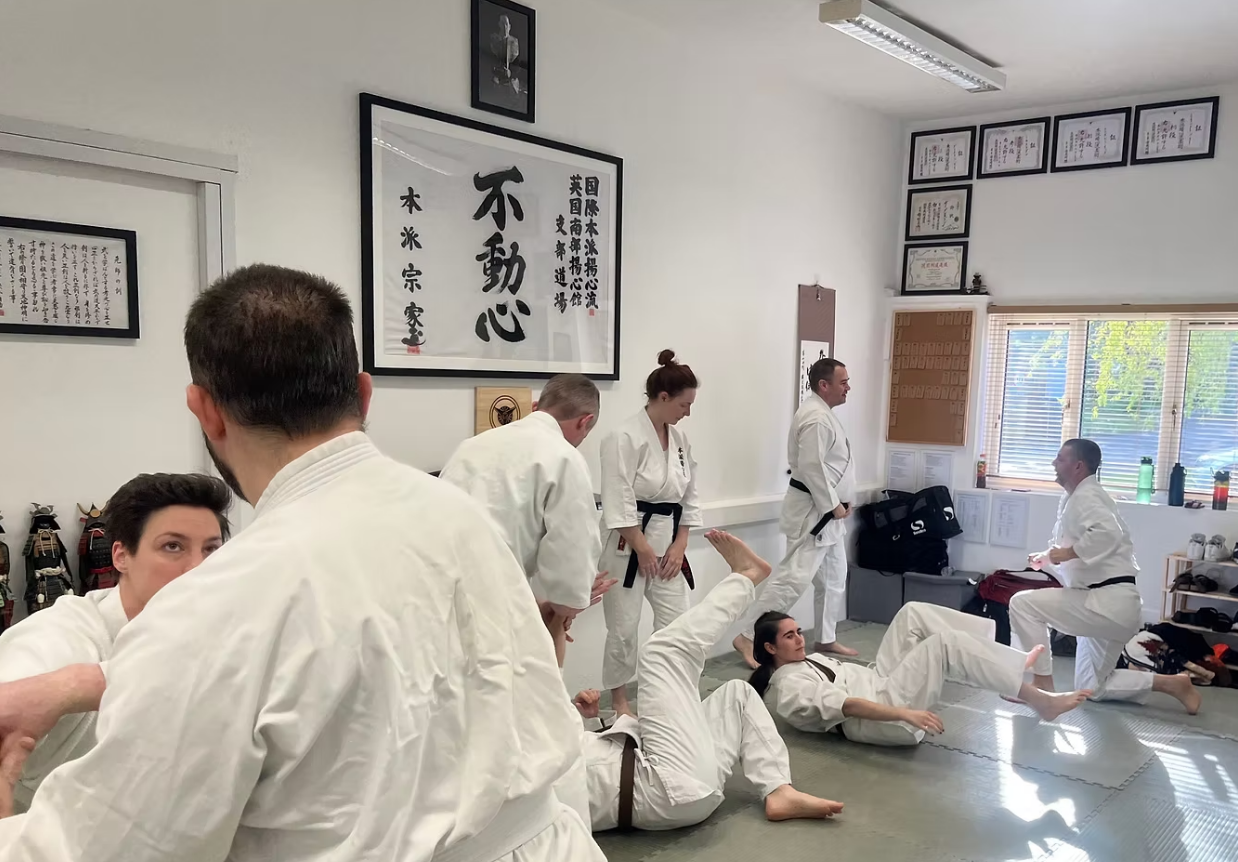
Sempai, Kohai and Dohai: respect for the hierarchical system
What is a dojo (道場)? | At the origins of the word
Mitsu no sen (three points) les trois principals initiatives

Karate Belts: Understanding the Order of Ranks
The concept of “Giri”, a profound moral commitment
Kyokun Martial – In karate there is no first attack.
The social economy at the heart of our martial arts center
