

Taekwondo is a martial art that has a long and rich history. Its origins date back more than 2000 years, but the modern form of the discipline only emerged in the 20th century. In this article we will explore its history, from its ancient roots to its worldwide popularity, drawing on the authority of experts in the field.
Ancient Origins
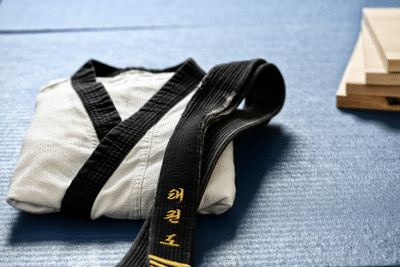
In ancient Korea, people used martial arts as a form of self-defense and for hunting. Early martial arts styles were influenced by Chinese and Mongolian martial arts. Over time, martial arts evolved and incorporated various styles, including Taekkyeon and Subak, which eventually gave rise to Taekwondo.
Foundation of modern Taekwondo
Modern Taekwondo was born in 1955, when a group of Korean masters decided to unify Korean martial arts under a single system. They chose the name Taekwondo, which means “the way of the foot and hand,” to represent the combination of kicking and punching techniques. The system was formally recognized by the Korean government in 1961.
The expansion
Since its founding, the South Korean martial art has rapidly expanded throughout the world. Organizers staged the first World Taekwondo Championship in 1973, and the discipline has since become a popular Olympic sport. Currently, more than 200 countries practice Taekwondo, with millions of practitioners worldwide.
Taekwondo today
Nowadays, people practice Taekwondo both as a martial art and as a sporting activity. Gyms around the world offer classes, from neighborhood schools to large, elite training institutions. This art is known for its beauty, agility and power, being one of the most popular martial arts in the world.
The future
Taekwondo continues to evolve and adapt to changes in the modern world. New techniques and styles are developing and competitions are becoming more intense and exciting. Furthermore, becoming increasingly accessible to all people, regardless of age, gender or physical ability.
The history is long and fascinating, and reflects the evolution of martial arts over the centuries. From its ancient origins to its worldwide popularity today, Taekwondo continues to play an important role in culture and society around the world.
The Journey of Taekwondo: From Ancient Roots to Global Sport
Taekwondo’s origins date back more than 2,000 years, rooted in ancient Korean martial arts, but the modern form of the discipline only emerged in the 20th century. Its evolution is a testament to Korean resilience and cultural preservation, transforming from a battlefield skill into a globally recognized sport and philosophy. In this article, we will explore its history, from its ancient roots to its worldwide popularity, drawing on the authority of experts in the field.
📜 Ancient Roots (Goguryeo, Silla, and Baekje Dynasties)
The earliest evidence of Taekwondo’s ancestors dates back to the Three Kingdoms period of Korea (around 50 BCE).
-
Tae Kyon and Subak: Early forms of empty-hand fighting and kicking techniques were central to military training. The name Tae Kyon specifically referred to a kicking-focused art, while Subak was a broader term for fighting skills.
-
Hwarang Warriors: The Silla Dynasty’s elite military corps, the Hwarang, practiced a form of martial arts alongside Buddhist and Confucian philosophy. A mural depicting two figures practicing a martial art, discovered in a tomb from the Goguryeo Dynasty, is often cited as early proof of its existence. This ancient practice emphasized not only physical prowess but also discipline, loyalty, and justice, values still core to modern Taekwondo.
⚔️ Decline and Revival (Joseon Dynasty and Japanese Occupation)
During the Joseon Dynasty (1392–1897), the focus shifted away from military training, and traditional martial arts like Subak and Tae Kyon were relegated to folk games and secret practices.
The art faced its greatest threat during the Japanese occupation of Korea (1910–1945), when the Japanese attempted to suppress Korean culture, including its traditional martial arts. Practitioners were forced to train in secret or travel to other regions (like Okinawa or China) where they studied related arts, such as Karate.
Conclusion
In summary, Taekwondo is now a live example of how old customs and new ideas can exist together beautifully. Originating from centuries of Korean fighting traditions, it has adapted into a worldwide practice that crosses borders, languages, and cultures. Its ongoing development shows not just the improvement of its skills but also the growth of its beliefs — which emphasize respect, determination, and personal growth just as much as physical ability.
As Taekwondo changes to meet the demands of today’s world, it stays true to its core: the aim of finding balance between body, mind, and spirit. The arrival of new skills, creative training approaches, and lively competitions shows its ability to remain important in modern life. Still, more than just contests and trophies, Taekwondo’s real power lies in its potential to change lives — giving discipline to kids, confidence to women, and energy to seniors.
Its welcoming nature has become one of its biggest achievements. Nowadays, individuals of all ages, genders, and physical conditions can enjoy the happiness and empowerment that practicing brings. Whether in an elite match or a local class, Taekwondo keeps bringing people together based on shared principles like respect, self-discipline, and collective advancement.
Furthermore, the worldwide growth of Taekwondo has turned it into a cultural link — fostering understanding, peace, and friendship among different countries. Its students not only learn to control their bodies but also to develop traits like humility, patience, and harmony, applying these qualities beyond the training space and into their everyday lives.
Ultimately, the journey of Taekwondo is still unfolding. It tells a tale of strength, flexibility, and motivation, showing that this martial art means much more than fighting — it is a lifestyle that continues to inspire future generations to progress with strength, dignity, and togetherness.
latest posts published
What does the name of our dojo “ishin denshin” mean?

Water: the elixir of life and the secret to optimal hydration
Sempai, Kohai and Dohai: respect for the hierarchical system
What is a dojo (道場)? | At the origins of the word
Mitsu no sen (three points) les trois principals initiatives

Karate Belts: Understanding the Order of Ranks
The concept of “Giri”, a profound moral commitment
Kyokun Martial – In karate there is no first attack.
The social economy at the heart of our martial arts center
