
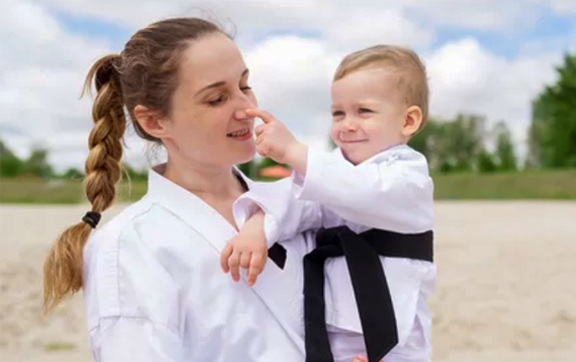
The participation of fathers and mothers in their children’s sport can be a source of support but also of pressure; this varies depending on the different types of parental participation. When children start practicing a martial art, they do it for simple satisfaction and fun. All children are different and develop skills at various stages of life. Some later, some earlier, but all, without exception, with good guidance will be good martial arts students and, above all, good adults.
However, some parents feel a strong desire to help their children succeed and be champions, demanding levels of performance from them that they never achieved as professionals, often becoming frustrated and obsessive parents.
These parents want to see their dreams, once faded
come true in their children, instead of supporting and maintaining a healthy balance between the martial art and other aspects of the child’s life. They push the child towards sadness and towards goals that he cannot currently achieve, putting enormous pressure on the child and becoming a bad example due to the attitudes he adopts, most of the time blaming the child’s poor performance on the Teacher, or on the referees of a tournament, being jealous of other students who have already developed skills that their child has not yet acquired or even changing the child’s school to try at all costs to obtain THEIR much desired success… and these These attitudes will turn your child into another frustrated and obsessive adult who has not achieved his main goal of growing up and being happy with his martial art…
We also have the disinterested who transfer the responsibility of «educating» their children to the Teacher, and do not allow themselves to be involved in the educational and training process. To compensate for their absence, they collude with the child when he is unmotivated or has problems, sometimes refusing the «punishments» that the Master inflicts without first inquiring about the reason for this attitude.
They don’t care if the child is making progress, if he is happy or if he has activities, the important thing is that the practice of martial arts only serves to destroy the accumulated energy of the child so that he can go home, bathe, eat, not disturb him too much and sleep… there is a total lack of understanding and interest in their role in the child’s education, since there will always be some excuse or commitment more important than attending training. With this absence and disinterest, the Teacher consequently, instead of being one of the foundations, increasingly becomes the home where the child takes refuge when he has problems, and when this happens and he feels threatened, he pushes the children away giving the typical excuse «they don’t want to go to training».
There is no greater joy for a child than to demonstrate what he has learned with effort and overcoming to those he loves, just as the greatest sadness and pain is to demonstrate it to an empty chair…
I don’t want to blame parents for inappropriate actions and for all the problems that exist with the education of children in martial arts, since they are born and do not have an instruction book, but I firmly believe that a lot can be achieved by alerting and improving the lines of communication between parents and Master.
For a child to grow up with martial arts, there will have to be behavioral and emotional restraint, a lot of patience and encouragement. We must be aware that everything we offer children is filtered by us adults. When they receive this conscious and appropriate support, their participation will be enriched, allowing for great growth and experiences based on the Master, their parents and the 5 principles of martial arts that I teach, which are: Courtesy, Integrity, Perseverance, Self-Mastery and Indomitable Spirit.
So here are some questions you should answer before enrolling your child in a martial arts academy:
- Will I be able to entrust my son to the Master?
- Will I be able to admit its limitations?
- Will I be able to humbly accept my son’s triumphs?
- Will I be able to accept my child’s frustrations?
- Will I be able to demonstrate the 5 principles to my child?
- Will I be able to dedicate time to my child?
- Will I be able to accept my child’s decisions?
To teach them to your child, I have already made them myself… and I have no doubt that children will do their best to make you feel proud of them…
If you liked it, follow us on our social networks and stay updated on our news. If you want to enroll your child in our martial arts. Contact us
latest posts published
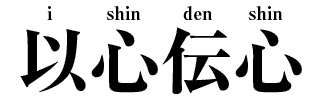
What does the name of our dojo “ishin denshin” mean?

Water: the elixir of life and the secret to optimal hydration
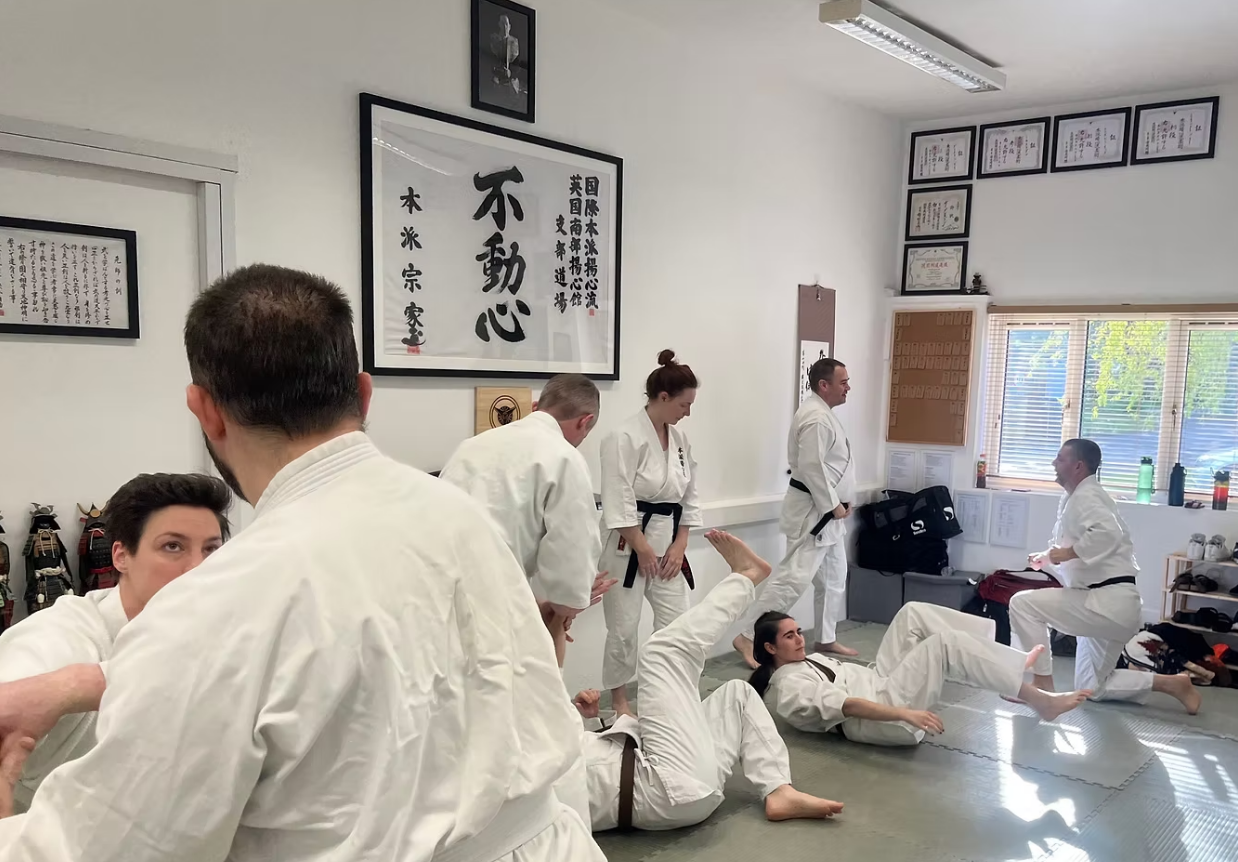
Sempai, Kohai and Dohai: respect for the hierarchical system
What is a dojo (道場)? | At the origins of the word
Mitsu no sen (three points) les trois principals initiatives

Karate Belts: Understanding the Order of Ranks
The concept of “Giri”, a profound moral commitment
Kyokun Martial – In karate there is no first attack.
The social economy at the heart of our martial arts center
