
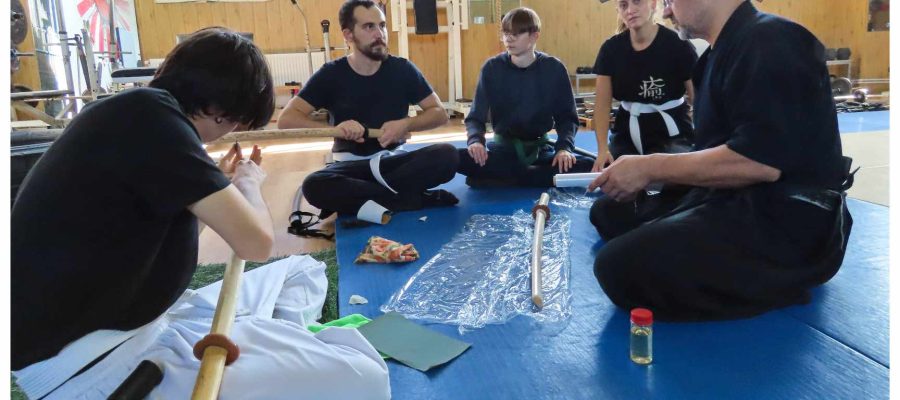
During a recent kenjutsu and iaijutsu training session, I found myself remembering my childhood. Before I knew anything about martial arts, my friends and I were already searching for something very similar: the perfect weapon.
We would go to the edge of the forest looking for the ideal stick. At the time, we could not explain what made one stick better than another. It was not about appearance, perfection, or even being completely straight.
It was about feeling.
We held each stick in our hands, tested its weight, moved it around, imagined battles, and searched for that moment when it felt natural. The perfect stick was the one that seemed to belong in our hands, the one that moved with us instead of simply being carried.
Once we found it, it became important. We cleaned it, protected it from rain, and sometimes kept it for months.
Looking back, I realize that this was my first experience of connecting with a weapon.
Discovering the Relationship With a Bokken
My First Steps With Wooden Weapons
Years later, when I returned to martial arts through Raiden Dojo, I purchased my first weapons: a bokken, jo, bo, and kodachi.
Naturally, I spent most of my time with the bokken because of my interest in sword practice.
However, I cannot say that my first bokken immediately felt like the «perfect stick» from childhood.
Perhaps it was because I did not yet know how to use it properly.
The connection was not automatic.
But that did not stop me from respecting it.
For more than two years, I cared for that bokken. I treated it with oil, cleaned it, dried it, and practiced constantly with it. It became my companion during the first stages of my journey.
Eventually, it reached its end.
Meeting Yuuki: Finding the Right Connection
A Bokken From Japan
After the loss of my first bokken, Sensei Cristian Laiber gave me another one.
This bokken was different.
It came from Japan.
And surprisingly, it was older than me—around fifty years old.
From the first moment I held it, something changed.
It felt familiar.
It was lighter, better balanced, and seemed to fit naturally into my hand.
For the first time since childhood, I felt that I had found the «perfect stick.»
That is why I decided to give it a name:
Yuuki.
The name simply appeared in my mind, without any special explanation.
Sometimes a connection does not need a logical reason.
When a Weapon Becomes an Extension of the Body
Learning to Feel Through Practice
In martial arts, teachers often speak about the importance of making the weapon an extension of the body.
For a long time, I understood this idea only intellectually.
Now I begin to understand the sensation behind it.
When you train with the same weapon repeatedly, something changes.
You begin to know:
- Its weight.
- Its balance.
- Its length.
- Its movement.
- Its reactions.
The weapon stops feeling like an external object.
You begin to communicate with it.
Recently, during training, Yuuki received a small chip after a stronger impact with a partner’s weapon.
I immediately knew something had happened.
I did not see the damage at first.
I felt it.
Maybe it was the vibration.
Maybe the sensation in my hand.
Maybe the sound.
Maybe the realization that I had not received the attack correctly.
Whatever the reason, training creates an awareness that goes beyond simply looking.
Learning From a Difficult Weapon
The Importance of Patience
My relationship with my metal sword, the iaitō, was not easy at first.
It felt heavy.
Difficult to control.
I wondered if I would ever become comfortable with it.
But I never considered replacing it with something lighter.
Instead, I decided to give both the sword and myself time.
Slowly, things changed.
The weight that once felt impossible became a teacher.
It showed me:
- When my posture was incorrect.
- When my grounding was insufficient.
- When I was using the wrong muscles.
- When my movement needed adjustment.
Like any relationship, the connection required patience, attention, and willingness to listen.
latest posts published
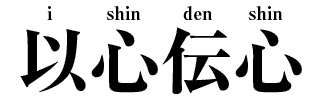
What does the name of our dojo “ishin denshin” mean?

Water: the elixir of life and the secret to optimal hydration
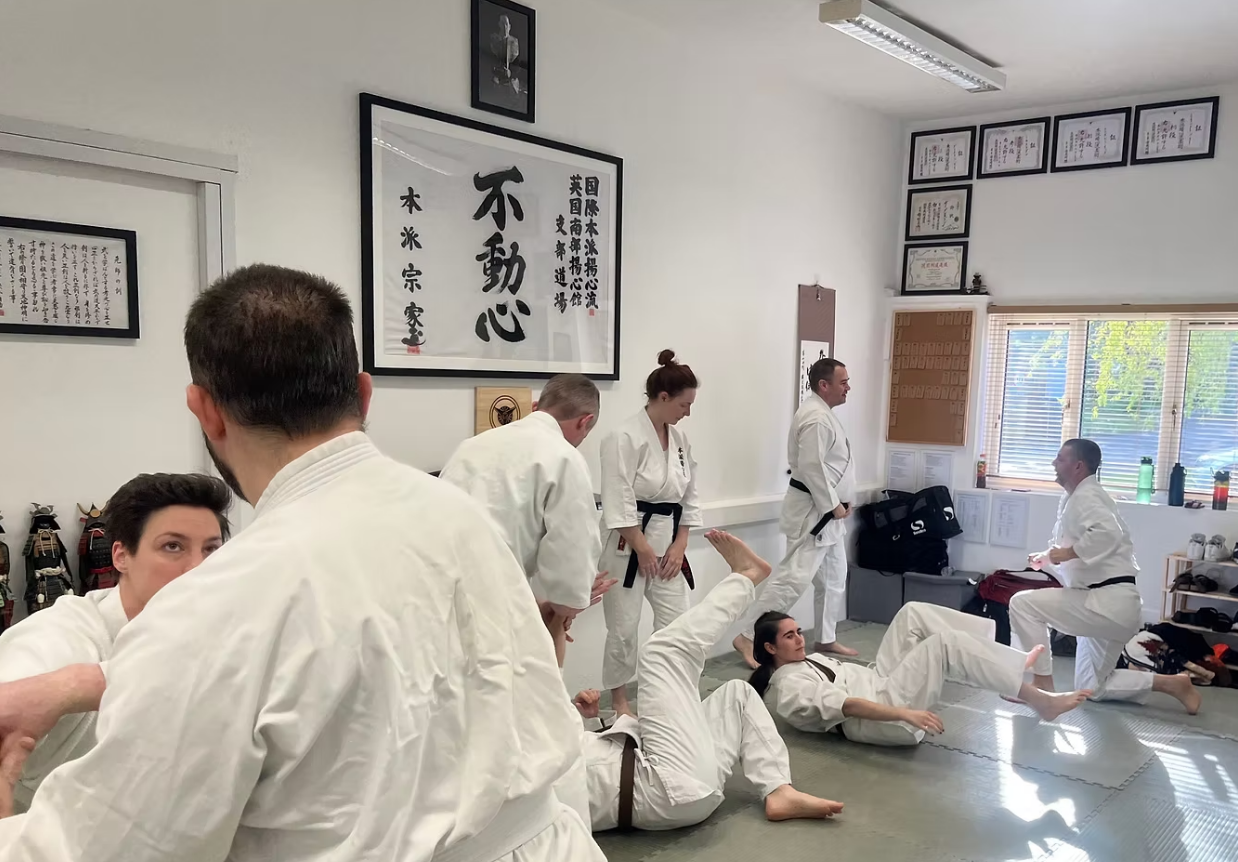
Sempai, Kohai and Dohai: respect for the hierarchical system
What is a dojo (道場)? | At the origins of the word
Mitsu no sen (three points) les trois principals initiatives
Karate Belts: Understanding the Order of Ranks
The concept of “Giri”, a profound moral commitment
Kyokun Martial – In karate there is no first attack.
The social economy at the heart of our martial arts center
