

William Kwai-Sun Chow was born in Honolulu on July 3, 1914. His father was Chinese and his mother Hawaiian. Being the eldest son, he inherited the right to learn Kung Fu from his father. His father «Hoon Chow» had emigrated from Shanghai to Hawaii. Hoon was raised and trained to be a Buddhist monk. This training included his family’s Kung Fu system, based on Shaolin Chuan-Fa, passed down from generation to generation from father to son.
When Hoon left China for Hawaii he abandoned monastic life. At the age of 7 William began his education with his father. As was customary in Chinese culture, foreigners were not allowed to teach martial arts. Therefore, when William began teaching in the 1930s, his class was limited to a select group of friends.
Over the course of William Chow’s lifetime, Hawaii became an amalgam of conflicting nationalities and ideas, and violent incidents were part of everyday life. Knowing martial arts meant survival, especially for Asians, fearful of the misfortune of chance encounters with drunken American soldiers.-
Without martial arts these men would never have been able to defend themselves against the Americans and Samoans who were generally physically larger than the Asians. Because Hawaii was a melting pot of various Asian cultures, it offered an unprecedented opportunity to study martial arts.
–
Although he had great knowledge of Kung-Fu when he met James Mitose in 1942, William Chow welcomed the opportunity to increase his knowledge in the martial arts.
Together they formed the “Personal Defense Club”. Mitose was chosen by Chow and the other members to manage the club. Mitose’s family system was called kosho Ryu kempo Jiu-jitsu.
–
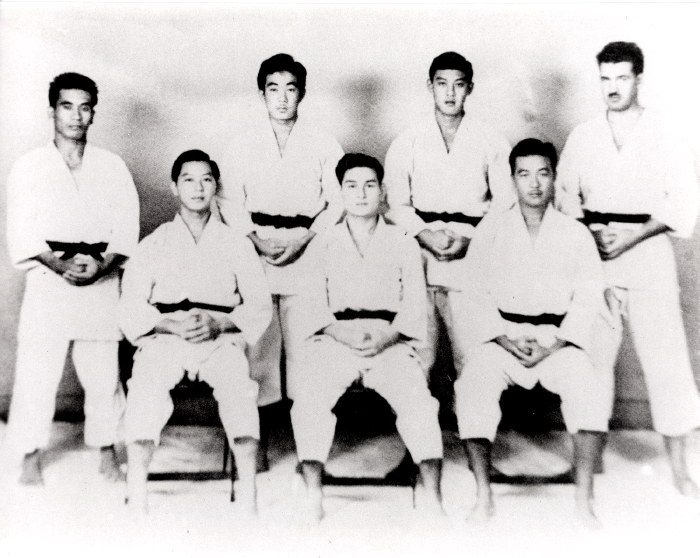 Mitose (born December 30, 1915 in Hawaii) was taken to Japan at age four to receive a formal education, returning to Hawaii in 1936 when he began teaching self-defense techniques to ROTC cadets at the University of Hawaii. During this period he also practiced Okinawan Karate and judo at Sensei Henry Okazaki’s dojo in Honolulu.
At the self-defense club, Chow and Mitose spent three years exchanging knowledge and improving techniques. Chow, along with Thomas Young, were assistant instructors. Young, in turn, also had experience in Kung Fu.
Around 1946 (dates differ depending on sources) Mitose graduated as a Chow black belt in the kosho Ryu system. Shortly thereafter they separated. Although it was not an amicable separation, they both learned much from each other and exchanged visits to each other’s schools until Mitose left Honolulu in 1953.
–
Chinese Kenpo
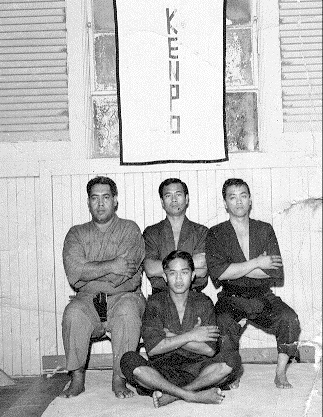
When Chow left the Mitose school, he called his system Kenpo Chinese Karate. Mitose had used Japanese scriptural terminology in Kempo (spelled with an m). Chow passed her on to Kenpo, to demonstrate that the system he taught was not the same as Mitose.
–
–
He also adopted the term “KARATE,” which was a term used to designate Okimawa systems and was what the general population knew as a martial art at the time. In the 1980s, when the term Ke(n)po became popular, Chow began using the Japanese kempo nomenclature, to separate his «Chinese Kempo Kara-Ho» system from the Kara-Ho subsystems.
The change in writing wasn’t the only one Chow made. Although there were many techniques in the mitosis system, they were mostly linear. Chow added circular techniques to the system. He was a constant innovator who was always experimenting with new ideas. Chow’s Chinese Kenpo emphasized techniques in a rapid succession of strikes on vital areas of the body.
The strikes remained simple and efficient. The long, flowery movements of kung-fu were no longer used. The hands were kept close to the body for defense and not on the waist. Kata were not initially taught in Chinese Kenpo. Finally the basics of developing strength and speed were practiced. Chow developed twelve «lines» (series in pairs) to simulate real-life self-defense situations. The defender had to respond to attacks with speed and multiple strikes with kicks, punches, twists and throws. Most of the training was full contact.
–Evolution
Chinese Kenpo has continued to evolve over the years. In the 1970s one of Chow’s black belts, Samuel Alama Kuoha, a California police officer, began making frequent trips to Honolulu to continue his training with Chow. Kuoha, who put his knowledge to the test on the tough streets of San Diego, had begun studying other martial arts and even graduated with a black belt in Aikido. He shared what he had learned with Chow and the result was the addition of “soft” techniques (characteristics of Aikido) to Chinese Kenpo.
–Pioneers
Due to his vast knowledge of martial arts and great fighting skill, Chow became a legend in Hawaii, with martial artists from all over the country falsely claiming to have been his students, just to boost his reputation. It must be understood that Chow was not a man of violent nature, but the violent times in which he lived sometimes called for violent responses.
–William KS Chow never had a school outside of Hawaii, so thousands of Kenpoists from around the world can easily trace their roots to him. Chow, the great innovator, taught his art to students who would become the founders of their own Kenpo systems.
–
–
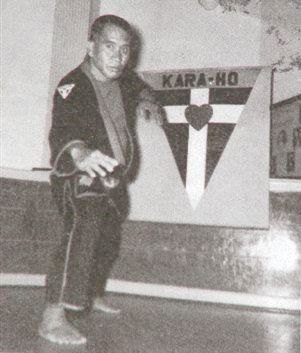
Adriano Emperado who trained with James Mitose and Chow. It was precisely in the 1940s that he received his black belt from Chow. In 1947, he joined Walter PYY Choo, a practitioner of Tang Soo Do, Frank Ordonez, of Jiu jitsu, Joseph Holck, a judoka, and Clarence Chiang, of Sil-Lum kung-fu. Together they formed the «Black Belt Club. For three years they trained together, thus creating «kajukenbo», which combines karate (ka), judo and jujitsu (ju), kenpo (ken) and Chinese boxing (bo). This system has become a very popular and highly efficient self-defense system.
–Kajukenbo gave rise to other systems, such as kenkabo, a combination of kenpo, karate and Kung Fu. Al Dacascos, a Kenkabo practitioner, is as famous as Emperado. He was the first star of the Kung Fu tournament. He founded his system, Wun Hop kuen Do in 1959. This system has a strong influence on kung-fu.
–Certainly the most famous of all Chow’s students was Ed Parker. Parker, a native Hawaiian, trained with Chow in the 1940s. He received his black belt from Chow in 1951. In 1954, while studying at Brigham Young University, Parker introduced kenpo to the American continent. He began teaching his Hawaiian colleagues. Finally, he was asked to demonstrate during halftime of a basketball game. The number of students grew to such an extent that he was forced to rent a gym. In 1956 he moved to Pasadena, California.
Over time, Parker added new elements to Chinese Kenpo and created his own system, which he called “American Kenpo Karate.” To this day, changes to the Parker system continue, innovating and always adding new concepts, thus making it the most practiced Kenpo style in the world.
–Of all of Parker’s students, the best known for developing their own systems were Ralph Castro and Tino Tuilosega. Castro, who had been a student of Chow and Parker, received his black belt in 1958. I continued to combine both systems and called it Shaolin Kenpo. Tino Tuilosega, another American kenpo black belt from Parker, founded «Lima Lama» in 1968.
Since kenpo schools are so prolific, it is evident that more subsystems will be developed over time.
–The legend lives on
On September 21, 1987, William KS Chow died suddenly due to a reaction to a prescription. Chow passed command of the system to his student Samuel Kuoha, who currently resides in California. With Kuoha, Kara-Ho kenpo has experienced unprecedented growth. As Parker’s system, Castro, Emperado and Kuoha continue to develop and expand, they are all a testament to the vision and greatness of one of the greatest and most innovative martial artists of the 20th century, William Kwai-sun Chow.
latest posts published
What does the name of our dojo “ishin denshin” mean?

Water: the elixir of life and the secret to optimal hydration
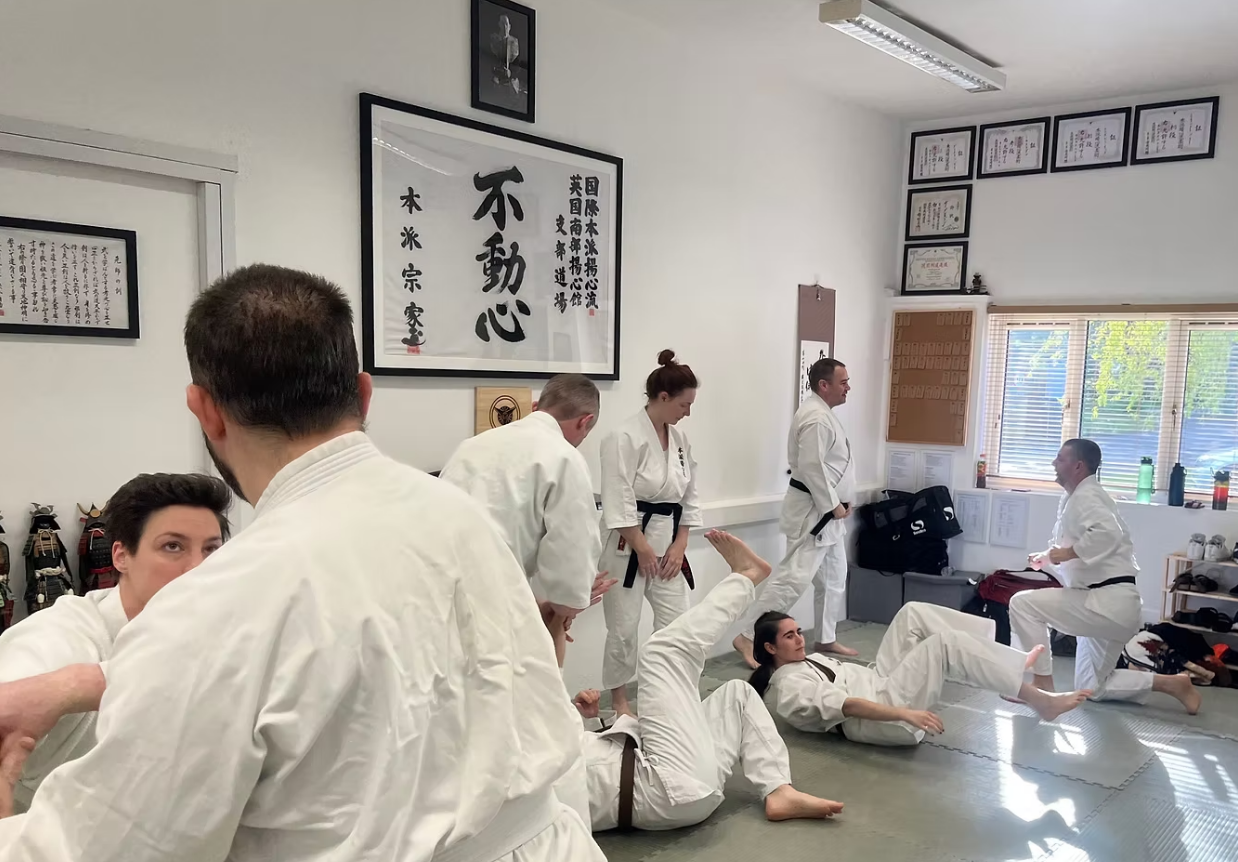
Sempai, Kohai and Dohai: respect for the hierarchical system
What is a dojo (道場)? | At the origins of the word
Mitsu no sen (three points) les trois principals initiatives
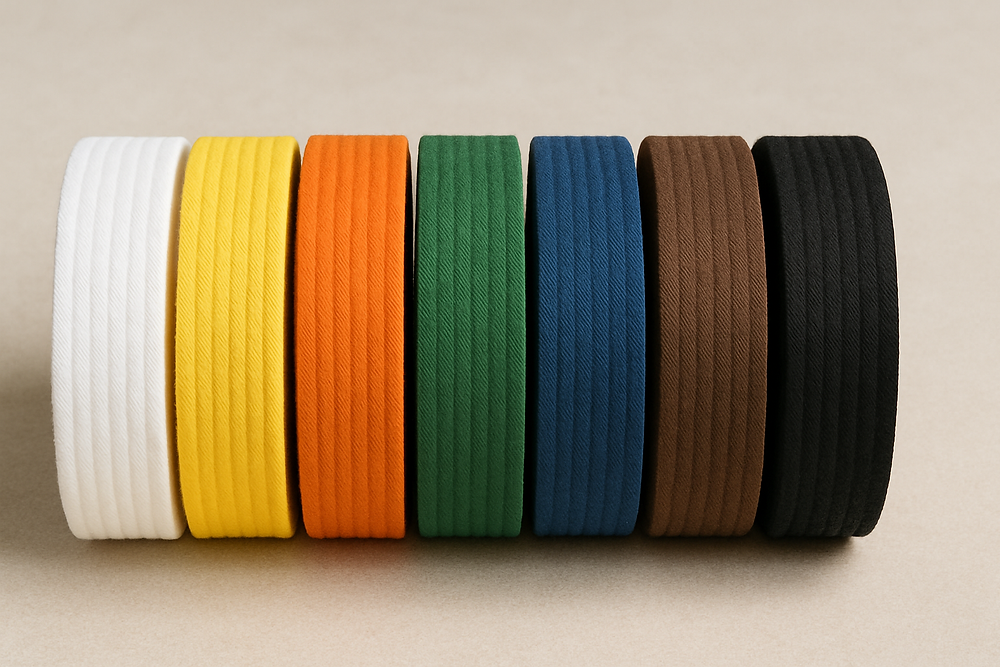
Karate Belts: Understanding the Order of Ranks
The concept of “Giri”, a profound moral commitment
Kyokun Martial – In karate there is no first attack.
The social economy at the heart of our martial arts center
