

I have always been fascinated by Kenpo and Jeet Kune Do.
The idea of stopping an attacker through a quick and fluid succession of strikes on vital points has always made sense to me. It also makes sense that I like both Kenpo and Jeet Kune Do, as the two share many ideas and concepts.
But why are they so similar? Well, both were created by men whose thoughts and understanding of martial arts were influenced by the same ideas and the same people. Both wanted to improve what they considered an outdated style of defense.
They met regularly, exchanged information, and at one point even shared a house (Bruce Lee spent four months at Parker’s house in Pasadena during the 1964 IKC). So to think that perhaps they experimented, exchanged ideas and learned from each other is not far-fetched at all.
Let’s take a look at what we know about the two men. Both Ed and Bruce had a tremendous amount of information and techniques to share with each other, as they both absorbed as much as they could from as many people in different styles of martial arts.
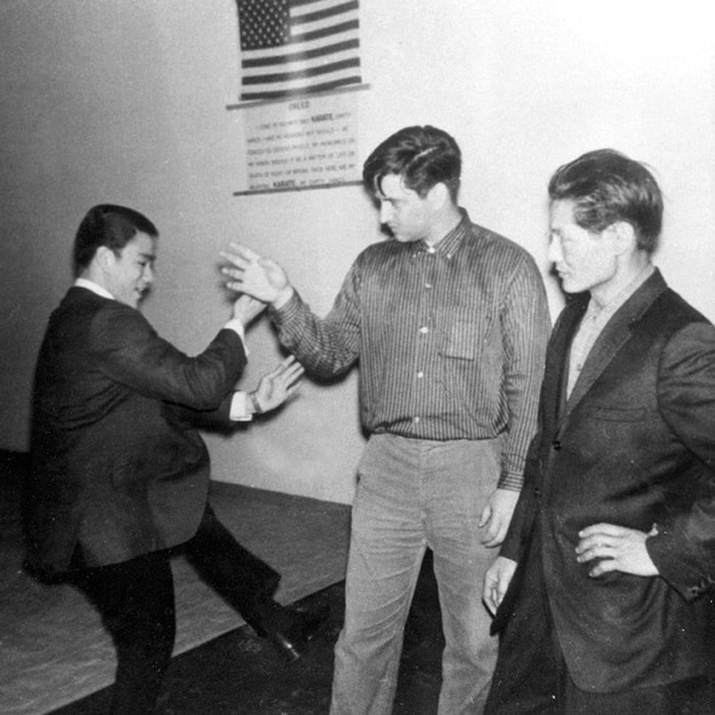
The beginning of the two men’s journey in martial arts
Parker began his martial arts training in judo at the age of twelve and received his black belt in that style at the age of eighteen in 1949. He also trained in Western boxing before beginning to train in kenpo and later received black belts in jiu-jitsu and Karate.
After receiving his black belt in Kenpo, Ed Parker moved to California and spent time with some of the best martial artists of the time, sharing information and learning from each other. And he was involved with Ark Wong (patriarch of kung Fu in the United States), Haumea Lefiti ((Lohan Chuan), Jimmy H. Woo (San Soo) and Lau Bun (Choy Li Fut). These martial artists were among the best of their styles.
Through his Chinese-Hawaiian teacher (William Chow) and through contact with these people, Parker became interested in Chinese styles which influenced the construction of his Kenpo. Ed later developed a system he called American Kenpo, around the same time Bruce Lee was working on his Jeet Kune Do.
Bruce Lee began Wing Chun at age 16 and later trained with his brother Edward, who was the coach of the boxing program at St. Francis Xavier School in Hong Kong. In 1958, Bruce ended up winning a school boxing tournament, knocking out the previous champion. Bruce also trained with his other brother Peter, who was a fencing champion at La Salle College, also in Hong Kong.
Once in the United States, Bruce met Chinese martial artist James Yimm Lee, who eventually introduced Bruce to Ed Parker. Bruce also trained a bit with taekwondo master Jhoon Goo Rhee (exchanging information on movements and techniques). Bruce gathered all his knowledge and created Jeet Kune Do at the same time that American Kenpo was being created.
Two greats meet
Between 1963 and 1964 Parker and Bruce met and became fast friends. Parker helped Bruce gain national attention by introducing him to the world of martial arts at the International Karate Championships (IKC) in Long Beach, where Bruce demonstrated his legendary one-inch punch.
This was also where Bruce Lee was discovered by Hollywood, which led to his role as a kato and helped him become a martial arts superstar. Ed Parker also suggested that Bruce talk to and learn from all the key people of the different styles he was communicating with at the time and introduced Bruce to the leaders of many martial arts.
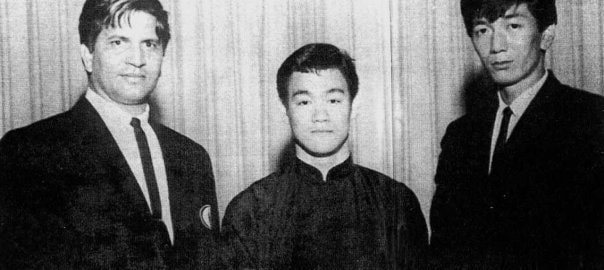
Evolution in the understanding of martial arts.
As an example of how Bruce has changed his beliefs, there was a time when he was very confident in hitting using the middle knuckle of one finger, protruding firmly above the others. Bruce was a big fan of this punch until one day he seriously injured himself using it.
Subsequently, he became a fierce critic of the use of this scam. Bruce was now completely against classical forms and replaced them with more flexible forms. It was more of a self-expression type of movement and Ed Parker adhered to these concepts, independently, at the same time.
Parker was moving more towards Chinese movements, but away from its obvious forms like Hung Gar.
Shapeless shape concept
Almost everyone involved in martial arts knows Bruce Lee’s famous beliefs about being against form. What most don’t realize is that he wasn’t completely against forms. He himself practiced forms of various styles.
Bruce Lee realized that he could not teach a formless style directly to martial arts beginners. The form of a style had to be mastered first, and only then could the student begin to experiment with abandoning the form.
Ed Parker came to the same conclusions with Kenpo and moved his teaching system in this direction. This style of formless form could not be taught to a new student from the beginning and he realized that most of his students would reject the concept of moving to this new style of kenpo. Parker saw his art as a path to this “formless form.”
If you look at Parker’s plans for Kenpo, which involve the concept of knowledge networks, you will see that they are very similar to the fluid movements and situation-based attacks of Jeet Kune Do: a formless form.
So are they sister arts?
What we know is that these two styles were created almost simultaneously by two people with very similar backgrounds, as they both trained in different styles. We know that they exchanged information and learned from the same group of other martial artists to gain knowledge.
We know that Ed Parker and Bruce Lee often talked about their ideas, exchanged information, learned, experimented and tested their martial knowledge.
I think denying the way they both influenced each other is denying the obvious. They both created what they believed was the best style they could bring to the table based on their knowledge.
Ultimately we know that in the same period of time they both came to the same belief that, to be the best, one must practice a formless form.
latest posts published
What does the name of our dojo “ishin denshin” mean?

Water: the elixir of life and the secret to optimal hydration
Sempai, Kohai and Dohai: respect for the hierarchical system
What is a dojo (道場)? | At the origins of the word
Mitsu no sen (three points) les trois principals initiatives
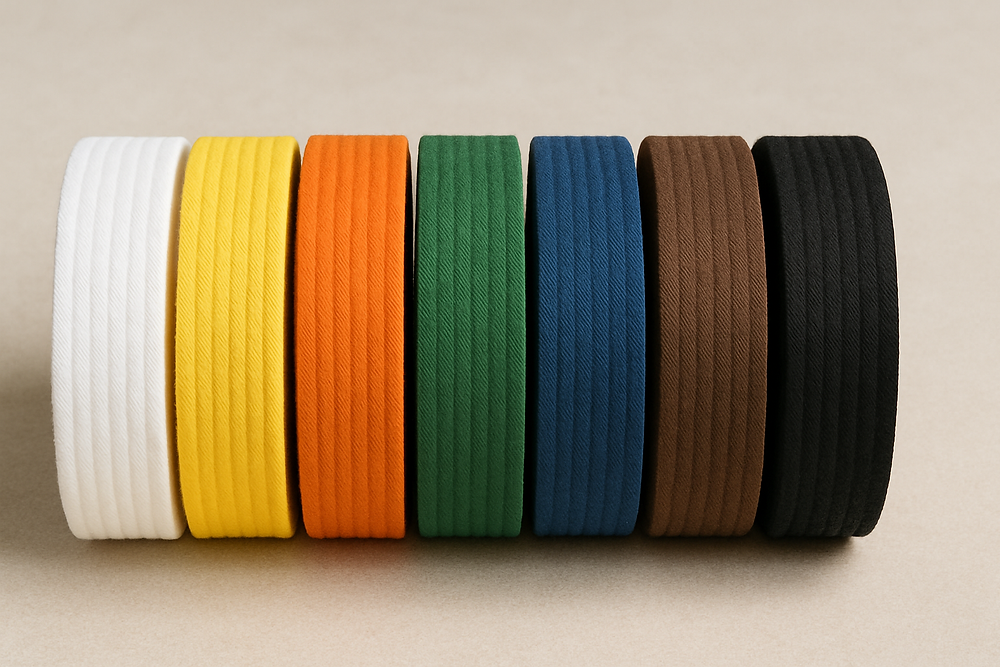
Karate Belts: Understanding the Order of Ranks
The concept of “Giri”, a profound moral commitment
Kyokun Martial – In karate there is no first attack.
The social economy at the heart of our martial arts center
