
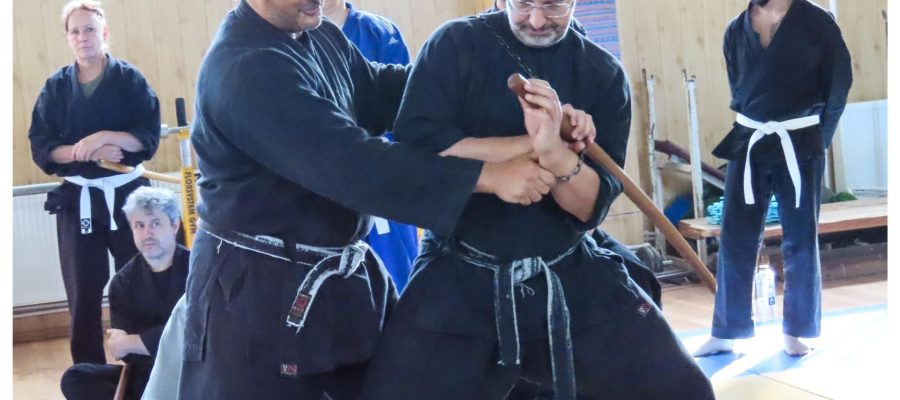
No matter what event you are about to face in life, the «nights before» are just as crucial (if not more) than the «mornings after.» 🙂 Hi, I was thinking tonight that we are just 3 weeks away from saying farewell to Doctor Kacem Zoughari (the seminar will happen from November 1st to 3rd at the Raiden Dojo – click here for details). I’m already feeling a bit of «anticipation excitement,» and I can’t wait for the seminar to discover what other great things I won’t be able to do. 🙂 I’m joking, in some way! Still reflecting on the wonder of the three-day seminar, I remembered an interview by Doctor Kacem Zoughari. His words really shook me. Because of this, I stored them away somewhere, so they wouldn’t ring in my mind, but I pondered over them now and then trying to understand them. In that moment, I felt personally affected by his words, and it was not a pleasant feeling at all. But time has moved on, things have calmed within me, the waters have become clearer, and now I can reflect on them with more distance.
Waiting for the seminar with Dr. Kacem Zoughari
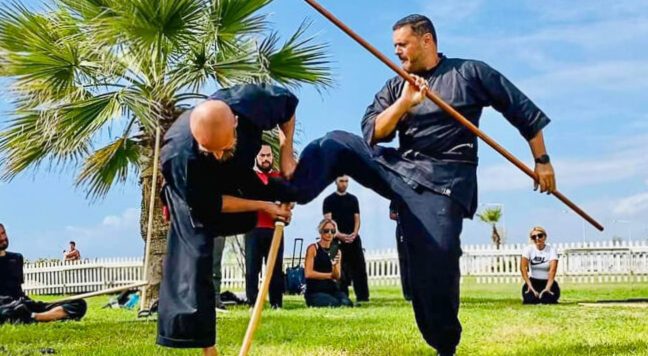
he said Doctor Kacem Zoughari Like this: «There are those who idolize, those who try to understand rather than do. For the latter, theory is everything, but they will remain forever limited”.
I admit, the above words still put me in a bit of trouble. Obviously the last two words bother me the most. They are extremely powerful. They have the power of condemnation. But at the same time they can awaken you to reality. I have always had this desire, this tendency to understand things, people, situations in their depth. Analyze. And yes, I often miss opportunities because I sit back and overanalyze.
In training I’m like a sponge trying to absorb as much information as possible. Then I try to do what Sensei showed us. Obviously it doesn’t work. But trying the second and third time, I begin to become aware of the way my body moves, of some blocks (that I can’t breathe, that there are tensions in my knees, ankles, etc.). And then, I start to think, to focus on the problems identified in an attempt to find a solution to solve them. It’s very difficult to fine-tune all the parts of yourself, bring them all into play and act in unison. A few times I succeeded. I had that feeling of flow, of a light but well-grounded body moving naturally. So I know what Sensei means when he speaks Flow. The problem is that it worked for me occasionally. There were about three or four lucky accidents that I couldn’t repeat, no matter how much I practiced the respective movements/exercises. It seems that the saying that governs my life is: “once in a lifetime.” I mean, I just did one exercise and felt good inside and out, and then I went back to my established clumsiness.
It’s true that during training I take breaks to think. I’m a little introspective and try to visualize the movement and understand why I can’t get it right. I realize it’s not the happiest way to work, but being clumsy and uncoordinated, I think it’s the only option for me. Perhaps Doctor Kacem Zoughari he’s right when he talks about a «remain eternally limited», eternally caught in doubts, questions and dilemmas. Although I would like to be able to prove that this is not the case. Who knows, maybe I will… in another life. 🙂
The culmination is that there is always this contradiction between mind (who freaks out and doesn’t know what to do and stops me in the middle of the exercise by putting a rotating circle on my forehead that says: «loading information… searching, please wait«) AND corp (which maybe it would be better if you gave it a chance – which I don’t know how to do it yet).
I hate that we don’t value our senses or heartbeats for the simple fact that they exist beyond our conscious effort. Some see better, others hear better. Others need to touch more to understand better… There are moments (rare though) when my brain sincerely hates me. I feel in every part of my body the hostility that comes from inside me.
Another extremely important aspect of practice (in both ninjutsu and kenjutsu) is one that Sensei emphasizes the idea of »being present, here and now». There is a lot of patience, there is a lot of calm, there is a lot of observation, a lot of empathy in this attitude that Sensei talks to us about periodically. It is very difficult to reach this state. Especially for those who don’t know how to live in the present. And if we look around, we notice that more and more people live in the present with syncope. I live it in a combative and revengeful way. Always on the offensive. Offend and offend. I experience it in an opaque way. Locked in their bubble. Self-centered and without empathy.
The theme of the seminar at the beginning of November is flow. I’m curious to know if I will ever be able to feel that inner flow again or if I will be left with the memory of the 3-4 times I felt it…»Be like water! Be fluid!” he keeps repeating Sensei Cristian Laiber in training…
But… what is water really like?!
He is fluid, without form or with any form, he is malleable, he is gentle but he is also tough, he is not vindictive, he is calm, he is patient. The water stirs when there is an external challenge (wind, earthquake, etc.). Sounds simple, right?!
The problem is that water, for humans, is not necessarily a familiar environment. Even if, paradoxically, we are mostly water, as Sensei keeps telling us. But the willingness of this substance to exist in so many ways is foreign to the mind of man. Or at least for mine.
When you get angry and punch a wall, a tree, the ground, you end up with bruises, in pain. If you play with fire you get burned, you hurt yourself. It is much easier to relate to, to understand such elements because there is a physical reaction to contact with them. Only the air ignores you when you try to punch it to calm your nerves.
But water is another story. If you hit the water, it “swallows” you, envelops you, envelops you, “contains” you. Water is an environment of patience, of calm, of infinity. And it is very difficult to understand and assimilate this quality. One more reason to look forward to the seminar conducted by Doctor Kacem Zoughari. By the way, the seminar is open to everyone (no matter if they are advanced or beginners). Don’t miss the chance to see a true master of traditional martial arts at work!
latest posts published
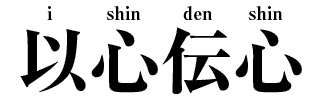
What does the name of our dojo “ishin denshin” mean?

Water: the elixir of life and the secret to optimal hydration
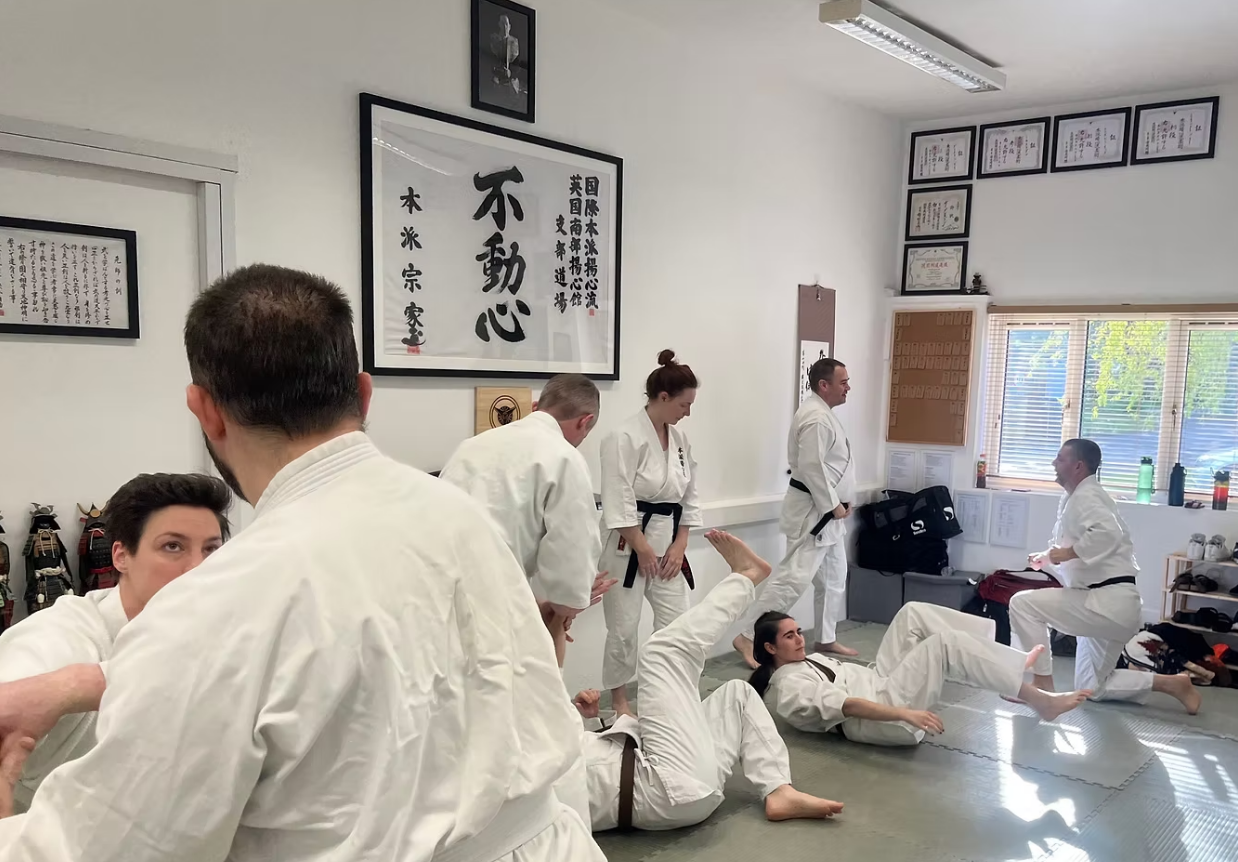
Sempai, Kohai and Dohai: respect for the hierarchical system
What is a dojo (道場)? | At the origins of the word
Mitsu no sen (three points) les trois principals initiatives

Karate Belts: Understanding the Order of Ranks
The concept of “Giri”, a profound moral commitment
Kyokun Martial – In karate there is no first attack.
The social economy at the heart of our martial arts center
