
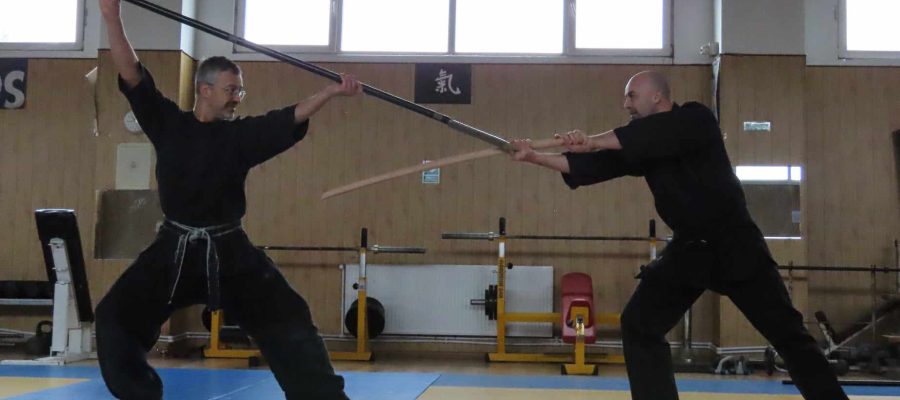
I chose one Say From Kukishinden Ryu i.e HitoTsuki aiho a method of first attack
which I find extremely useful for learning dodging skills on the spot, understanding alignments and axes, as well as flows from one posture to another. And I worked on this kata for more than 4 hours because a traditional Kata is a springboard for many topics of study, strategy, attack and defense in many angles and directions. The techniques can be performed, depending on the level of the practitioners, on the spot, in retreat, in advance, diagonally in combination with the 3 levels Jo – Chu – Ge. First I explained the correct attack of those who fight with the sword against the spear. The apparent disadvantage of length can easily be counteracted with the correct distance, angle and timing. And I have also seen how even those with the sword can win when these details are well understood. Because we are talking about a strategy, often counterintuitive…

I worked on all this and many others such as fear
the degree of preconception in the kata, the clear motivation of the techniques, building gradually and above all with the partner’s feedback. And I’m happy that no one got hurt even though they were quite dangerous techniques… Perhaps the initial part in which I explained what it is and how to do it contributed to this bitethat little meditation that acts as a buffer zone between the outside of the dojo and the dojo perceived as «sacred space” in which you look for your “path” and your inner balance… I think that in this ever-fast world where superficiality is at the top, we need ceremony, sacredness, a return to ourselves.
The traditional martial arts teaching system also greatly involves the emotional brain or the limbic system, especially recalling some techniques that start from the somatic and amplify fear and survival instincts in a controlled way. But this part of the brain is resistant to change because it prioritizes security and familiar patterns.
Ceremony of any kind bypasses the analytical mind and directly engages the limbic system. Martial arts Kata, especially with weapons, symbolism, breathing and specific intention establish direct communication with the emotional brain with its «language» of archetypes and sensory experiences. And this practice can be a real bridge to change and personal improvement.
I realize now more and more that each Kata is a story in itself and this is very important. We are beings who live through stories, and the emotional brain responds better to symbols and metaphors than to logic. Doing a Kata, such a combination of ritual movements passed down and perfected for hundreds of years, is practically a form of ritual ceremony, important because it will create new narratives that align with the desired changes within us.
There are things that I partially mentioned in the seminar, but I am also planning a seminar on this topic – on the ritual history in the Kata martial arts, on the archetype that touches us.
latest posts published
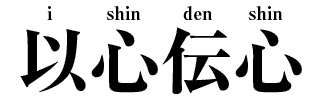
What does the name of our dojo “ishin denshin” mean?

Water: the elixir of life and the secret to optimal hydration
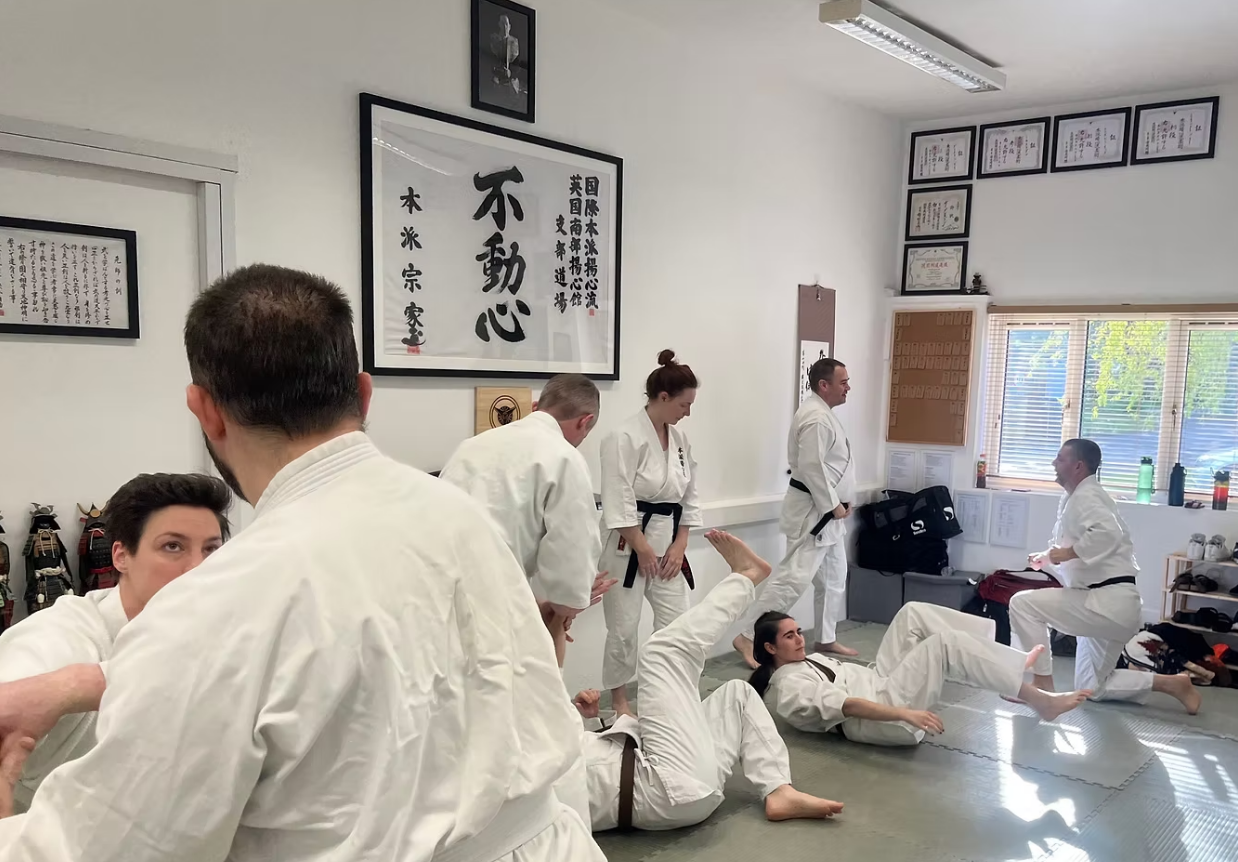
Sempai, Kohai and Dohai: respect for the hierarchical system
What is a dojo (道場)? | At the origins of the word
Mitsu no sen (three points) les trois principals initiatives
Karate Belts: Understanding the Order of Ranks
The concept of “Giri”, a profound moral commitment
Kyokun Martial – In karate there is no first attack.
The social economy at the heart of our martial arts center
