
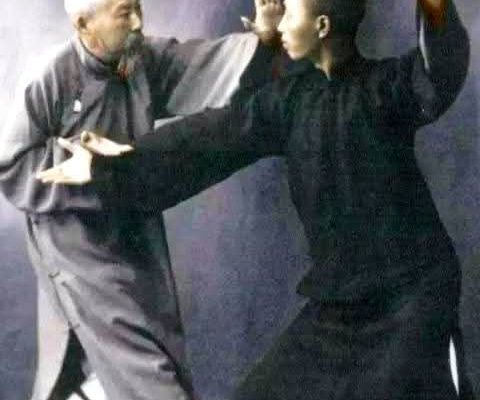
A classic example of Tai Chi commercialization in the Republic of China: Chen Weiming and the Zhiro Club
Source: prof. Li Tongguo, Hangzhou University, Zhejiang.
Chen Weiming AND Zhirou Club of Tai Chi pioneered the use of marketing to make Tai Chi a popular and respected practice in China. In Shanghai, during the Republic of China, Tai Chi was a little-known practice, but with the help of clever marketing strategies, Chen managed to turn it into a mainstream activity. Here’s how he did it:
Differentiated marketing (market positioning)
Chen Weiming chose to focus on the «health preservation» aspect of Tai Chi, which distinguished his school from other martial arts institutions. Instead of offering a wide range of martial styles, he emphasized the health benefits and life-prolonging idea of Tai Chi. This unique and innovative approach has attracted a wide audience. In comparison, other schools, such as the Jingwu School founded by Huo Yuanjia, offered various types of martial arts, including Western sports, but lacked this holistic approach.
Cultural «packaging».
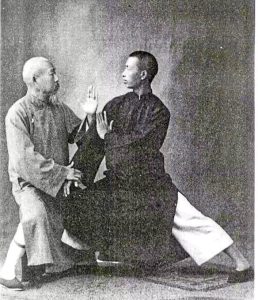
Chen Weiming he used the tradition of Tai Chi to build a powerful image. He promoted the figure of Zhang Sanfeng (11th century Taoist mystic) as a symbol of Tai Chi and his commemorative activities became an important element in creating a strong cultural link with the past. Every year on April 6, Zhang Sanfeng’s birthday, the Zhirou Club held commemorative ceremonies that attracted public attention and strengthened the club’s image. (Furthermore, the practice was carried out with long dresses which were then fashionable in the upper middle class area and made practitioners feel a sense of belonging to a higher social sphere closer to their «Chinese» origins)
Marketing efficiency in healthcare
Another key element of Chen Weiming’s marketing was the effectiveness of Tai Chi. He positioned Tai Chi as a health preservation method, providing clear evidence to support this claim. In his first book, Tai Chi Chuan, he recounted his personal experiences and those of his friends who managed to overcome various health problems thanks to Tai Chi. Furthermore, in his third book, The Benefits of Tai Chi, he detailed the effects of Tai Chi on the health of his students. These were essential to convince the public of the effectiveness of the practice.
Price positioning
Chen Weiming made Tai Chi accessible to a wide range of people, including the working class. It has set course prices by category, depending on the student’s program:
• 10 yuan per month for specialized courses,
• 6 yuan for 3 sessions per week,
• 4 yuan for 4 sessions per week,
• 2 yuan for one session per week.
(In the 1920s, most workers in Shanghai had a monthly salary of around 20 yuan, so they weren’t exactly cheap courses, but the pricing structure still allowed plenty of access)
Taiji Brand Awareness!!
Chen Weiming was very careful to protect the reputation of Club Zhirou. In the club’s rules it was clearly stated that only those who had completed the club’s courses or passed the club’s exams could teach or perform the club’s techniques in its business. It also established that Chen Weiming and Chen Zhijin were the only teachers authorized to teach, thus protecting the exclusivity and quality of teaching.
Using the media and the celebrity effect
Chen Weiming has successfully used mass media advertising. He placed advertisements in influential Shanghai newspapers such as «Shen Bao», and in the advertisements he mentioned famous Shanghainese people such as Wang Yiting and Nie Yuntai who studied in his club and this helped a lot to create a prestigious image for the club. Some of these VIPs were former classmates or acquaintances of acquaintances, and a famous judge of the time, Guan Xuzhi, was invited to become the club’s honorary president!
Nie Yuntai was the grandson of Zeng Guopan, a prominent Qing Dynasty official and successful businessman, former president of the Shanghai Chamber of Commerce!
Marketing results
Zhirou Club grew rapidly, moving to larger and more spacious premises, and began to establish branches in Suzhou and Guangzhou. He also collaborated with government institutions and organizations, training more than 10,000 students in 1937. The activity was so successful that Tai Chi became a popular practice in Shanghai, and by 1929 «Tai Chi became a popular sport throughout the country.»
The long-term impact
Chen Weiming made Tai Chi a popular practice and his name became the symbol of Tai Chi. In 1931, Sun Lutang, the great martial arts expert (Taiji, XingYi, Bagua), praised Chen’s contributions, stating that «40 years ago only very few practiced Taiji Quan.» «A strong drum needs a strong hammer to hit it. Chen Weiming is this strong hammer, and Taiji business promotion is the power with which this strong hammer hits.» Sun Lu Tang added.
Therefore, the commercialization of Tai Chi under the leadership of Chen Weiming was a huge success, and the Zhirou club remained a model for all those who wish to promote Tai Chi as a martial art and health method. »
latest posts published
What does the name of our dojo “ishin denshin” mean?

Water: the elixir of life and the secret to optimal hydration
Sempai, Kohai and Dohai: respect for the hierarchical system
What is a dojo (道場)? | At the origins of the word
Mitsu no sen (three points) les trois principals initiatives

Karate Belts: Understanding the Order of Ranks
The concept of “Giri”, a profound moral commitment
Kyokun Martial – In karate there is no first attack.
The social economy at the heart of our martial arts center
