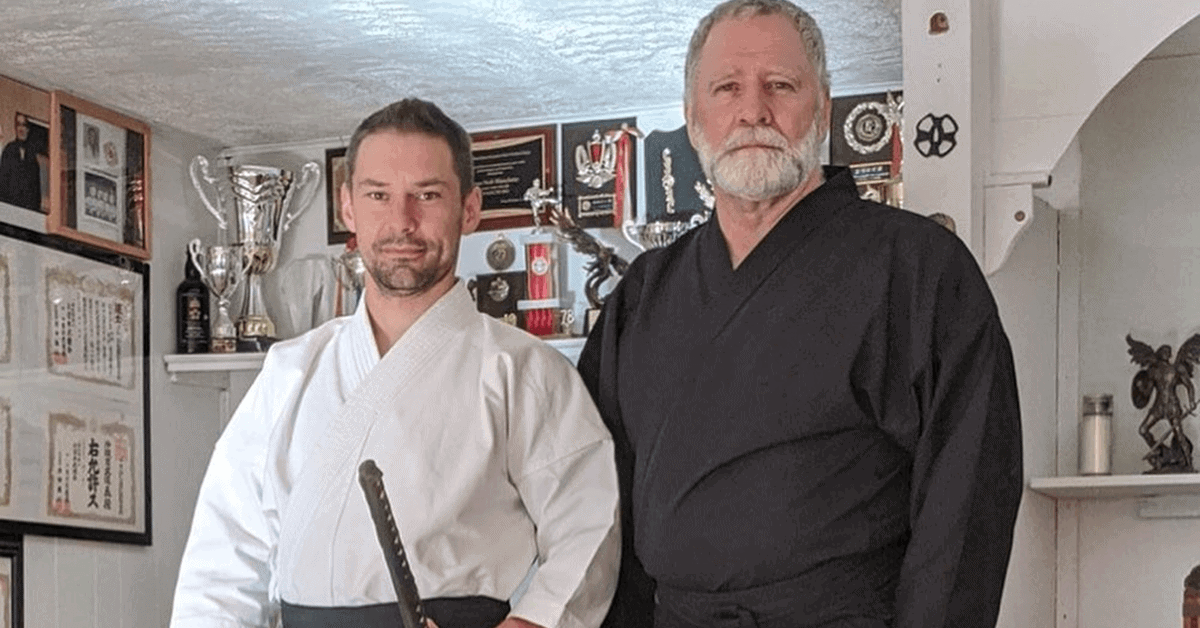
You have just opened the door of a Shotokan Karate dojo, or perhaps you have been practicing for a while, and you hear «Hajime!», «Yame!», «Mokuso!»… Japanese is the lingua franca of Karate, and understanding these terms is essential not only to follow the instructions, but also to fully immerse yourself in the richness of this martial art.
Whether you’re a beginner trying to understand the basics or an experienced practitioner looking to refresh your knowledge, this glossary of Japanese terms commonly used in Shotokan Karate (and often other styles) is for you.
Why learn Japanese terms in karate?
Beyond simply understanding commands, knowing Japanese vocabulary in Karate allows you to:
-
Respect tradition: Karate is a Japanese martial art and the use of its original terminology is a sign of respect towards its founders and its history.
-
Better understand the concepts: Some terms like «Zanshin» or «Kime» have no direct equivalent in English and contain profound concepts.
-
Improve your practice: Understanding the nuance of a term can influence how you perform a technique or approach an exercise.
-
Facilitating universal communication: If you travel or change dojos, Japanese terminology remains a common basis.
Karate Glossary: Basic Techniques
Directions and heights
-
hidari : Gauche
-
City : RIGHT
-
Mae : front/forward
-
Ushiro : Backwards
-
Age : Return
-
Yoko : Lateral side
-
Ura : On the contrary or in reverse
-
Gyaku : Technique performed on the side opposite the front foot
-
Honey : While crossing in front of the karateka
-
Jordan : High/above the shoulders
-
Chudan : Medium level/shoulder strap
-
Gedan : Low level/below the belt
Positions and movements
-
Zenkutsu Dachi : Lunges forward, front leg bent, back leg straight
-
Kokutsu Dachi : Lunge back, 70% of body weight on back leg
-
Heisoku Dachi : Stand with your feet together
-
Musubi Dachi : Standing, heels together, toes apart
-
Reinoji Dachi : Stand with one foot in front of the other in an «L» shape.
-
Teji Dachi : Stand with one foot in front of the other in a “T” shape.
-
Heiko Dachi : Stand with feet apart and parallel
-
Hachiji Dachi : Stand with your feet facing outward and hip-width apart
-
Uchi Hachiji Dachi : Feet facing outwards
-
Kiba Dachi : Pilot position
-
Shiko Dachi : Place your sumotherium
-
Fudo Dachi : balanced fighting position
-
Nekoashi Dachi : Location where you chat
-
Kosa Dachi : Crossed feet position
-
Dachi Motorcycle : Fundamental position
-
Sanchin Dachi : “Hourglass” position.
-
Hangetsu Dachi : “Hourglass” position enlarged
-
Tsuruashi Dachi : Standing on one leg
-
Ayumi Ashi : Take a step forward
-
Hi Ashi : Take a step back
-
Yori Ashi : Not slipped
-
Tsugi Ashi : Not chased
-
Okuri Ashi : Double step
-
Mawari Ashi : Movement by rotating the front foot
-
Ushiro Mawari Ashi : Move by rotating the back foot
Defense techniques
-
Gedan Barai : Low defense with overwhelming move
-
Jodan Age Week : High defense with upward movement
-
Soto Week : Defense in an external/internal movement
-
Nude female : Defense in an in/out motion
-
Shuto Uke : Defense with the cut of the hand
-
Have a good week : Hand immobilization
-
Teisho Uke : Defense with the palm of the hand
-
Haisho Uke : Defense with the back of the hand
-
Juji Uke : Double defense with crossed arms
-
Kakiwake Uke : Double defense with expulsion
-
Carrot Week : Double defense, rear arm in protection
-
Hi Uke : Double defense with parallel arms
-
Sukui Uke : Defense by draw
-
Nagashi Uke : Brushed defense that accompanies the attack
-
Otoshi Uke : Downward defense with the forearm
-
Cooking Week : Wrist defense
Fist attacks
-
Oh Zuki : One-Step Tracking Punch (Move Forward)
-
Gyaku Zuki : Punch in the back
-
Choku Zuki : Basic Punch
-
Maete Zuki : Strike with the front fist
-
Kizami Zuki : Front punch that clears the torso
-
Tate Zuki : Punch with vertical fist
-
Ura Zuki : Fist, palm facing up
-
Kagi Zuki : Hook punch
-
Mawashi Zuki : Round punch
-
Yama Zuki : Double punch, Jodan/Gedan
-
Morote Zuki : Double punch at the same level
-
Nukite : Direct attack with the hand
-
Zuki age : The fist goes up
Attacks on foot
-
There’s Geri : Front kick
-
Mawashi Geri : Roundhouse kick
-
Yoko Kekomi : Side kick while destroying
-
Yoko Keage : Ascending side kick
-
Mikazuki : Increasing calcium
-
Ushiro Geri : Kick backwards
-
Kakato Geri : Heel strike up and down
-
Smoke Komi : Crushing football
-
Fumikiri : Low kick cut
-
Toby Gary : Jump kick
-
Ashi Barai : Balayage
-
Ura Mawashi Geri : Backhand kick
-
Ushiro Mawashi Barai : Rubbish rolling from the rear
-
Back alignment : Knee strike
-
Nami Gaeshi : Wave kick
Essential Japanese terms at the dojo
Here is a list of the most frequent Japanese terms, classified for better understanding.
Greetings and polite expressions
-
Osu (Oss): Versatile interjection. It can mean «yes», «I understand», «hello», «goodbye», expressing respect, commitment, patience. It is a contraction of “Oshi Shinobu” (to push and endure/persevere).
-
Onegaishimasu: “Please” (formal). Make a respectful request.
-
Arigato Gozaimashita: “Thank you very much” (formal, for a completed action).
-
Rei: Hello, sign of respect.
-
Usage: “Shomen ni rei” (greeting in front, often the wall of honor), “Sensei ni rei” (greeting to the teacher), “Otaga ni rei” (mutual greeting between students).
-
The place and the people
-
Dojos: “Place of the Way”. The place where martial arts are practiced.
-
Sensei: “He who was born first”, instructor, master. Refers to the main teacher of the dojo.
-
Senpai: Older student, older in practice.
-
AS : Younger student, younger in practice.
-
Shomen: It often refers to the dojo’s honor wall where the founder’s portrait or a calligraphy is located.
Basic commands during training
-
Hajime: Start!
-
Sky: Stop!
-
Mawatt: Tour! U-turn, pivot.
-
I: Get ready! Waiting position before an exercise.
-
Mokuso: Silent meditation. Often practiced at the beginning and end of lessons to focus or clear the mind.
-
Seiza: Sit correctly, on your knees, with your buttocks on your heels.
The pillars of practice (Kihon, Kata, Kumite)
-
Kihon: Basic techniques, foundations. Repetition of postures, blows, blocks.
-
Say: Form, model. Codified sequence of techniques that simulate combat against imaginary opponents.
-
Bunkai: Analysis, decomposition. Practical application of kata techniques with one or more partners.
-
Kumite: “Hands clasped/crossed”, fighting. Applying techniques with a partner.
-
Gohon Kumite: Five-phase conventional combat.
-
Kihon Ippon Kumite: Conventional combat in one step.
-
Jiyu Kumite: Free fight.
-
Key concepts
-
Kiai:
-
Squad :
-
Zanshin:
-
Sharp :
-
Do :
-
Meaning: Way, path. Emphasizes the aspect of personal and spiritual development (e.g. Karate-Do, the way of the empty hand).
-
-
Kun Dojo:
Ranks and clothing
-
Kyu:
-
AND :
-
Obi:
-
Gi (Karate):
Conclusion: The journey begins with understanding
Mastering this Japanese vocabulary is a further step in the «path» of Karate. This will enrich your practice, improve your communication with your Sensei and your partners, and connect you more deeply to the spirit of this martial art. Don’t be afraid to ask the meaning of a term you don’t understand. Every word learned is a new key to unlocking the secrets of Shotokan Karate.
latest posts published
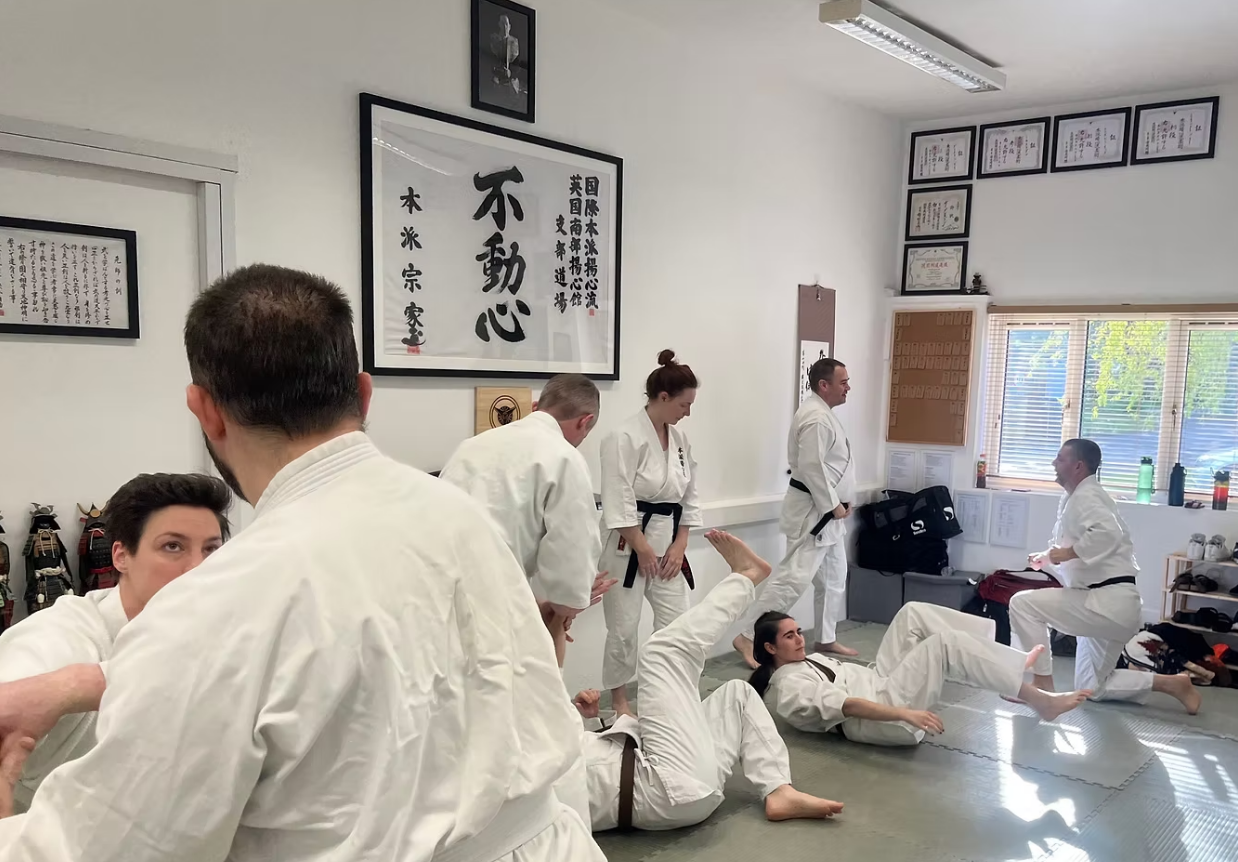
Sempai, Kohai and Dohai: respect for the hierarchical system
What is a dojo (道場)?
Mitsu no sen (three points) les trois principals initiatives
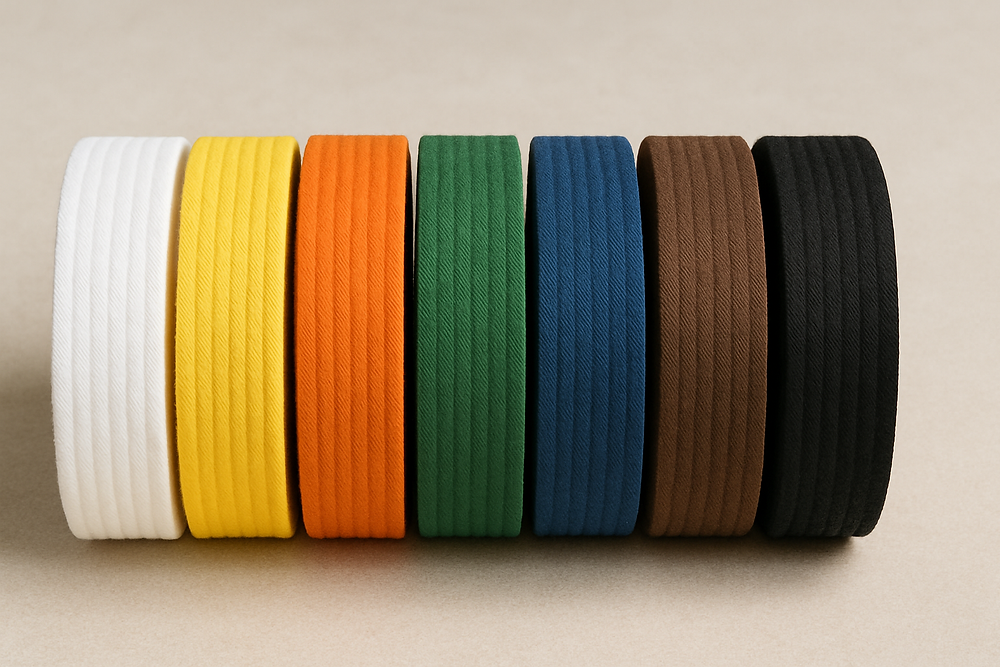
Karate Belts: Understanding the Order of Ranks
The concept of “Giri”, a profound moral commitment
Athlete Imaging | Martial Arts Larry Foisy
Black belts, keepers of knowledge
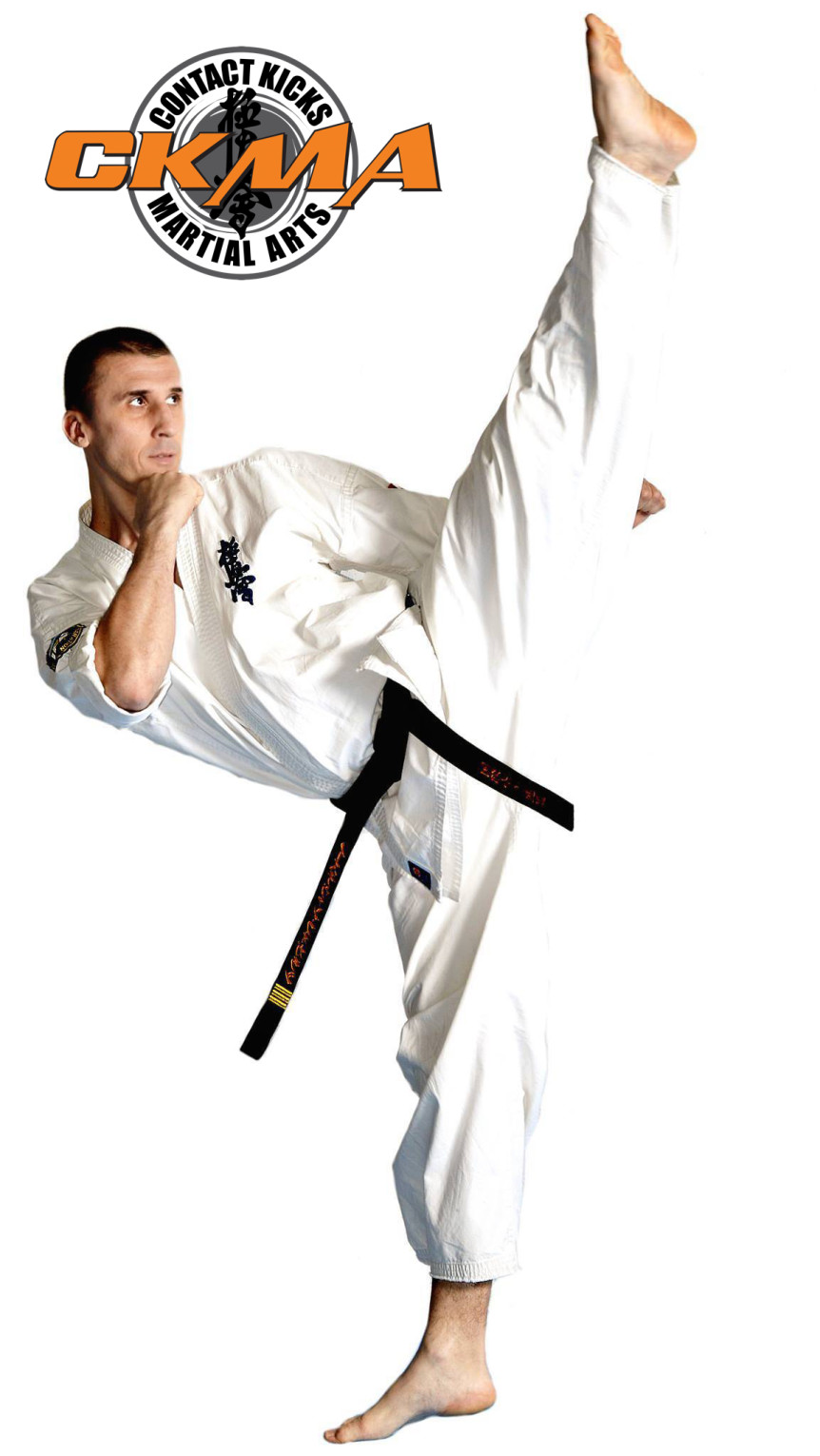
Kyokun Martial – In karate there is no first attack.
The social economy at the heart of our martial arts center