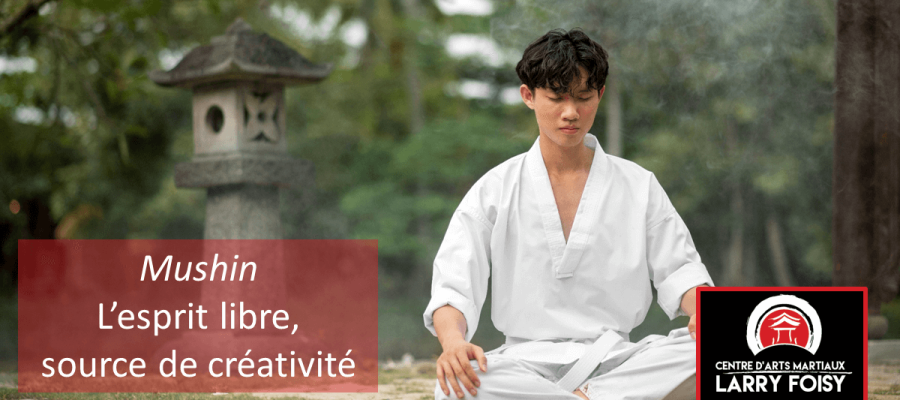
The term mushin contains the negation character “無” (mu, meaning “without”) and the character “心” (shin, meaning “heart” or “mind”). This is a shortcut for mushin no shin (無心の心), Zen expression which literally means “mind without mind”. This state, also called non-spiritdesignates a mind free from any mental fixations, intrusive thoughts or disturbing emotions – an open, available mind, fully in the present moment.
In martial arts, we search mushin in moments of truth, when every fraction of a second counts, to be able to react with precision and spontaneity. In this column, however, I would like to offer you another perspective of this state: that of an available mind creativity.
In the whirlwind of everyday life – work, study, family responsibilities, etc. – our mind is often saturated. Our cognitive resources are called into question on all sides. However, when we take a break, whether by going for a run, meditating, practicing a kata, or simply contemplating the present moment, something happens: a creative clarity emerges. It is often in these moments that ideas come to me bunkaididactic exercises or, as today, the inspiration to write this column.
Take a moment of mindfulness or mushinit subsequently makes us more efficient. I remember my university years: I sometimes ran into impasses in my practical work. Blinded, I couldn’t see any solution. But after giving karate lessons – a discipline that I rigorously imposed on myself – I returned with a suddenly clear mind and the solutions seemed natural.
In our age of hyperconnectivity, it is becoming increasingly difficult to find these moments of mushin. Some people avoid them, because a constantly busy mind prevents us from introspecting. Stopping, meditating, finding yourself alone with your thoughts can be disturbing. We often prefer to fill these silences with contents of all kinds. I’m not against entertainment, but I often hear: «I don’t have time.» » Yet statistics on screen time would probably be very revealing about how much time and mind they are occupying.
I came to another realization: we once had to take care of only one life: our very real one. Today we have two: real life and virtual life. And this second life requires an enormous amount of time and energy to sustain. This is why I believe practicing martial arts is healthcarein the noble sense of the term. It allows you to disconnect, reconnect with yourself and find mental balance.
I invite you to discover the work of Sonia Lupien, a neuroscientist specializing in human stress and its effects on the brain. I also recommend the book Deep work (in French: Finding focus in a world of distractions) which offers a method to save time, improve efficiency and regain a state of deep concentration. This research agrees that we take great care of our bodies – often for aesthetic purposes – but not enough of our own cognitive health. One of the great lessons of Deep work : we should focus on one task at a time, instead of juggling seven open windows, music in the background and a phone that is always calling us at hand. This constant multitasking exhausts our brains.
In conclusion, I wanted to offer you this other perspective mushin : not only as a state of presence in martial action, but also as a favorable mental space creativityalintrospection and better mental health.
Larry Foisy
latest posts published
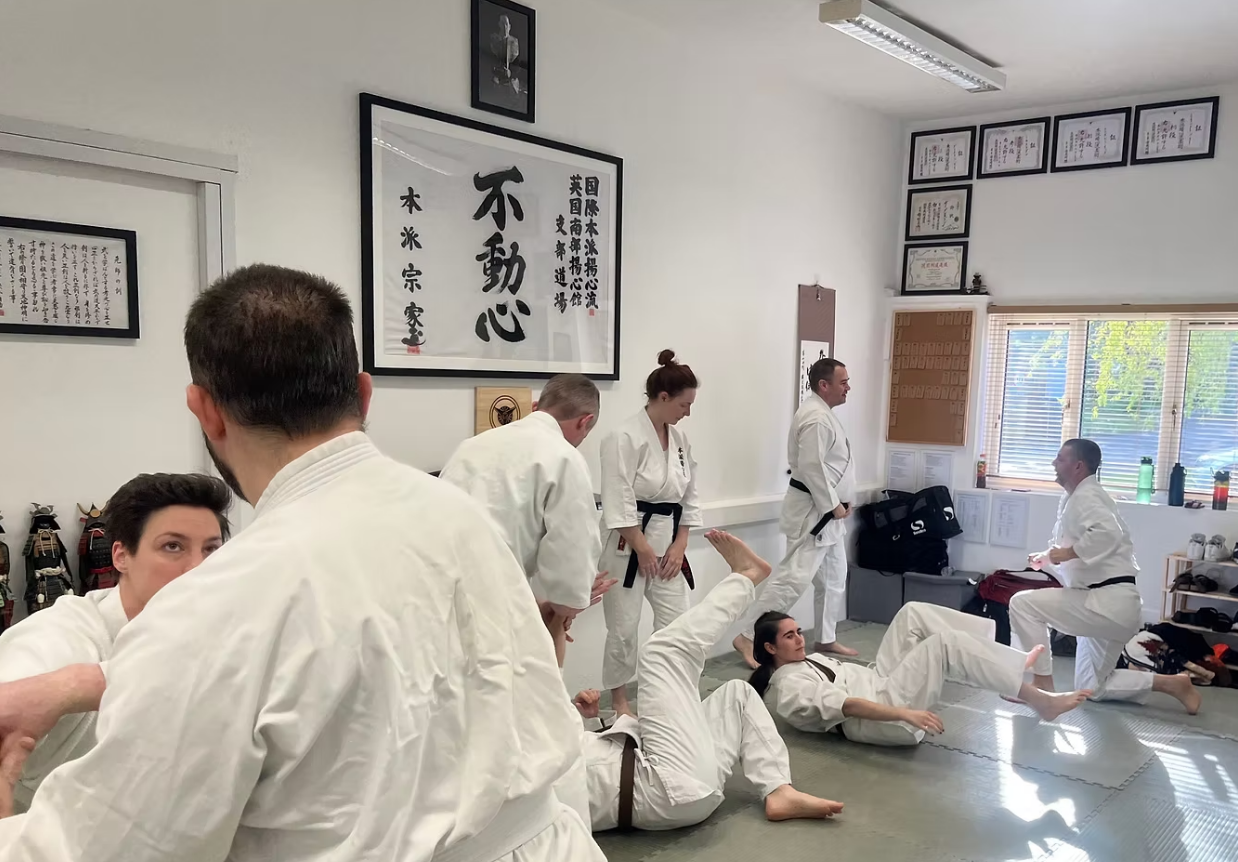
Sempai, Kohai and Dohai: respect for the hierarchical system
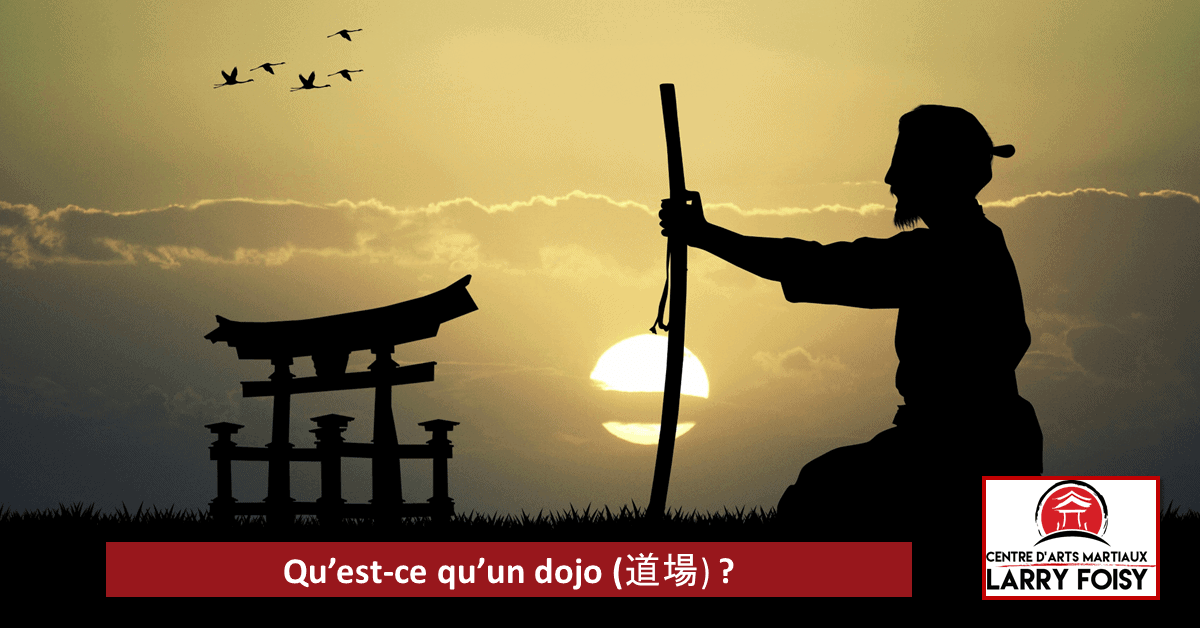
What is a dojo (道場)?
Mitsu no sen (three points) les trois principals initiatives
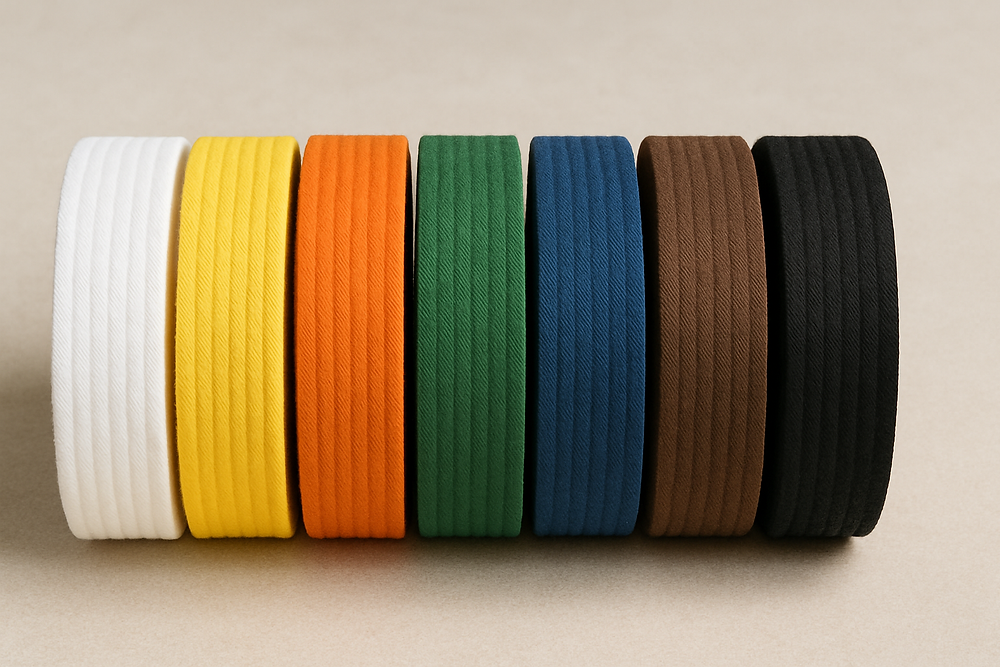
Karate Belts: Understanding the Order of Ranks
The concept of “Giri”, a profound moral commitment
Athlete Imaging | Martial Arts Larry Foisy
Black belts, keepers of knowledge
Kyokun Martial – In karate there is no first attack.
The social economy at the heart of our martial arts center