
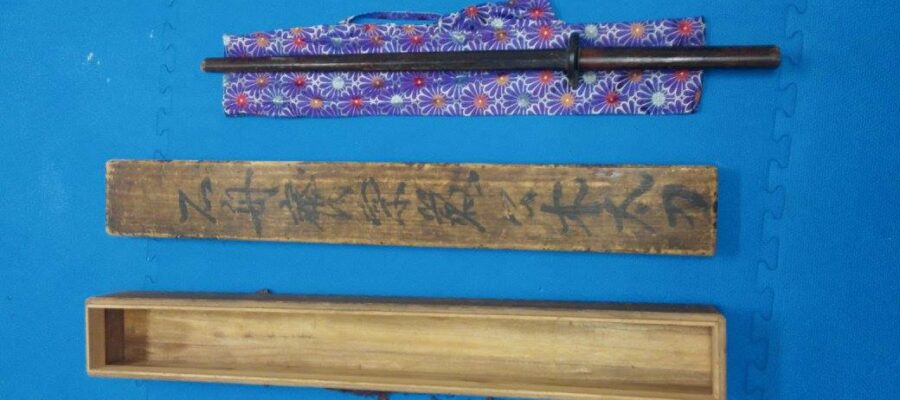
In a break after lunch, Sensei Shimazu He tells me about old samurai weapons but also about old protective equipment they used. These are precursors to Kendo armor, made largely of wood and, of course, other wooden weapons. Sensei also shows me an older article that dances in writing Hiden Bujutsu – The famous Koryu Bujutsu magazine whose publisher has been for decades!
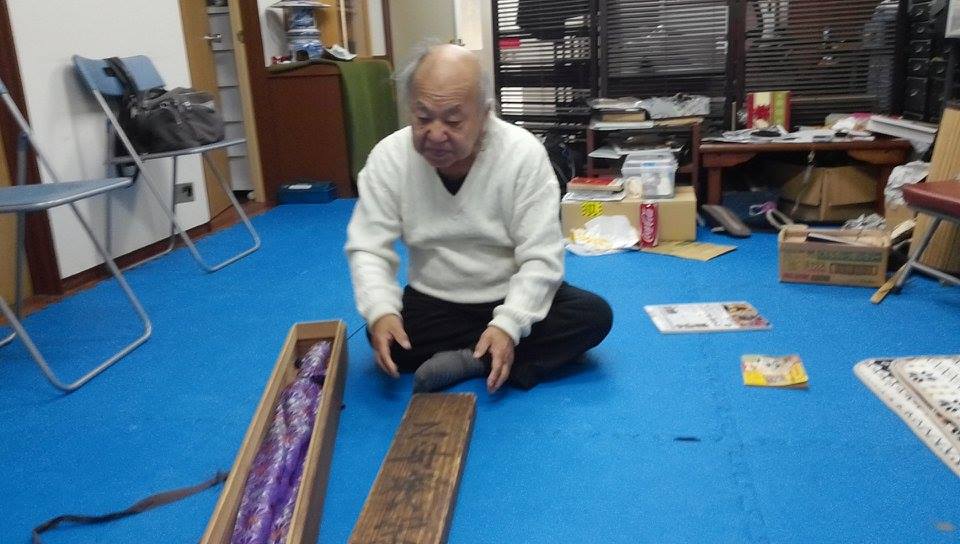
«Study these weapons» – Sensei tells me» «We can understand more about those who used them and especially how they did it! It is essential to understand this to approach the Yagyu family sword school«(Or Shinkage / or Shingan Ryu). He smiles and disappears to appear later, with a mysterious box. Shimazu Sensei he tells me briefly that it is Bokken -ul He Yagyu Sekishusai!!!
Yagyū Sekishūsai Taira-no-Munetoshi (柳生石舟斎平宗厳, 1529 – May 25, 1606) – is the legendary founding of the famous Sword School Yagyu Shinkage Ryu! Derived from Kage and respectively Shinkage Ryu!
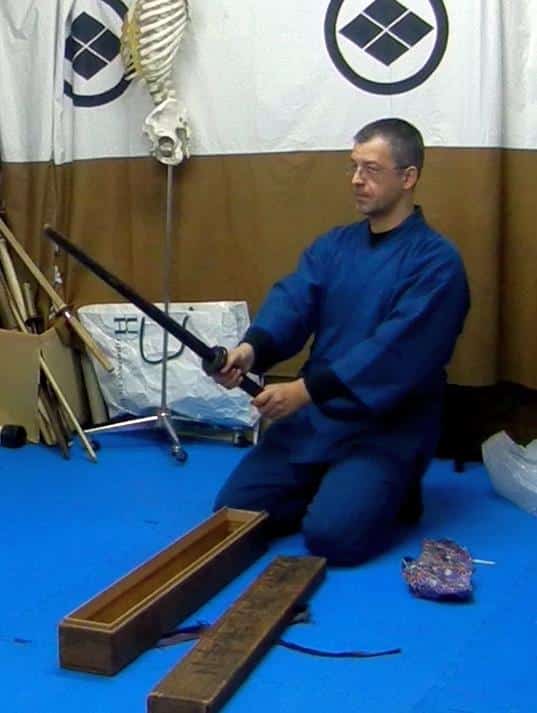
Wow again! I hardly come back out of amazement and Sensei even let me unpack the miracle! I find it hard to believe that the wooden sword of that master or perhaps one of them, is so close to me. It's also a paradise here at Shimazu Sensei Because beyond his extensive knowledge of martial arts and traditional treatments, Sensei is also the owner of an impressive amount of old documents, weapons and other objects that belonged to famous fighters: an authentic living museum of the noble tradition of medieval Japan.
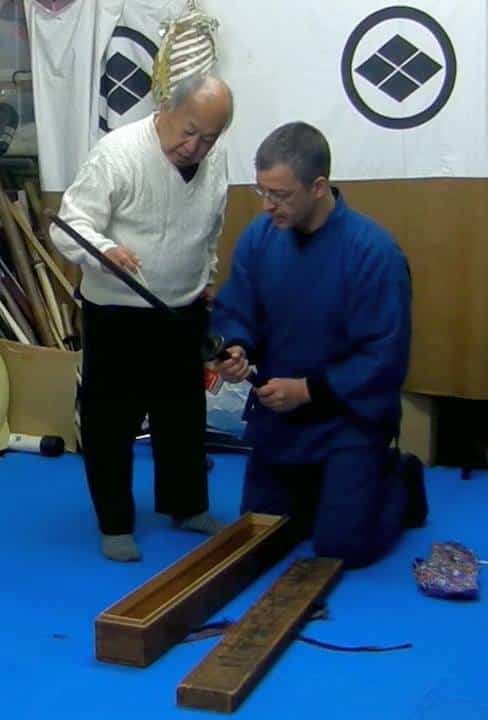
Bokken is small, ThenSenseii tells me No long weapons were used during training. The Bokkens that have survived from that period are all small, a sign that the people had smaller waists, but they also used special Sabaki to compensate for this shorter height. Senseii clearly shows me traces of other Bokkens, but what comes out are also traces of Habiki (Metal Sword, but without Tais) against which this Bokken was used. These scratches have a special angle and only appear in certain areas of Bokken. This must suggest to me some specific techniques for the Yagyu school…
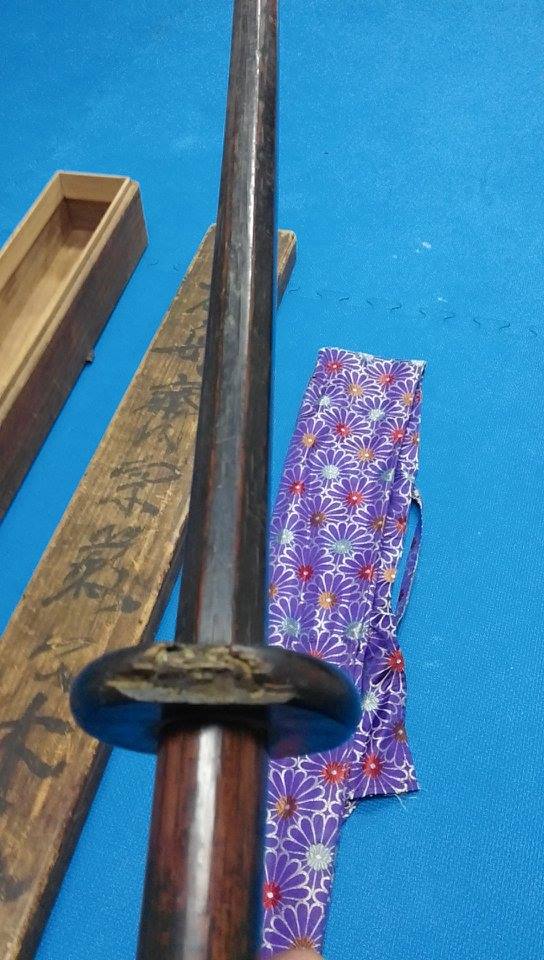
Tsuba is also made of solid wood and gives a special balance to the Bokken that feels easy to manipulate. The center of gravity seems to be more for Tsuba which allows for light and fast sword movements, perhaps like those applied by Sensei on me, just a day earlier! Extremely pragmatic and efficient. I don't know the meaning of those tracks but it's amazing how It seems Don't hesitate to use this piece of wood against steel sword opponents. The distribution of scratches on Sekishusai's Bokken is not symmetrical at all…
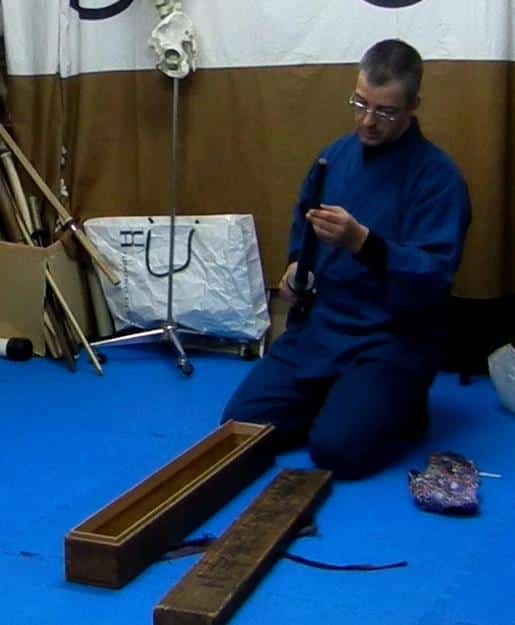
Shimazu Sensei Finally I explain what it is. Some kata I studied Shinkage Ryuothers will explain to me later in front of the Dojo. Until then, study the Bokken and see how you feel! – Sensei tells me. As I said, Sensei has a special way of talking with the blades but also with the Bokkens, to understand their history and… technique… I have to learn this too! Everything matters from the way it is touched and held… physical force closes it and does not allow us to express ourselves. Attempt No, no, no AND Ichi no tachi Slowly trying to listen to the trajectory of the Bokken not the one I want to print.
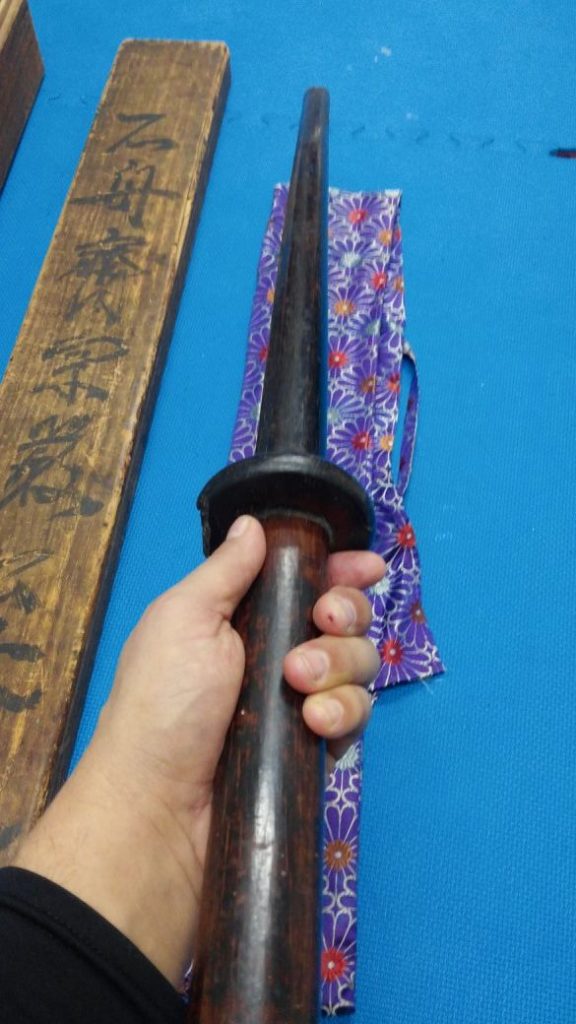
I had discussed a lot about this topic with Sensei before, but they are difficult and delicate techniques… after more than half an hour, we are preparing for the next patient, so the Bokken must be placed in its place. It may not necessarily be that Bokken, many doubt its existence (perhaps because they don't have it) but it is clearly a very old Bokken passed down over several generations of samurai and experts of the Yagyu school, with a strong load and which has a lot to say on a physical level. A unique presence at Dojo, on which Shimazu Sensei tells me that it has been transmitted and effective, for him is beyond a commercial value … this matters, the feeling and life that lift our training and … why not, life! Thank you Shimazu Sensei for this exceptional encounter with a fantastic Bokken, full of history and traditions!
latest posts published

Come try karate for free from June 12th to 30th at KCC
Why join the KCC for the 2025/2026 season?
Why join the KCC for the 2025/2026 season?
What sport can a 4 year old do?
Winning double for KCC
Towards the Coupe de France for the KCC
KCC: the 2023 pre-exam course
What are the belts and ranks in Karate?
What are the different styles of Karate?