
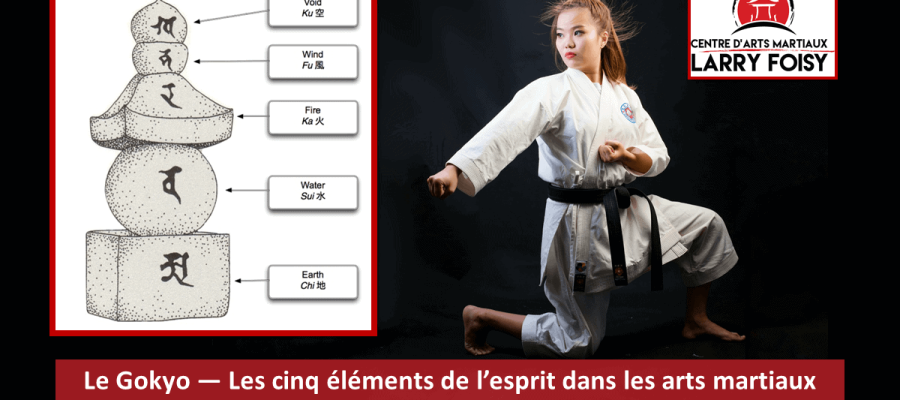
In the Japanese fighting arts, abilities are not just basic actions to master: they represent a way of thinking. The concept of Gokyo – THE five elements – originates from Buddhist and Shinto traditions and offers a useful guide for our method to combat, understanding, and development. It is divided into these segments: Chi (Earth), Sui/Mizu (Water), Ka (Fire), Fū/Kaze (Wind), and Kū/Kara (Void or Ether).
This pattern shows up in various areas, including Japanese funerary art during the Corinth period (五輪塔), the five rings monument, which symbolizes this cosmic idea and is also found in the practice of Gokyo No Kumite in Shorinjiryu Kudaka-Ha. While the Gorintō symbolizes the elevation of the spirit after passing, the Gokyo can symbolize the growth of the student on their martial journey.
🌍 Chi – Earth: stability and foundation (White-yellow)
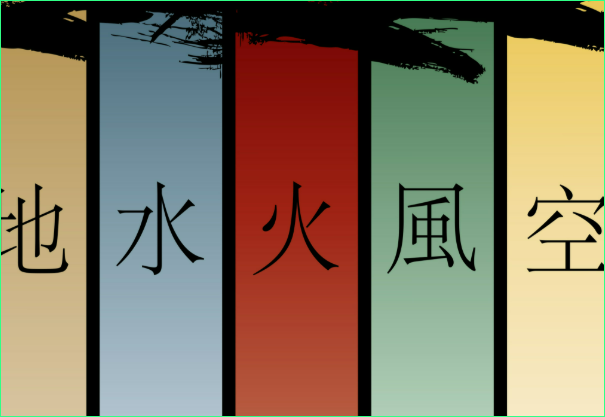
In practice, Who represents what is solid, reliable, confident, down to earth. It is our posture, our anchor, our ability to resist. Without this foundation everything falters. Mentally it is silent determination, silent strength.
➡ On the Gorintō, Chi is the square base. It is the foundation, both in stone and in being.
💧 Sui/Mizu – Water: adaptability and fluidity (Blue)
Water conforms to the shape of the container, but it can also corrode the stone. Water seeks the easiest path and represents intelligence. In combat, Sui/Mizu embodies fluidity, the ability to move without unnecessary resistance, to absorb attacks. It’s listening, flexibility, inner calm.
➡ In Gorintō Sui it is represented by a sphere: without edges, it symbolizes movement and transformation.
🔥 Ka – Fire: energy and passion (Orange-Red)
THEit’s the explosion, the intensity, the instinct. It is the kiai, the impact, the will that comes forth without restraint at the right time. On a mental level it is motivation, courage in the face of adversity, taking charge, the sacred fire that pushes us to move forward.
➡ Fire is symbolized by a pyramid, an ascending shape, which evokes the rise of energy.
🌬️ Fū/Kaze – The Wind: lightness and freedom (Green)
The wind cannot be grasped. He is unpredictable, fast, elusive. This element is, from my point of view, very representative of aikido. In practice, It was it is agility, strategy, the ability to change direction or pace without being limited by habit or ego.
➡ In Gorintō this essence is represented by a crescent moon: dynamic and fluid, yet sharp.
🕊️ Kū/Kara – The Void: Transcendence (Black)
The hardest to understand, but perhaps the most essential. Stand/Carit is the space between two techniques, the breath between two thoughts. It is detachment, pure awareness, mental clarity. This is the moment when the body acts without the ego intervening. Emptiness is not nothingness, it is infinite potentiality!
➡ At the top of Gorintō, Kū is represented by a form of flame or teardrop: immaterial, elusive, but ever-present.
🧘♂️ From Gorintō to the Dojo: the same elevation path
Every element of the Gokyo it invites us to cultivate an inner quality that manifests itself in our physical practice. Looking at Corinthwe can meditate on our journey: from grounding to liberating the mind, each level is a level of consciousness to cross. Training then becomes a way to align body, mind and energy, like the five stone rings stacked on top of each other.
🥋 The elements on the belt: a symbolism carried on oneself
In some martial arts schools such as Ninjutsu and Kyokushinkai Karate, the 5 elements are also the colors of the belts relating to their level of technical and psychological advancement.
Conclusion
Just like Gokyo which is an «esoteric» theory: it is an invitation to practice with awareness. Every kata, every movement, every exchange then becomes a way to better understand one’s nature. And as Gorintō reminds us, the goal is not simply to become stronger, but to rise internally.
The concept of Gokyo, or the Five Elements, reminds us that martial arts are far more than a collection of techniques. They represent a philosophy of continuous growth, where physical skills and personal development evolve together. Through the symbolic elements of Earth, Water, Fire, Wind, and Void, practitioners gain a framework for understanding not only how to fight more effectively but also how to think, adapt, and live with greater awareness.
Each element reflects a quality that contributes to the complete martial artist. Earth teaches stability, patience, and a solid foundation. Water encourages adaptability, flexibility, and the ability to respond naturally to changing situations. Fire represents determination, energy, and decisive action. Wind inspires openness, learning, and the willingness to explore different perspectives. Finally, Void symbolizes the highest level of understanding, where instinct, experience, and intuition work together without conscious effort. Individually, these elements have value, but together they form a balanced approach to martial training.
The connection between Gokyo and traditional Japanese culture demonstrates that martial arts have always been closely linked to broader philosophical and spiritual ideas. Just as the Gorintō, or Five-Ring Pagoda, symbolizes the journey of the spirit, the Five Elements can also be seen as representing the lifelong evolution of the martial artist. Progress is not measured solely by technical ability or belt rank but by the gradual development of wisdom, humility, resilience, and self-awareness.
latest posts published
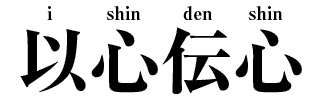
What does the name of our dojo “ishin denshin” mean?

Water: the elixir of life and the secret to optimal hydration
Sempai, Kohai and Dohai: respect for the hierarchical system
What is a dojo (道場)? | At the origins of the word
Mitsu no sen (three points) les trois principals initiatives

Karate Belts: Understanding the Order of Ranks
The concept of “Giri”, a profound moral commitment
Kyokun Martial – In karate there is no first attack.
The social economy at the heart of our martial arts center
