
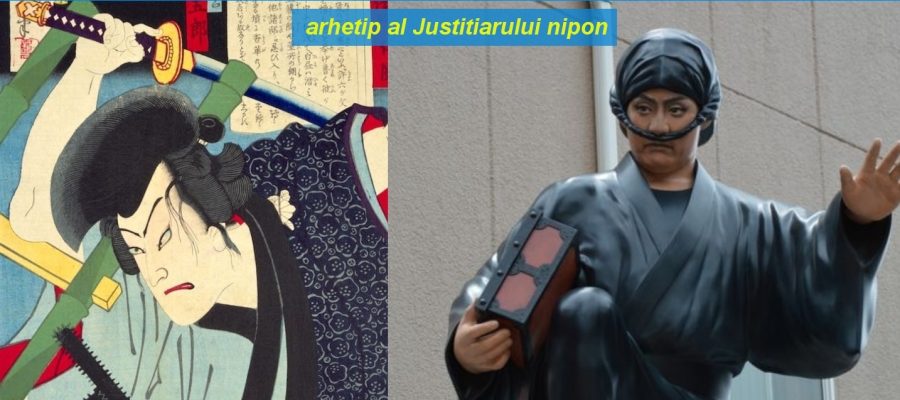
Well, besides Ninja and Samurai, there were others KYOKAKUlittle known, more or less Knights of Justice/outlaws – inconvenient characters, because they have taken a firm stand in the face of dysfunctional or unilaterally applied laws.
Considered «rebels with a cause», the Kyokaku 侠客 were a very real phenomenon, somewhat obscure in works of fiction due to their metaphorical overtones. In this direction, at the very beginning of the 20th century, YCOUNT from the group Kokusuikai (國繴会) praised chivalric ideas and used (the false and actually recent concept of)»Bushido” to combat the “corruption of national morality and good customs” of that period by promoting “harmony between labor and capital”. But the concept of Kyokaku – Knights Errant of Good, was much older.
Starting from the 13th-14th centuries (period Kamakura/Muromachi) there was the concept of Jiriki Kyuusai Self-Help – the legal right to recover honor or property without resorting to public justice (also as a right of «self-defense»). Although frowned upon by society, this was a way of taking justice into account, especially when the offended party could not invoke public law. Under the Tokugawa regime, this aspect led to Kenka ryouseibai a severe punishment for all parties involved in the conflict, regardless of the reason. The forced pacification of the new united Japan of Tokugawa in the 17th century, together with the demilitarization of the samurai and the destruction of the feudal structure (daimyo versus central government, separation of the samurai from land ownership) greatly complicated matters and led to chaos.
It’s a time when different groups feel the need to rebel. For example, Kabuki mono they were in the early 1600s, literally «strange/crazy people», known for aggressive, violent and undisciplined behavior. This was in contrast to Kyokaku’s idea; while the Kabuki mono were harsh and unpleasant company, our Kyokaku heroes add an extra «positive» connotation to the idea of a rebel, perhaps violent with a higher moral motivation. The real motivation was sometimes difficult to determine and the work of these people (gambling halls, brothels, etc.) did not help much in creating a good reputation.
1. Shiranui Kozo (#Shiranui Primary School)
By his real name, Hasegawa Heizohe was among the most famous thieves in the ancient capital of Edo, stealing from the rich and corrupt, redistributing the loot to the poor. His exploits made him a popular hero, a sort of outlaw known for his ability to evade capture, which increased his reputation as a Kyokaku.
2. Ishikawa Goemon (#Ishikawa Goemon)
Period: end Azuchi-Momoyamastarted from Edo
Goemon is a semi-legendary figure in Japanese history, often depicted as a noble thief. One of the most famous deeds attributed to him was the attempt to assassinate Oda Nobunaga to avenge the death of his family. After his death Nobunagahe continued his activities against his successor Nobunaga, Toyota Hideyoshi. However he is very well known for stealing from the rich to give to the poor and is often present in kabuki theater but in essence he was more of a Ninja agent who used the image and actions of a Kyokaku.
3. Nezumi Kozo (#Nezumi Kozo)
About his real name Nakamura Jirokichi (中村次郎吉) lived in ancient Edo. Nezumi Kozotranslated by «The rat boy«, was a notorious thief, but became a folk hero for his daring courage and his practice of distributing stolen goods to the rich. Also very good at ninja escape techniques, which made him escape from impossible situations.
4. Tange Sazen (#Tange Sazen)
He was a fictional character from the Edo period, a one-eyed, one-armed samurai who becomes a Ronin and uses his special martial arts skills to protect the weak by fighting injustice. His stories are popular in Japanese literature and cinema and embody the spirit of the hero Kyokaku
5. Sakamoto Ryoma (#Sakamoto Ryoma)
Samurai and hero of the end of Edo, who is not a kyokaku in the classic sense of an outlaw vigilante. But he is a historical figure who helped defeat him Tokugawa shogunatulu and the modernization of Japan. His efforts to form an alliance between the Choshu and Satsuma domains were instrumental in bringing about the Meiji Restoration. His vision of a more just society and his actions against the ruling class are in tune with Kyokaku’s spirit of challenging injustice and aspiring to justice.
The kyokaku ideal of fighting for justice and protecting the weak was continued into modern Meiji discourse where it manifested itself in the musical phenomenon «naniwabushi» and is also present in contemporary pop culture – manga, anime, etc..
latest posts published
What does the name of our dojo “ishin denshin” mean?

Water: the elixir of life and the secret to optimal hydration
Sempai, Kohai and Dohai: respect for the hierarchical system
What is a dojo (道場)? | At the origins of the word
Mitsu no sen (three points) les trois principals initiatives

Karate Belts: Understanding the Order of Ranks
The concept of “Giri”, a profound moral commitment

Kyokun Martial – In karate there is no first attack.
The social economy at the heart of our martial arts center
