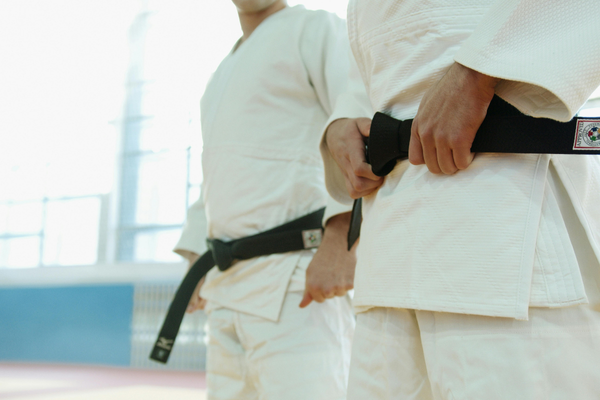
Understand the true meaning of progression in Aikido and how this trajectory transforms body, mind and spirit.
Introduction
When someone first enters an Aikido dojo, they wear the keikogi white and takes his first steps on the mat, he is starting much more than just physical preparation: he is undertaking a journey of self-discovery. Unlike other martial arts that focus on competition and quickly achieving ranks, Aikido offers a progression with a purposewhere each track created represents a stage of internal maturation.
In this article we will explore the student path in Aikidofrom white belt to the highly respected black belt. Discover how this path goes far beyond technique, shaping attitudes, values and the way you see life.
🎓 1. The white belt: the beginning of the journey
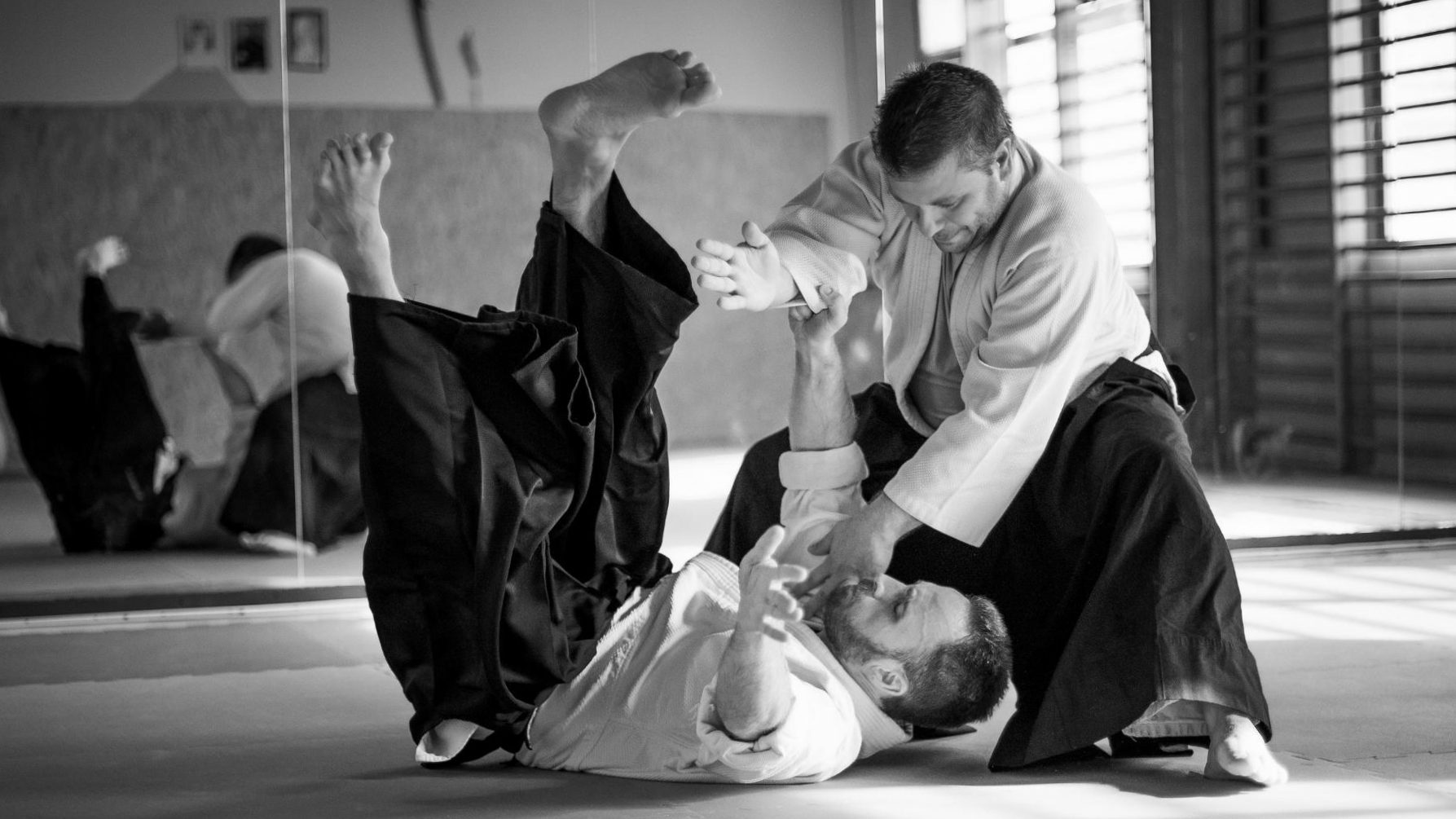
By wearing the white belt, the student symbolizes the empty and receptive mental state – ready to learn and grow. In this initial phase the first challenges arise: memorizing the basic movements, learning to fall safely (ukemi) and understanding dojo etiquette.
More than mastering the techniques, the attention is focused cultivate patiencehumility and respect for the process. The white belt represents the “beginner’s spirit” – free from ego and open to transformation.
🌀 2. The Path of Colored Bands: Learning, Repetition and Evolution
Over the years, the student goes through different colored bands (variable depending on the group), which represent increasing levels of technical mastery and philosophical understanding. Each phase is characterized by intense repetition, constant correction and overcoming oneself.
During this phase, the practitioner begins to feel the physical and mental benefits of trainingdevelops greater sensitivity to your partner’s movements and learns to act with more precision and fluidity. Training starts to feel less “rehearsed” and more natural.
The most important thing is that the student begins to realize that true progress lies not in fighting better, but in fighting better act with more harmony, attention and balance.
🥷 3. The black belt: a new beginning
Many think that the black belt is the end of the road. In Aikido, it is precisely the beginning of a new phase. Once this level is reached, the practitioner has already mastered a wide range of techniques and has a solid foundation of principles, but now the focus deepens: the student becomes responsible for his own improvement and for the example he gives to others.
The black belt symbolizes maturity, responsibility and the ability to understand that true power lies in non-violence, control and self-mastery. Often, at this point, the student begins to help with the teaching, further consolidating their learning.
🔄 4. The journey never ends: the Budô path
In Aikido the most important thing is not to arrive, but walk with purpose. Even the most experienced practitioners continue to train, improve, learn from mistakes and try to refine their spirit.
This is the true meaning of “Budo” – the warrior’s path. A path that never ends and is followed with discipline, humility and dedication. Aikido is not about accumulating belts, but about becoming someone better with each training session.
💬 Testimonials that inspire
Many students report how Aikido has helped them overcome insecurities, deal with stress and find balance in difficult times. The progression in Aikido is perceived not only on the tatami, but in the way the practitioner acts at work, in the family, in human relationships.
It is this complete transformation that makes the journey so meaningful.
Conclusion
A student’s path in Aikido – from white belt to black belt – is full of meaning. Every step is an invitation to look inside, grow, mature and act with more awareness and harmony in the world.
More than a technical progression, Aikido offers an internal journey, shaped by discipline, respect and purpose. By following this path, the student transforms not only into a martial artist, but into a more attentive human being, centered and connected with his own essence.
Book your trial lesson without obligation
Do you want to experience all this in practice and understand why Aikido transforms lives?
Book your trial lesson now!
Come feel the energy of the dojo, learn from qualified instructors and take the first step on a journey of self-knowledge, discipline and harmony.
Click here to make an appointment
Keywords: white belt in aikido, beginnings in aikido, first steps in aikido, degrees in aikido, what it means to be a black belt, path of budo, philosophy of aikido
latest posts published

Sempai, Kohai and Dohai: respect for the hierarchical system
What is a dojo (道場)?
Mitsu no sen (three points) les trois principals initiatives

Karate Belts: Understanding the Order of Ranks
The concept of “Giri”, a profound moral commitment

Athlete Imaging | Martial Arts Larry Foisy

Black belts, keepers of knowledge

Kyokun Martial – In karate there is no first attack.

The social economy at the heart of our martial arts center