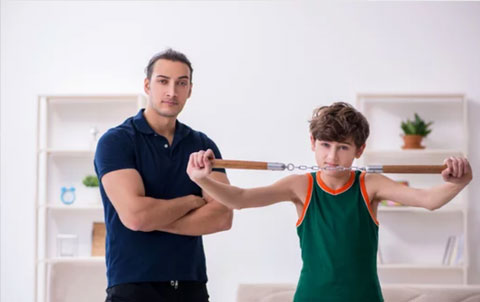
If you have chosen to enroll your child in martial arts it is because you want him to carry out a healthy and safe activity, which helps him with self-discipline, self-esteem, respect for the rules, improvement of his physical condition, etc…
After all, parents always want the best for their children, right? But sometimes the best they want may not be the best for them. This is the downside of wanting the best for your child. After the trial period the child decides that they like it and want to continue practicing and it is at this stage that parents often make the mistake of setting expectations and expecting their children to reach certain developmental milestones, such as leveling up within a certain period of time or comparing their children’s progress with that of others of the same age in their level of training.
However, this mindset can be harmful to your child’s physical and emotional development. In this blog I will talk to you about why it is important to respect your child’s individual development times and avoid constant comparison with others.
How to respect your child’s development times
It is important to remember that the goal of martial arts is the physical and mental development of the child and not necessarily competition or performance. You must understand that all these advantages and benefits that you want for your child go through a long developmental process that is unique and unique to each child as they grow and mature, they have their own stages and pace of learning.
The age at which you choose to enroll your child greatly influences and depends on the child’s developmental stage. For example, if your child is 4 years old, he is unlikely to be ready for a real martial arts class, but that doesn’t mean he is too young to participate. A 4 year old is still very young and discovering himself and the world.
At this stage, a 4-year-old is just starting to develop the motor and mental foundations and continues to depend heavily on his parents. A child of this age is ready for martial arts lessons, but does not have the physical, mental, and emotional skills to succeed in the same way as a 10-year-old.
It is also important to respect the child’s development times and not force him to follow times or rhythms that are not suitable for him. This means being patient until your child is ready to start practicing martial arts, and when they do start, making sure they attend a class appropriate for their age and skill level. For example. At my gym I offer a free two week trial for everyone. There are children who try it, love it and stick with it right away. Others who don’t like it at the moment and then after a while ask their parents to come and try again and stay. Another very ridiculous example is parents who come to register a child, who doesn’t like it and ends up with the sibling who they never imagined would like martial arts.
Because you can’t compare your child to others
As I said previously, it’s important to be aware that every child is unique and develops at their own pace, and it’s normal to want your child to be as successful as possible, but sometimes they make the mistake of wanting to be better than others instead of being the best version of themselves. When observing your child’s training there may be a tendency to evaluate and compare your child to other children in the class and this is quite harmful to their self-esteem and development. A 6-year-old child may be able to easily perform certain movements or techniques that are difficult for another child of the same age. That doesn’t mean one is better than the other. It just means that they are at different levels of development.
Children develop at different rates and stages and there is no single model that applies to all children. At the same age there are children who can develop physical skills more easily, while others may be more mentally developed. Some progress rapidly, stagnate and then continue to evolve slowly, others progress slowly at first and after a while “skyrocket” in evolution. In other words, this does not necessarily mean that children have less ability or potential, but rather that they need different times and stages to absorb and apply what they are taught.
Comparing your child to others can also have a negative impact, as they will feel that their efforts are not recognized, but rather judged and evaluated based on the abilities of others. Additionally, labeling your child with negative terms such as “distracted,” “not good at this,” “restless,” etc. he goes in the completely opposite direction and damages his self-esteem, often ending up giving up martial arts, not because he loses his taste for what he does, but because he feels like he is disappointing the expectations his parents have placed in him.
Help your child with positive feedback
Instead of focusing on comparisons or how long it took your child to achieve certain goals, focus on the effort he is putting in and encourage him. Remember to respect his physical and mental limits. Don’t put pressure on him and allow him to develop in a healthy, safe and happy way. Encouraging and helping your child develop positive self-esteem is critical to their healthy growth and overall well-being. This can include things like praising your efforts and encouraging you on days of frustration. This will help your child understand that failures are a normal part of the learning and growing process and not an indication of his or her “ineptitude” or “clumsiness.”
In conclusion, martial arts are an excellent tool for helping children develop valuable physical and mental skills. However, parents must remember to respect the child’s development time and not to put excessive pressure on their children. They must also be active and involved in children’s learning process and respect their development times.
It is important that they understand that practicing martial arts is a long-term journey and that results only come with time and effort. When there is respect for the timing of the development of children’s abilities, they are able to develop in a healthy and positive way, have fun learning, and parents will be able to see the result of their children’s long-term evolution… excellent Human Beings and black belts trained at the White Tiger Academy.
If you liked it, follow us on our social networks and stay updated on our news. If you want to enroll your child in our martial arts. Contact us
latest posts published
Sempai, Kohai and Dohai: respect for the hierarchical system
What is a dojo (道場)?
Mitsu no sen (three points) les trois principals initiatives

Karate Belts: Understanding the Order of Ranks
The concept of “Giri”, a profound moral commitment

Athlete Imaging | Martial Arts Larry Foisy
Black belts, keepers of knowledge
Kyokun Martial – In karate there is no first attack.
The social economy at the heart of our martial arts center