

Born in Honolulu/Hawaii on March 19, 1931, Edmund Keahola Parker, sixth son of Arthur and Eva Parker, was projected onto the American martial arts scene and then became known throughout the world starting in the 1960s.
During high school at Kamehameha High School, young Parker developed a great affinity for contact sports, such as boxing, judo and American football. At the age of 16, he had his first contact with Kenpo Karate through Frank Chow – a fellow member of the Mormon Church – and began practicing it with his brother, William Kwai Sum Chow.

–
It was a branch of Kenpo influenced by James Mitose who introduced the modality to Hawaii in 1941. Mitose’s system was very linear and Chow reintroduced circular movements by combining his style with the Kung Fu his father had taught him. But the art that Ed Parker achieved was still a “raw” system that needed to be perfected.
At 18 – already a black belt and practicing 7 days each week – Parker informed his future wife Leilani that he believed the Kenpo Karate he had mastered and would keep developing would turn into his way of life and spread around the whole globe.
In 1949, Parker moved from Hawaii to go to Brighan Young University (BYU) in Provo, Utah, USA. He completed his studies in 1956 (graduating with a degree in Sociology and Psychology). He served in the Coast Guard during the Korean War and kept learning from William Chow while he was in the military. After returning to Utah, he started a «Kenpo Club» at BYU, and even though he taught Kenpo in other locations, he was one of the first to do so at the university level.
Parker married Leilani Yap on December 28, 1954 in Salt Lake City. They had 5 kids who gave them 14 grandchildren, creating a family that would become their most valuable possession. Of these, he is the only one to stand out in Kenpo, calling himself the «Ambassador of Kenpo.»
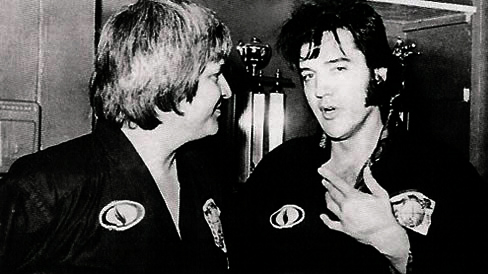
In September 1956, he opened a Kenpo Karate school in Pasadena – which he named Karate Studio, using the term “Studio” to mean a place of creativity. Always encountering various challenges, Parker still managed to teach in Hollywood at the Beverly Wilshire Health Club. During this time, in 1960, at a demonstration held at the Beverly Wilshire Hotel, he personally met Elvis Presley, who would become both a friend and a student, and he also became a Karate technical advisor for shows like «Dangerous Robin,» «The Courtship of Eddie’s Father,» and more.
–
John MacSwceney and Rainer Schulte, black belts trained by Parker, took their Kenpo to Ireland and other parts of Europe. Parker’s reputation grew: in March 1961, Time magazine called him «largely responsible for the rapid growth of Karate in Hollywood circles.» Elvis used the emblem of the International Kenpo Karate Association (created in 1956 by Parker, but formalized in 1960 as the IKKA) on his guitar and even performed Kenpo movements on stage.
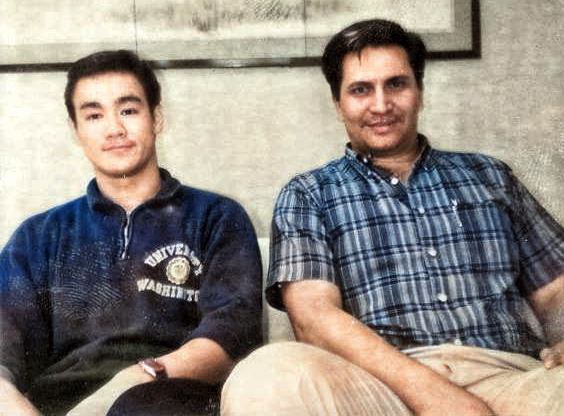
–Parker had cultivated good friendships in the Kung Fu community of San Francisco… John MacSwceney, one of his first black belts, had accompanied him on numerous occasions to that North American city. Kung Fu practitioners liked Parker and Parker liked Chinese systems. From this interest his friendship with Bruce Lee was born.
Ed Parker: The Father of American Kenpo
Edmund Keahola Parker, better known as Ed Parker, is universally recognized as the «Father of American Kenpo» and one of the most significant figures in 20th-century martial arts. His innovative approach transformed traditional martial arts into a modern, systemized combat method tailored for Western conditions.
Early Life and Martial Roots
Young Parker’s upbringing in Honolulu, Hawaii, in the 1930s and 40s, immersed him in a culture where martial arts and contact sports were highly valued. During his high school years at Kamehameha High School, Parker developed a great affinity for contact sports, such as boxing, judo, and American football. These activities gave him a practical, athletic foundation that would later influence his martial arts system, particularly regarding power generation and real-world application.
At the pivotal age of 16, he had his first contact with Kenpo Karate through Frank Chow – a fellow member of the Mormon Church – and began practicing it with Frank’s older brother, William Kwai Sum Chow. William Chow, known for his powerful, practical style, became Parker’s primary teacher. Under Chow, Parker learned the fundamentals of Kenpo, a style heavily influenced by Chinese Kempo and Okinawan Karate.
–
–
In 1959, after several years in the United States. Parker returned to Hawaii with the intention of bringing William Chow with him, to work together, but, faced with the rejection of his former instructor, he returned alone. William Chow harbored great resentment for Parker’s success.In 1963 he published the book “Secrets of Chinese Karate” – a book considered at the time to be ahead of its time. Parker came to be seen in the martial arts community as something of a “rebel”: the individuality that embodied his system, with its emphasis on creativity, infuriated traditionalists. The answer given to a young Japanese black belt who suddenly asked him became «classic», on the occasion of a Shotokan Karate tournament. Why aren’t you a traditionalist? “Why don’t you teach a pure Poe system that doesn’t use Japanese terms?”: “What makes your system pure and mine not?” The founder of his system studied two arts with two different masters and mixed them. There are no Pure Karate systems. When your bare hands hit your opponent’s flesh… that’s pure Karate!
latest posts published
What does the name of our dojo “ishin denshin” mean?

Water: the elixir of life and the secret to optimal hydration
Sempai, Kohai and Dohai: respect for the hierarchical system
What is a dojo (道場)? | At the origins of the word
Mitsu no sen (three points) les trois principals initiatives
Karate Belts: Understanding the Order of Ranks
The concept of “Giri”, a profound moral commitment
Kyokun Martial – In karate there is no first attack.
The social economy at the heart of our martial arts center
