

For some time, Cosminone of the instructors of Raiden Dojo Bucharestaims to help us beginners to define the basic movements essential to progress in practice. Consequently he created a special WhatsApp group for us, but also a slide with all the techniques divided by school, with images, with videos, with explanations. All the admiration for our colleague, who worked hard to collect and organize all the information! After each practice, he writes to us as a group what exactly we should repeat at home, depending on what we did in practice. Kind of like homework, only it’s not mandatory and no one makes you take a test at the gym. The idea is excellent because, in this way, you can also fix the names of the techniques and postures (it’s much easier to remember them when you see them written down), plus it gives you a sort of line to walk on, you feel like you have a sort of direction. What increases motivation (at least for me).
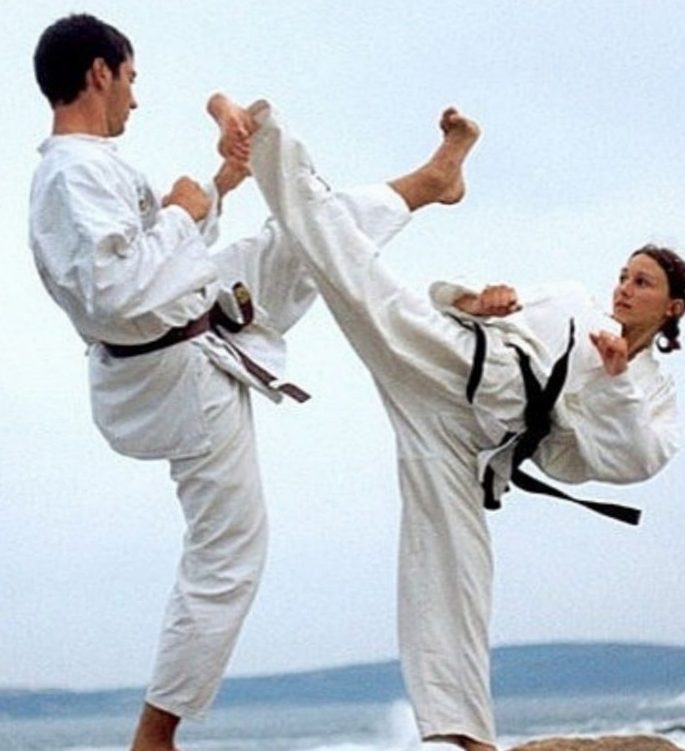
However, at home I repeated the things that I had understood a little in the gym. And when I say I understood themI mean I’ve been able to retain more information about how I should do those movements and I try to self-correct and repeat them until I get it right. To be more precise, I repeat them until I feel comfortable in a position…. At home I only did a few simple movements or postures. Yes, since Cosmin started giving us homework 🙂 , home workouts are more targeted, more «connected».
Today I came across an old post by Sensei in which he talks about a text written by Yamamoto Kansuke (1493–1561), general and strategist of the Takeda clan, who had identified four main types of practitioners: Heiho-zukai, Heiho-jin, Heiho-sha AND Ha-heiho-sha. Find the full article on the site (click here to read). The text struck me from the first time I read it. I have always wondered what kind of practitioner I am… It’s one thing the impression you have of yourself, it’s another thing how the people around you see you. Rereading the lines written by Yamamoto Kansuke, I realized that I have the traits of about three types of practitioners: I am stuck in logic, mentallybut they are also there worker and of course, very often they are too shallow. I also remembered what Master sometimes tells us, about how training goes in Japan today but also in times gone by… The fact that the Japanese don’t (nor did they before) give you a friendly pat on the back and encourage you at every step, always telling you that you’re doing something well, says a lot about them and the way they view personal development.
I think it’s fabulous to be able to move forward without having constant feedback on your progress. Even without asking. It’s proof of that strength of character, of spirit, learning to look at yourself honestly, to self-evaluate, to keep your ego under control and not to give up. Not even when you feel like nothing is coming out, or especially at that moment. And we’re not just talking about what you do and how you do it in training we’re talking about how you are as a person, how you behave in everyday life. Because, as I said in a previous diary, the dojo is a mirror that shows you exactly how you are.
I try a lot at home and sometimes I do it as a kind of abandonment. Sometimes it is a refuge, an escape In training, a sort of escape from oneself. But I think we’re much more defeated when we realize that we do not train ourselves to understand others (adversaries), but to understand ourselves. In Shakespeare’s universe there are two characters who always tell the naked truth: buffoons AND he jokes. Only from the mouths of these characters can kings tolerate the cruel and harsh reality. I think it is extremely important to know how to listen to the two characters within us and look at ourselves honestly, especially when we hesitate, when we don’t have clear feedback, when we have the impression of having gone astray… I think one of the great problems of the present is this permanent need for validation. The fact that we give up too easily if we don’t have a chorus of applause behind us is a sign of great weakness. This kills persistence.
We often say: «we can never achieve perfection” (we say it as a sort of resignation, which is almost equivalent to giving up, an excuse that we prepare to justify failure/giving up), but how many actually understand it essential is the courage to walk towards Perfection… One of the first things I heard when I came to Raiden Dojo was: «your technique will never be perfect, you always have something to improve, to perfectWhich for some practitioners may be shocking. Even demoralizing, discouraging. Many come to think that in a few months they will master wonderful techniques and… that’s it… And it’s nice to learn from the beginning that this isn’t the case. I think Sensei wants us not to lose sight of an essential detail: progress comes only as a result of your efforts. There is no time frame of x months in which you can learn x number of techniques. Progress comes from the sincerity with which you practice. Just like in life. No matter how good a Sensei, an instructor, he cannot do anything for the student. Precisely for this reason I appreciated the frankness with which Sensei tells us about it. If you think about it,»the technique will never be perfect for you”, is also a liberationIt’s like someone lifted a weight off your shoulders. You don’t aim to «collect» perfect techniques, you don’t expect praise… You want to improve. Do you want to do better tomorrow than today… And so on… It’s hard to look and try to copy without understanding… But it’s nice when you realize it this is paradiseActually. Because hell is where you understand too much. I realized this when the storms in my mind quickly destroyed the beautiful garden my soul was tending. And I had to start over and rebuild it.
Whenever questions and doubts arise about my progress, I do my best to push them out of my mind. Because it means that in those moments I can no longer look at myself honestly. And this is a problem. It’s easy to judge others, but it’s infinitely harder to truly look at yourself. Looking at yourself honestly means breaking down walls, accepting yourself as you are to discover what needs to be corrected. I tend to think that honesty is more of an expression of intelligence. Sincerity is an act of self-knowledge and consequently it is also an act of creation.
I think about it often.»Ninjas«is not a noun. It’s more of a verb because it implies an action (both internal and external).
latest posts published
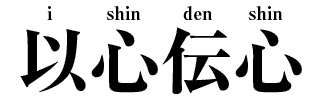
What does the name of our dojo “ishin denshin” mean?

Water: the elixir of life and the secret to optimal hydration
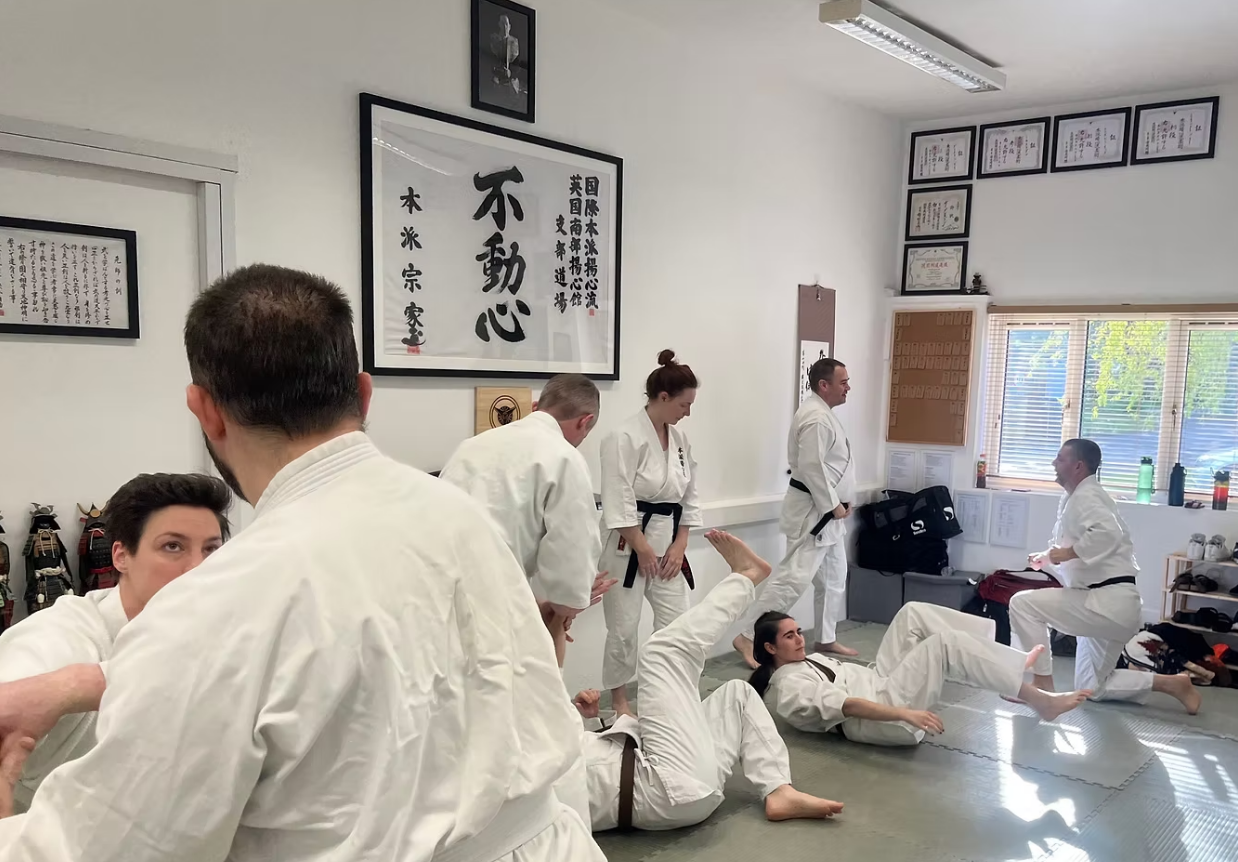
Sempai, Kohai and Dohai: respect for the hierarchical system
What is a dojo (道場)? | At the origins of the word
Mitsu no sen (three points) les trois principals initiatives

Karate Belts: Understanding the Order of Ranks
The concept of “Giri”, a profound moral commitment
Kyokun Martial – In karate there is no first attack.
The social economy at the heart of our martial arts center
