
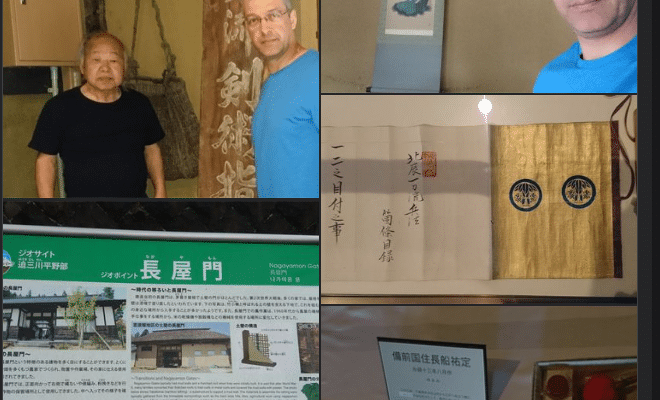
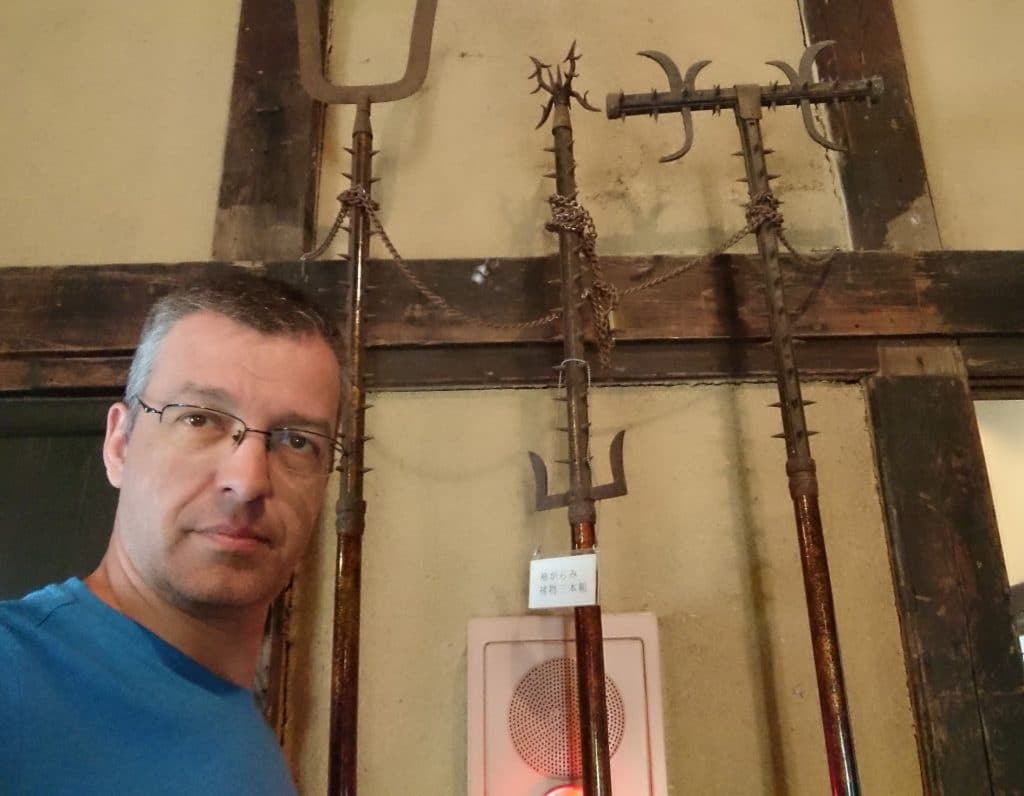
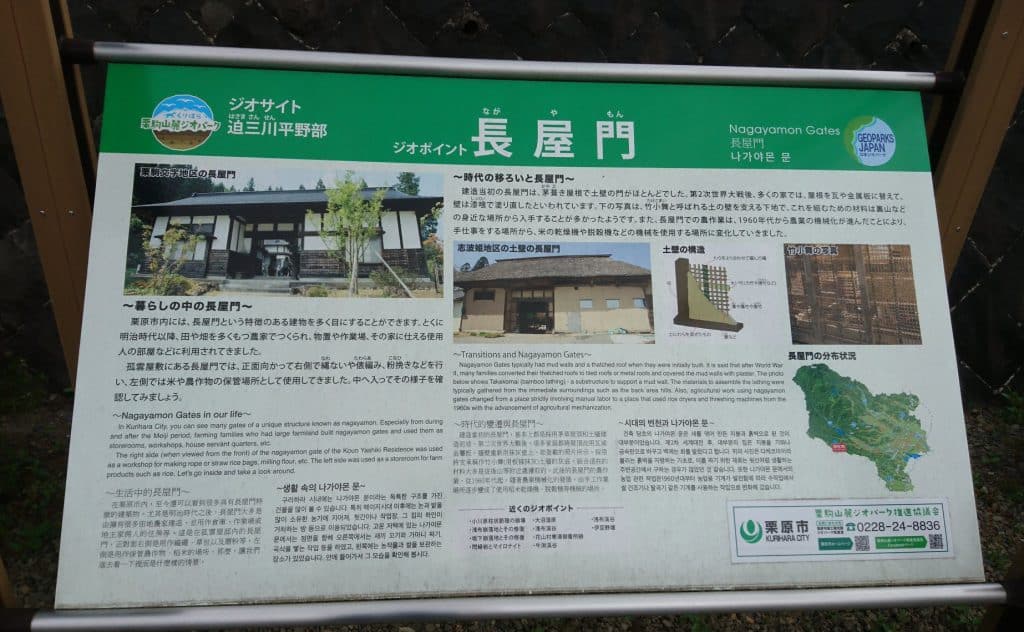
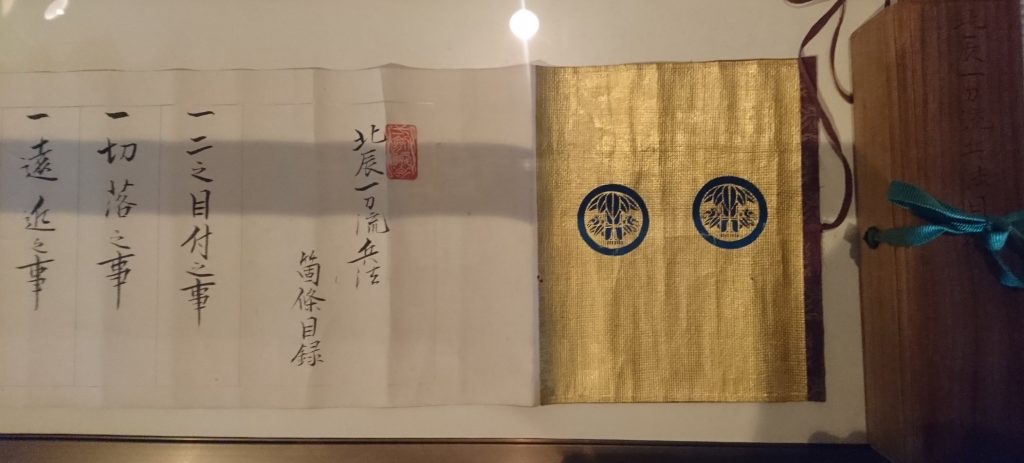
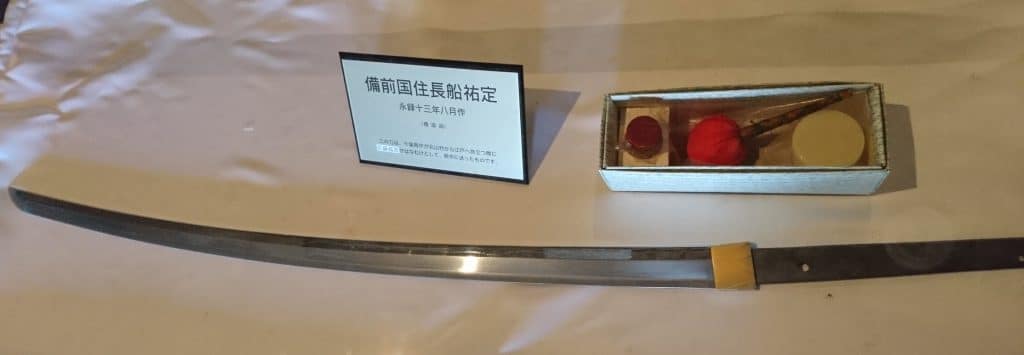
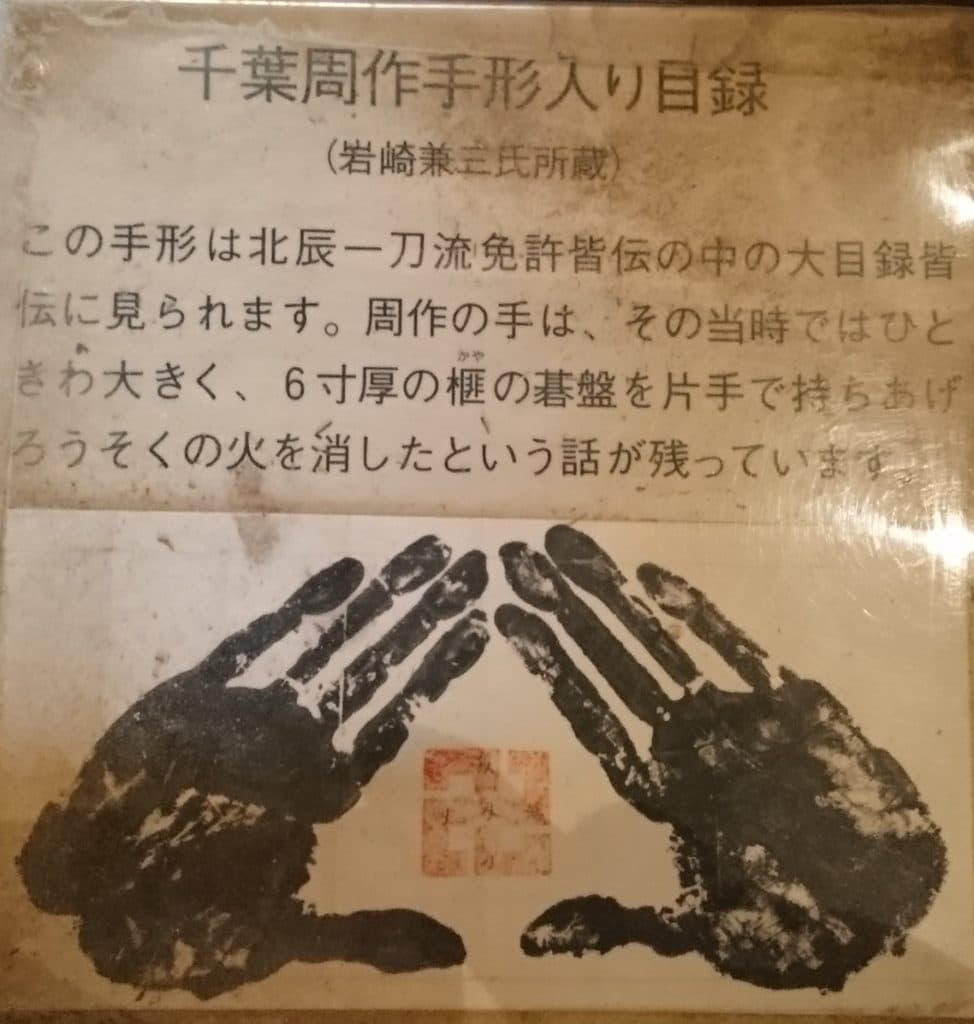
In 2019, I visited with Shimazu sensei (Soke of Yagyu Shingan Ryu) the Koun 千葉周作 residence of Sato Jutaro – student of the famous Chiba Shusaku – the founding master of the Hokushin Itto ryu Kenjutsu branch. The residence is perfectly preserved and registered as a cultural heritage of the Kurihara region: a model of a samurai’s house, with some interesting gates, a dojo, a tea garden and beautiful surroundings!
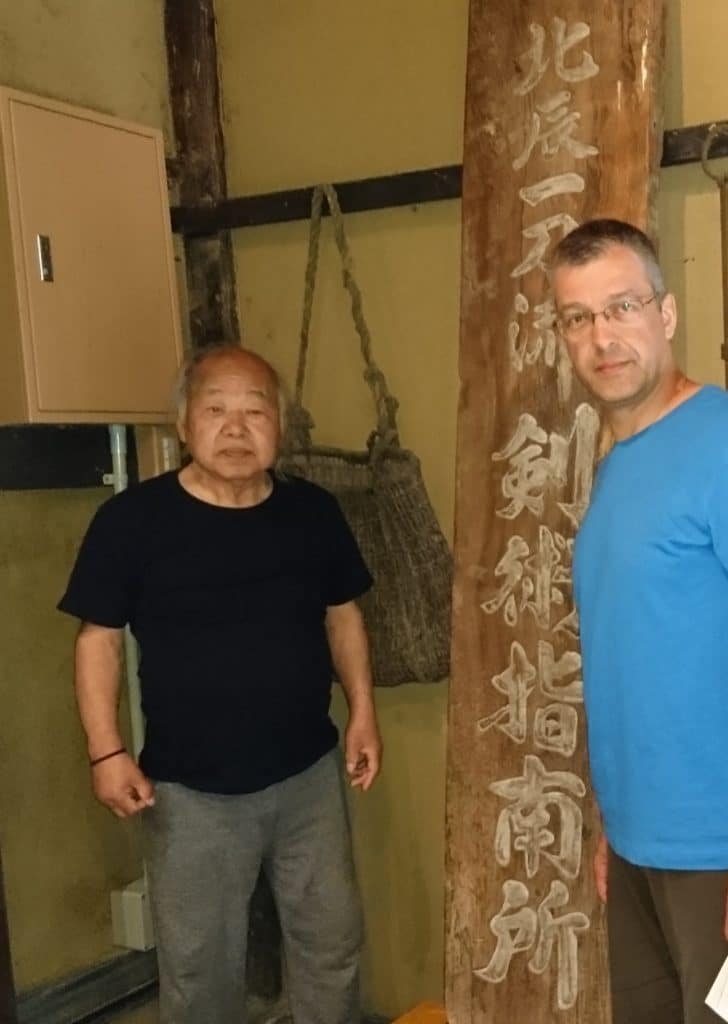
Here is kept the famous wooden board (kanban – a kind of equivalent in our country of an official notice of operation, license) with the name of the famous Chiba Shusaku school in Tokyo, unfortunately drilled to be fixed to the wall, as Shimazu sensei angrily shows me. I am always amazed by the sensei’s relaxation, naturalness and cheerfulness when he shows me the values of other schools because they are simply Values and deserve to be appreciated by any practitioner, beyond any politics between schools/organizations. A true practitioner must be open and impartial and I try to carry this forward in the traditions I carry on. It is a joy and a blessing to meet wonderful people in life who will light your way.
Chiba Shūsaku Taira no Narimasa 千葉周作成政. (1792 – 1855) practiced Itto Ryu and founded his own Hokushin branch Ittō-ryū Hyoho (北辰一刀流兵法, «Hokushin» – North Star, very interesting Taoist influence) being perhaps the last master with the title Kensei («sword saint»). The first appears to have been Bokuden. Despite some tumultuous and violent times, these people awakened the conscience of those around them through the way they practiced swordsmanship, turning conflict into peace! And so I achieve the purpose of the post, a brilliant text by Chiba sensei, set forth therein, a text that seems exceptionally essential for all authentic martial arts practitioners:
«Those who practice the martial way
He must first know and correct his Heart/Conscience
If the Heart is not correct
Not even the martial way will be correct!
The sword is not for cutting someone
But for self-discipline and self-conduct
This is the real sword!
An evil sword takes life
The true sword protects life
This is very important!
Those who wish to study this Path
They should be grateful for all the divine gifts received, respect the Divine and honor the ancestors
Always act with honor and not for a second
Don’t forget these teachings!
Protect these teachings and swear by the Gods between Heaven and Earth
May you always adhere to these teachings!»
Chiba Shūsaku Taira no Narimasa (1792-1855)
founder of the Hokushin Ittō-ryū Hyōhō
“If you want to learn martial arts, first correct your mind.
If the heart is not right, the way of martial arts will not be right.
A sword is not suitable for cutting people.
Hold yourself back and correct your behavior. This is a serious sword.
An evil sword loses people, a true sword saves people. This is a treasure.
Those who learn this path always feel blessed by God.
Respect God and respect your ancestors
Even if the time comes, don’t forget to be ashamed
I swear to the heavens, the earth and God to firmly protect each other in the six on the right.
Okay, don’t do that.»
Founder of Hokushin Itto-ryu Chiba Shusaku Heisei Masa tactics (1792-1855)
Conclusion
Visiting the Koun residence with Shimazu Sensei in 2019 was more than a historical excursion—it was an immersion into the living heritage of classical Japanese martial arts. The residence of Sato Jutaro, a direct student of Chiba Shusaku, preserves the essence of samurai life and training from the Hokushin Itto Ryu Kenjutsu tradition. Every element of the property—from the meticulously designed gates to the dojo, tea garden, and surrounding landscapes—reflects the values, discipline, and aesthetic sensibilities of the samurai era.
The experience highlighted how environment and culture are inseparable from martial practice. A samurai’s house was not merely a home; it was a place where daily life, strategy, training, and spiritual cultivation converged. The architecture and layout were designed to instill awareness, discipline, and harmony with nature, emphasizing that the practice of Kenjutsu extended beyond the dojo floor into every aspect of living. Observing this carefully preserved residence offered insights into the historical context in which these martial arts evolved, providing a tangible connection to centuries of tradition and philosophy.
Being in a space maintained as cultural heritage allows one to feel the presence of the past and the lineage of masters who walked those grounds. It becomes evident that martial arts are more than techniques; they are expressions of culture, aesthetics, and values transmitted through generations. Experiencing such a place instills both respect for tradition and inspiration to continue one’s own practice with mindfulness and dedication.
Ultimately, the visit reinforced the understanding that the study of martial arts is inseparable from the study of history, culture, and environment. By walking the same paths and observing the same structures as past masters, practitioners gain a deeper appreciation for the living spirit of the art, and the ways in which every detail—whether in a dojo, a garden, or a gate—contributes to the cultivation of skill, character, and harmony.
latest posts published

Come try karate for free from June 12th to 30th at KCC
Why join the KCC for the 2025/2026 season?
Why join the KCC for the 2025/2026 season?
What sport can a 4 year old do?
Winning double for KCC
Towards the Coupe de France for the KCC
KCC: the 2023 pre-exam course
What are the belts and ranks in Karate?
What are the different styles of Karate?