
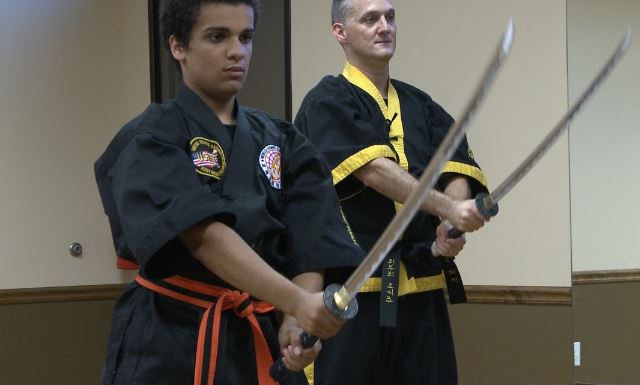
Performing the following practice before workouts ensures that your mind will be as flexible as your body.
The founder of Zen and creator of Shaolin Kung Fu and Qigong was the son of a king of the warrior caste in India. When he was a boy, his teacher of Buddhist teachings showed him a jewel and asked him: “Is there anything more precious than this jewel?” Then the Boddhidarma replied: “A clear mind is worth much more than a precious jewel.”
Boddhidarma took 3 years on his journey from India to China. He brought with him his scrolls with Buddhist teachings. After his unsuccessful meeting with the Chinese emperor, he crossed the Yangtze River and arrived at the Shaolin temple where he was known as «The Indian Who Stares at the Wall». His teachings were aimed more at understanding Buddha nature than at intellectual understanding itself.
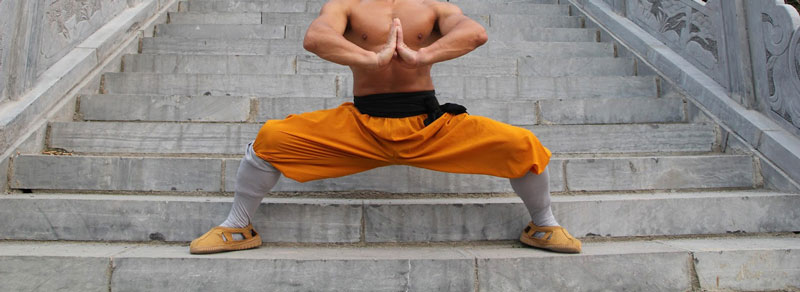
If you are thirsty, the description of a glass of water will not quench you.
Boddhidarma attached great importance to physical exercise to keep the body healthy. For him, by keeping the body healthy, our mental energy increases and prepares us for rigorous meditative practices. He also taught that Shaolin Kung Fu and Qigong are also part of the path to Zen.
Boddhidarma is always depicted with a serious expression. This represents his resilience and determined spirit (he says he once plucked his eyebrows to keep him from falling asleep while meditating).
When you train in Shaolin martial arts, Boddhidarma is one of your most important spiritual ancestors. You can obtain many benefits through the energy of this great Indian Master, even if you are not Buddhist or have no religion.
What do Shaolin monks do before training?
Like Buddha, he renounced his wealth to become a monk. He achieved nothing material from his studies and practices. His teachings were authentic and profound. When I was studying at the Shaolin Temple, our master gave us a teaching and asked us to think about it throughout the week and apply it to our Kung Fu and Qigong training. Although I wasn’t always able to understand these teachings, this practice ended up making my mind more flexible and broader.
I suggest you add this practice to your workouts and see how you get on. Here are some Zen teachings to get you started:
Conclusion
The tale of Bodhidharma shows the deep link between clear thinking and physical training, stressing that nurturing the mind is just as important as exercising the body. By doing certain preparatory routines before workouts, individuals align their muscles and joints along with their minds, establishing a base of concentration, awareness, and flexibility. Bodhidharma’s trip from India to China and his commitment to sharing Buddhist teachings reveal the lasting significance of a focused and disciplined mind in reaching personal and spiritual growth.
His lessons at the Shaolin Temple show that martial and physical activities are not only about strength, endurance, or skills—they serve as a way to know oneself and understand life. The focus on mindfulness, meditation, and purposeful movement represents the idea that mental clarity is a valuable treasure far greater than material possessions or outside accomplishments. When the mind is clear, the body functions better, movements become accurate, and the practitioner builds a balanced connection with both internal energy and outside forces.
Incorporating this belief into current workout routines supports a complete approach to exercise. Warm-ups and preparatory routines are not only physical requirements; they provide chances to build presence, focus, and mental toughness. This connection between mind and body enhances performance, lowers the chance of injury, and boosts overall well-being.
In the end, the legacy of Bodhidharma teaches practitioners that true expertise comes from the harmony of body, mind, and spirit. By appreciating a clear mind as much as physical skill, one can engage in training—and in life itself—with balance, awareness, and understanding, making every action a meaningful and transformative practice.
latest posts published
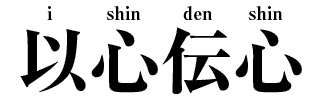
What does the name of our dojo “ishin denshin” mean?

Water: the elixir of life and the secret to optimal hydration
Sempai, Kohai and Dohai: respect for the hierarchical system
What is a dojo (道場)? | At the origins of the word
Mitsu no sen (three points) les trois principals initiatives

Karate Belts: Understanding the Order of Ranks
The concept of “Giri”, a profound moral commitment
Kyokun Martial – In karate there is no first attack.
The social economy at the heart of our martial arts center
