
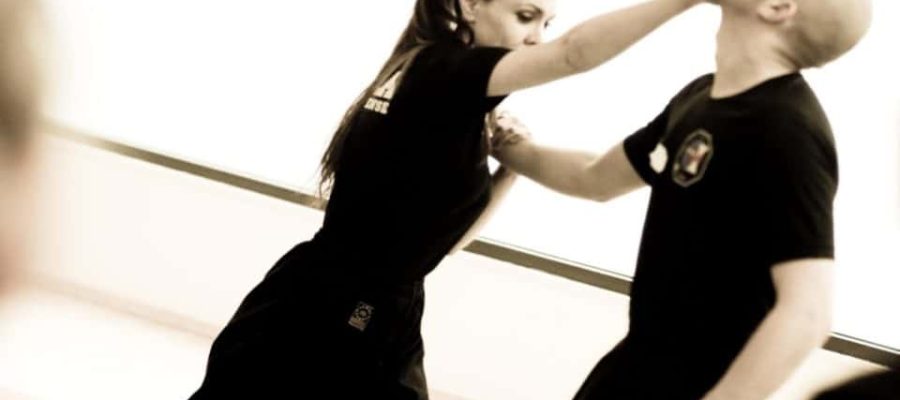
When is it appropriate to use self-defense? We must respond to this question to understand when it’s acceptable to take action or not. To make this explanation easy to grasp, even for younger ones, we have made a simple and adaptable guideline. (For little kids, I suggest breaking it down to 3 “Ps”, which are: talk, leave, and protect). Here is a guide that can motivate you to follow the steps to learn self-defense.
Prevention
Prevention is absolutely the best form of personal defense that exists, because it allows us to avoid conflicting or potentially risky situations for us and our loved ones. In most cases, simple actions like locking doors, asking for a ride, and choosing the neighborhood you live in minimize the risk of attacks.
Projection
The projection is the image of ourselves that we reflect in the eyes of our attacker. Let us never forget that we are mammals and that the predator will always give priority to easy prey. Therefore, through the practice of martial arts, it is common to acquire self-confidence, to the point of giving ourselves the certainty that, if necessary, we will be able to defend ourselves. For example, it is not uncommon for attackers to attack children or the elderly. Likewise, when we think about bullies, they will tend to target the most vulnerable.
Planning
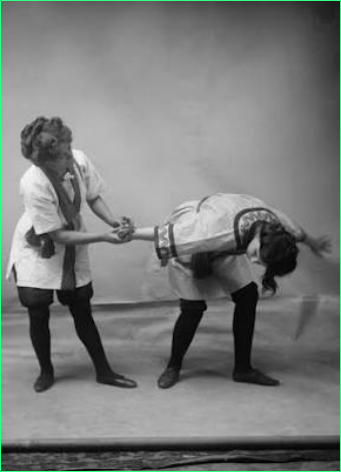
Planning allows us to stay one step ahead and have a defense scenario in mind should an attack occur. This way we are not caught by surprise and we already have a well-studied protocol. For example, if we need to get back to the car alone, having the phone on call mode or pretending to argue is an effective option. In the case of bullying, by definition, the manifestations are recurrent. Then we can plan actions and words that will prepare us for the next confrontation.
So far, our first 3 “Ps” are down the line, before there is an altercation. The next ones will be upstream.
Speak
Speech is the recommended mode of communication to describe what we want (e.g. taking hostages) or to express anger. However, if words are lacking to express escalating anger, violent actions often follow. Fortunately, a knowledgeable person can find the words needed to defuse a situation and calm things down. For example:
– “What are you looking at, what is your problem…?” »
– “Well, I’m sorry, my mother died today and she had the same eye color as you…”
Start
When words lead nowhere or the situation doesn’t offer us the opportunity to dialogue, it’s time to leave. This will prevent you from acting recklessly, which could cause physical harm to yourself and others. Never hesitate to walk away and swallow your pride if you feel you might regret one of your actions.
Protection
We have reached the point where your life is currently in danger. It is time to act using the force necessary to defend ourselves. It is at this stage that we use the self-defense means at our disposal to save his physical integrity.
Legal procedures
It is possible to win the battle, but lose the cause. So, on the one hand, we must target the attacker’s intention, and as a last resort, use force. After making sure the attacker is out of danger, you must ensure his safety and seek help, in this case 9-1-1. You should always report the situation to the police, to protect yourself, in case there are more complex legal procedures, such as a trial. I strongly advise you to stick to this sentence:
– “I used the necessary force given the context.”
In conclusion, although certain attacks do not allow us to apply the 7 “Ps” to the letter, this model will guide you in the steps to follow if you need to defend yourself more seriously.
Conclusion
Understanding when it is appropriate to use self-defense is just as important as learning how to defend oneself. Martial arts are not only about developing effective techniques but also about cultivating the judgment to know when those techniques should—or should not—be used. By teaching a clear and simple decision-making process, practitioners of all ages can better understand that self-defense is always a last resort rather than the first response to conflict.
A step-by-step guideline helps transform a complex concept into something practical and easy to remember. For children especially, simple principles such as talk, leave, and protect provide a foundation for making safe and responsible decisions. They learn that many situations can be resolved through communication, walking away, or seeking help from a trusted adult. Physical action becomes necessary only when every reasonable option has been exhausted and there is no safe alternative.
This approach reinforces one of the core values of martial arts: the greatest victory is avoiding unnecessary violence. A skilled martial artist does not seek confrontation or attempt to prove their abilities through force. Instead, they remain calm under pressure, assess the situation carefully, and choose the response that minimizes harm to everyone involved. Confidence comes not from knowing how to fight, but from knowing that violence can often be prevented through awareness, patience, and self-control.
latest posts published
What does the name of our dojo “ishin denshin” mean?

Water: the elixir of life and the secret to optimal hydration
Sempai, Kohai and Dohai: respect for the hierarchical system

What is a dojo (道場)? | At the origins of the word
Mitsu no sen (three points) les trois principals initiatives

Karate Belts: Understanding the Order of Ranks
The concept of “Giri”, a profound moral commitment
Kyokun Martial – In karate there is no first attack.
The social economy at the heart of our martial arts center
