
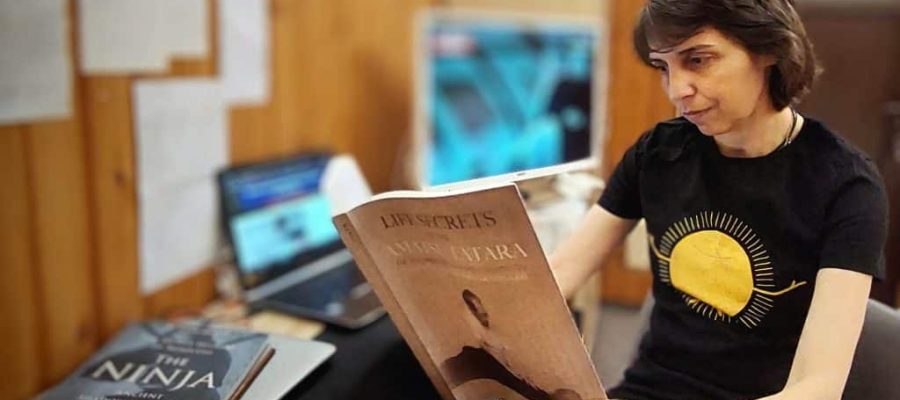
The moment Sensei Cristian Laiber he informed us Peter King will hold a seminar on Japanese therapy at Raiden DojoI rolled my eyes. I’ve never heard of it.»amatsu tatara» and neither Peter King. But I found the theme extremely attractive: «walking-legs-pool dynamics.” Then I found out Peter King is an osteopath, physiotherapist, member of the Royal Society of Medicine and has his own clinic in the UK. Of course I wanted to know more too amatsu tatara. So I took advantage of his generosity Sensei Cristian Laiber (thanks to him!), who said he had an extra copy, I borrowed the book»The secrets of the life of the Amatsu Tatara – The documents of Takamatsu Toshitsugu – Interviews with Doctor Hatsumi Masaaki» and I started reading.
The book is really fantastic! I read it like a novel! It’s about doctors, it’s an in-depth lesson in empathy, but, above all, it is on people. Be careful, by reading this book you will not become a therapist, you will not learn to massage, it does not replace modern medicine. No, it doesn’t matter. But it’s a real life and history lesson.
«The Secrets of the Life of the Amatsu Tatara» by Peter King, or Carte de Posteste
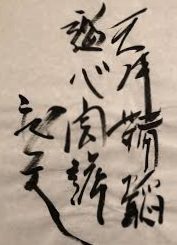
Reading the book, I discovered it the essence, the basic principle of Amatsu Tatara is to try to cure people, help patients to feel at ease, to feel good, to be happy, to enjoy life (even if they suffer from a serious illness), to accept failures and learn from them. In order to help a patient heal, you have to listen to him, understand him, know that the treatment is individual, for each person separately… Halfway through the book, I wondered if what I was reading was real or fiction.
Hmmm… so far I have never met a doctor like this, one who shows so much empathy towards the patient. Never in my life. The doctors I dealt with didn’t even look at me while I was in the office, they started filling out forms, writing the prescription and then goodbye. Next. No medical history asked me that… I haven’t heard a single good word from any doctor, not even when I went to the emergency room after falling off my bike. It was like a factory, patients entered alone (unaccompanied) onto a conveyor belt, were put on a chair and left there with an IV… There were two people I interacted with in the emergency room (a doctor and a nurse), both of whom spoke to me coldly and distantly. More recently, doctors have protocols and if the patient deviates from the patterns, his bad luck, enters the other statistic… Now that I think about it,
doctors seem increasingly dehumanized.
But it’s not just a matter of doctors. I have never met a man who shows so much empathy, who wants to give you so much attention and welcome you into his inner world to understand you and help you overcome a difficult moment. You all know at the greeting question «HI! How are you«, you must answer with the eternal»Well!Ok… 🙂 Sometimes, when I feel like confusing people and making fun of them, as soon as I hear the cliché question, I put on a serious face, look deep into their eyes (with that stomach-deep look) and start saying what I’m doing at that moment (whether it’s good or bad) and walk around like that for a minute or two.
I find their reaction fascinating. It’s amazing how much you can notice when you really look at a person: the little twitches of the eyelids, some move their ears back, some flinch, some break eye contact hoping you’ll shut up and not notice that it’s not okay for them to look into their soul, others look at you confused and you read their eyes»what the hell is he doing?! because he doesn’t say like everyone else «okay, thanks!» What do I do now that I don’t want to listen to it!“Do this to a person and they won’t ask you for a while.”How are you”. At least on this point today’s doctors are honest: they don’t want to know how you are. They have protocols and they also have the stupid habit of sending you to other colleagues, recommending other tests and other tests until the pain goes away (now I speak from personal experience).
His words remained imprinted in my memory Hatsumi Sensei: «This type of medicine is important. Medicine not predetermined. But now it’s all basically settled, which is really like getting a diagnosis from a robot. The important thing, the basis, is to continue to be human, using different types of things, using different tools”.
I think the idea of doctor who puts his hand on the patient, palpates him, listens to his body, asks him questions and listens to the answers. You rarely see it today! I don’t even remember when was the last time a doctor felt me up during my annual checkup.
Honestly, I’m looking forward to this seminar and can’t wait to meet him Peter King! Additionally, I will place this book next to his volumes Alexander Dumas«The Three Musketeers”, and I will reread them all at least once a year to remind myself that empathy, the idea of really helping people, friendship, keeping one’s word, honor are part of life (or should be).
I will return to this book because it is worth reading! If you would like to purchase this book (in English), you can order it from Amazon (click here).
Peter King returns to Romania on May 25th and 26th at Raiden Dojo (Independence Day 315-317). More details about this event can be found here:
latest posts published

What does the name of our dojo “ishin denshin” mean?

Water: the elixir of life and the secret to optimal hydration
Sempai, Kohai and Dohai: respect for the hierarchical system
What is a dojo (道場)? | At the origins of the word
Mitsu no sen (three points) les trois principals initiatives

Karate Belts: Understanding the Order of Ranks
The concept of “Giri”, a profound moral commitment
Kyokun Martial – In karate there is no first attack.
The social economy at the heart of our martial arts center
