
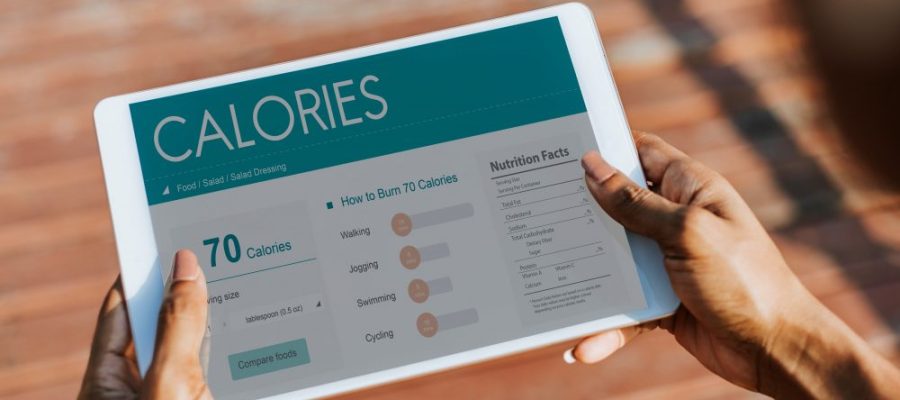
What’s the best way to track your diet, count calories, or look for other ways to lose weight? Perhaps every woman has been faced with this choice. Each method has its advantages and disadvantages. In this article you will find out whether it is possible to lose weight without counting calories, what the advantages and disadvantages of these methods are and whether we should exclude them from our lives.
Do we have to count calories?
Every woman who wants to lose weight knows that counting calories is important at the beginning of the regime. Has anyone tried to lose weight successfully. But there will always be those who say: «This method is not for me.» In the first phase in which you decide to lose weight it is important to know how many calories you need, so you can see how your body reacts and how it changes. We will explain below what the advantages and disadvantages of this method are and find a principle that will help you in the future.
Arguments in favor
- Transparency. Calorie counting contributes to a better understanding and visibility of the nutritional value of foods.
- Dismantling food myths. By counting calories we eliminate misconceptions such as «if I eat this piece, nothing will happen» or «it’s just the hormones for weight gain». This approach allows us to clearly see the connection between our food intake and its effects on weight.
- Let’s learn about the nutritional value of food. Calorie counting helps develop the ability to quickly estimate portion sizes and the calorie content of foods. This makes it easier to make informed food decisions and helps maintain a nutritional balance.
- Visible results. With consistent and correct application of calorie counting, you can achieve fast results, whether it be weight loss or improved health.
The counterarguments
- You must always keep records. One of the main disadvantages of calorie counting is the need to weigh each portion and even each bite. This can be an all-consuming activity at times.
- You can’t eat something without weighing yourself. Calorie counting limits your ability to eat spontaneously. Any food consumed must be weighed and recorded, which can be inconvenient, especially when on the move.
- Frustration when you can’t follow the norm. Counting calories can lead to frustration and guilt when you fail to meet your daily calorie limit.
- Stress. Counting calories effectively requires not only discipline and strong will, but also the ability to manage stress. Realizing the actual amount of food consumed can be a shock and can lower morale, making the process even more difficult.
- Boredom. In the long run, counting calories can become monotonous and boring. The daily routine of weighing and recording every food eaten can reduce the enjoyment of eating and turn eating into a chore rather than an enjoyable experience.
The principle of the healthy dish
While there is still no clear answer as to whether or not we should be counting calories, we at Fitness Mama highlight a principle that helps all girls: The principle of the healthy dish. Let’s see what it consists of:
We therefore choose a plate with a diameter of 22-24 cm and build the tables as follows:
Breakfast
We visually divide this dish into 3 equal parts.
• 1/3 of your plate should be made up of protein sources
• 1/3 of the plate – vegetables
• from the remaining 1/3 we divide it into two other parts (i.e. 1/6 and 1/6) – these parts must be – 1/6 – healthy fats and 1/6 belong to carbohydrates
How to use these tips and build your menu?
For example, a breakfast may contain:
– 2 large hard boiled eggs, sliced cucumber, carrot and pepper and oatmeal made from almond milk with 2-3 sliced strawberries
– or you can prepare 2 soft-boiled eggs, take a slice of wholemeal bread, spread it with avocado puree sprinkled with lemon sauce, put a lettuce leaf and sliced cucumber on top and two soft-boiled eggs on top.
Lunch
We visually divide this dish into 3 equal parts.
• 1/3 of your plate should be made up of protein sources
• 1/3 of the plate – vegetables
• from the remaining 1/3 we divide it into two other parts (i.e. 1/6 and 1/6) – these parts must be – 1/6 – healthy fats and 1/6 belong to carbohydrates
At lunch:
– baked fish with brown rice cooked with a salad of allowed vegetables, drizzled with olive oil and sprinkled with sunflower seeds.
– Or you can have baked chicken breast, steamed or baked vegetables (broccoli, cauliflower, zucchini drizzled with olive oil and sprinkled with sesame seeds) with boiled buckwheat.
Dinner
We visually divide this dish into 3 equal parts.
• 1/3 of your plate should be made up of protein sources
• 1/3 of the plate – vegetables
• from the remaining 1/3 we divide it into two other parts (i.e. 1/6 and 1/6) – these parts must be – 1/6 – healthy fats and 1/6 belong to carbohydrates
And dinner can look like this:
– baked chicken breast with a good portion of salad with the vegetables from the list, dressed with olive oil and sprinkled with flax, sesame, sunflower or pumpkin seeds.
– Or it can be baked fish with steamed vegetables and a small portion of salad dressed with olive oil and sprinkled with nuts.
We hope we have helped you understand what a complete dish should look like and how easily you can put these tips from our nutritionist into practice.
In the next article we will talk about lipids, stay tuned so as not to miss this precious information.
latest posts published

Come try karate for free from June 12th to 30th at KCC
Why join the KCC for the 2025/2026 season?
Why join the KCC for the 2025/2026 season?
What sport can a 4 year old do?
Winning double for KCC
Towards the Coupe de France for the KCC
KCC: the 2023 pre-exam course
What are the belts and ranks in Karate?
What are the different styles of Karate?